Vietnam’s New Religion Law Sparks Immediate Concerns During Vatican Bishops’ Visit
Vietnam’s National Assembly recently passed a revised Law on Belief and Religion that grants state authorities new powers to suspend religious officials, stirring debates on religious freedom as Vietnamese Catholic bishops hold their Ad Limina Apostolorum visit in Rome.
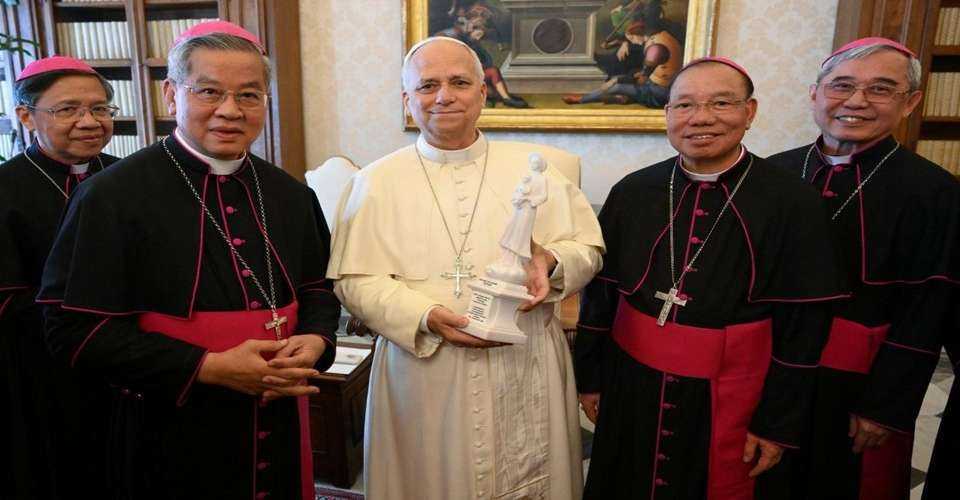
The passage of this law in late April 2026 coincided with a significant religious event when Vietnamese bishops traveled to the Vatican to meet Pope Leo during their routine Ad Limina Apostolorum pilgrimage, a global Catholic tradition where bishops report on the Church’s state in their homeland.
At its core, the law stops short of allowing the government to dismiss clergy outright. Instead, it introduces a powerful administrative mechanism that enables state officials to suspend priests or bishops — a move that could, in practice, halt their religious duties even without formal removal from office.
This technical legal nuance now puts the practical exercise of religious authority under the state’s conditional control, especially critical in a country where public religious activity requires close state oversight and compliance with administrative regulations.
Growing Tension Between Formal Autonomy and Practical Control
The revised law highlights a key tension in Church-state relations in Vietnam. While the Catholic Church operates under a global hierarchical structure guided by the Pope, local enforcement actions like suspensions can severely limit the real-world functions of appointed clergy.
This shift especially catches attention since Vietnam is known for its cautious, evolving dialogue with the Holy See, where mutual interests are balanced behind diplomatic scenes.
Though no official agreement on episcopal appointments has been publicly revealed, informal understandings reportedly allow the state a say in vetting bishops before Vatican confirmation. The new law fits this subtle framework by not challenging appointments directly but shaping conditions that affect officeholders’ capacity to serve.
Ad Limina Visit: A Quiet Negotiation Space for Catholic Leaders
The timing of the law’s enactment during the Vietnamese bishops’ Ad Limina visit to Rome signals more than coincidence. During these meetings, bishops privately discuss complex issues like religious freedoms, possible restrictions, and government relations with Vatican officials.
Although sensitive topics remain off public records, conversations likely delve into how the new legal tools could impact the Church’s work in Vietnam. Ad Limina serves not only as a spiritual event but as a discreet forum for navigating and negotiating ongoing challenges in Church-state relations.
A New Model of State-Church Relations in Vietnam Emerges
Unlike other countries where states exert direct control over religious appointments or practice complete secular separation, Vietnam seems to be developing a middle ground. It respects the Church’s internal autonomy on paper but exercises indirect regulatory power through administrative measures that influence clergy’s operational freedom.
This approach allows the Vietnamese government to oversee religious activities and respond to concerns without overt confrontation, preserving a fragile balance of power that evolves in response to internal and international pressures.
What This Means for the Global Catholic Community and Religious Freedom
The new law and ongoing dialogue with the Vatican demonstrate how religious freedom and governance remain contested and negotiated terrains in Vietnam. For Catholics worldwide, especially here in the United States where religious liberty is a core value, this situation sheds light on the complexities facing communities under restrictive regimes.
As Vietnamese bishops return from Rome, the international Catholic community will be watching closely how the suspension provision is applied and whether it affects ecclesiastical authority on the ground.
For now, the law adds a new regulatory layer with potentially profound implications, leaving prayers and advocacy focused on preserving religious rights amid increasing state oversight.
William J. Grimm M. M., Publisher of UCA News: “The relationship between Rome and Hanoi continues to take shape in the space between what is written and what is practiced.”
Why North Carolina and US Readers Should Care: Vietnam’s new approach to religious regulation adds to global tensions over religious autonomy, reinforcing the importance of vigilance for religious freedoms worldwide. The Vietnamese-American Catholic community, especially in North Carolina’s growing immigrant populations, may face ripple effects from these delicate Church-state dynamics.
What’s Next?
Observers await further developments as Vietnamese clergy resume their ministry under this new legal framework. Future Vatican communications and Hanoi’s enforcement patterns will reveal how far the state will go in exercising this new power.
For now, the world’s eyes remain on how a nation of millions balances authoritarian controls with religious institutions deeply connected to global governance at the Pope’s Vatican.