Historic Pink House Demolished but Lives On Through Community Tribute
The Pink House, a cherished 100-year-old Plum Island landmark, was demolished on March 11 by the U.S. Fish & Wildlife Service (F&WS), sparking emotional responses across the community and inspiring a heartfelt memorial.
While the physical structure is gone, its legacy remains powerful due largely to the advocacy of seven-year-old Rylee W., who passionately fought to save the house with letters, drawings, and persistent community engagement. Rylee’s love for the Pink House—once the most painted and photographed icon on the Great Salt Marsh—spread to neighbors and local artists, igniting efforts to keep its memory alive.
Young Advocate Sparks Memorial Effort With Impactful Letters
Rylee vividly recalls greeting the Pink House every time her family drove to their Plum Island home. Her curiosity and affection for the house were fueled by neighbor Bruce Stott, a former resident, and another neighbor, Bob Connors, who fondly remembers Rylee’s repeated pleas: “What are you going to do to save the Pink House?” Connors says it was Rylee’s unwavering dedication that inspired him to propose a commemorative sign to the town’s authorities.
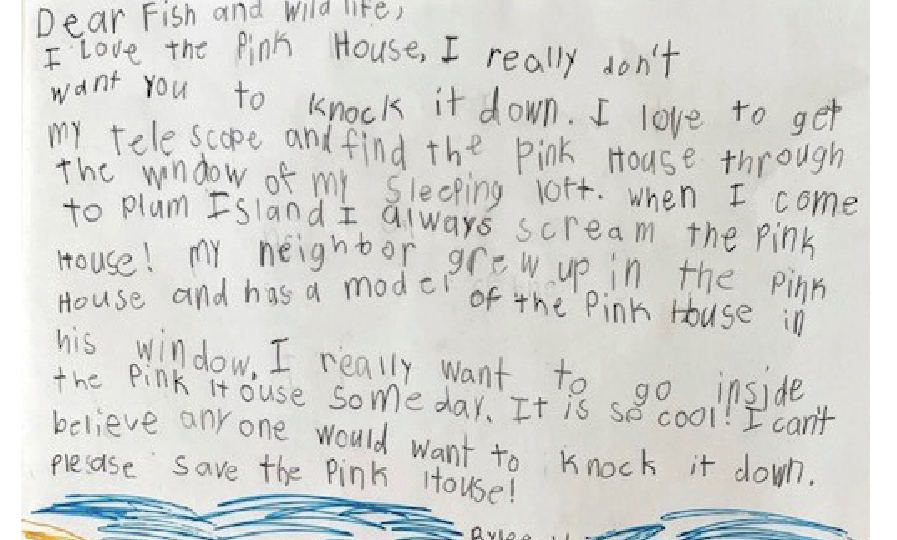
Despite Rylee’s heartfelt letter to the F&WS urging them to halt demolition—where she expressed her desire to explore and preserve the Pink House—plans moved forward. “There were a lot of tears in our house when it was torn down,” Rylee’s mother, Meghan, said.
Newbury SelectBoard Approves Memorial Sign with Community Backing
Connors took his proposal to the Newbury SelectBoard, which unanimously approved the installation of a memorial sign at the former Pink House site. Funded anonymously by two Plum Island residents, the sign features a replica of local artist Kathy Culbert’s painting and bears the inscription:
“The Pink House. Honoring 100 Years of Memories. Demolished March 11, But Never Forgotten.”
Kelly Page, director of The Support the Pink House group and manager of the Newburyport Artists Association gallery, praised the effort. She highlighted how Rylee’s letter “etched a place in history for the Pink House community” and emphasized the ongoing cultural significance of the landmark despite its absence.
Local Artists and Visitors Keep Pink House Spirit Alive
The Pink House’s influence endures through artworks, photography, and community storytelling. Page noted that the house’s disappearance has fueled creative expression, inspiring continued interest and emotional connections among residents and visitors alike. The memorial sign now stands as a beacon for those wanting to remember a cultural landmark “not measured in size but in the impact it left.”
This tribute captures a deeper community pulse—of preservation and connection—that goes beyond concrete and paint. Across the nation, stories like Rylee’s exemplify how even the youngest voices can catalyze collective memory and honor regional heritage amid change.
What’s Next for the Pink House Site?
The memorial is a permanent reminder of March 11, the day the Pink House was lost but not forgotten. Community leaders and artists are expected to continue celebrating its history, while advocates watch to ensure other heritage sites receive similar attention.
For those in North Carolina and beyond, this story underscores the power of local action and the emotional resonance of landmarks that define our shared cultural landscapes.