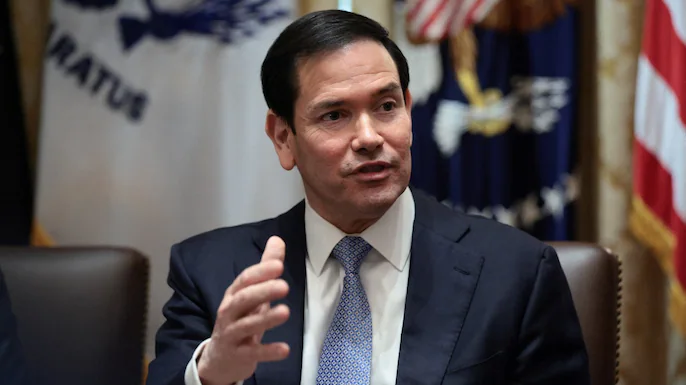
WASHINGTON, May 5, 2026 – U.S. Secretary of State Marco Rubio announced the end of the offensive phase of the conflict with Iran, known as Operation Epic Fury, signaling a major shift in U.S. strategy in the Middle East. Speaking at a White House press briefing, Rubio declared that the operation successfully achieved its primary objectives and that the United States is now transitioning to a defensive posture under a new initiative called Project Freedom.
Rubio emphasized that protecting commercial shipping through the Strait of Hormuz remains a critical priority for the U.S., describing the waterway as a vital artery for global energy flow that no single country can dominate. “We will continue to target any hostile drones or high-speed boats that threaten freedom of navigation,” Rubio said, pointing to the recent destruction of seven such vessels.
The secretary of state revealed that the conflict has already taken a heavy human toll, with 10 civilian sailors killed in the narrow strait’s tense clashes. “These deaths underscore the real human cost of Iran’s aggression and the stakes involved for global commerce,” Rubio added.
One of the most striking data points from Rubio’s announcement was the economic impact of the ongoing U.S. blockade against Iran. He disclosed that it is now costing the regime nearly $500 million per day, leaving Tehran economically isolated and vulnerable to collapse without immediate diplomatic engagement.
Rubio Signals Tough Negotiations Ahead
Calling on the Iranian government to “accept the reality on the ground,” Rubio urged Tehran to come to the negotiating table without delay. He named envoys Jared Kushner and Steve Witkoff as lead diplomats actively exploring a peaceful resolution. However, Rubio stressed that any final agreement must address Iran’s nuclear capabilities—specifically undisclosed nuclear materials reportedly stored underground.
“We will not allow Iran to normalize disruption of energy markets,” Rubio warned, confirming that the U.S. is increasing its military presence in the region to maintain pressure and ensure stability in global energy supplies.
Project Freedom: Defensive Watchdog in Strait of Hormuz
Project Freedom, the newly announced defensive initiative, aims to create a “protective bubble” for commercial shipping through the Strait of Hormuz. Rubio clarified that U.S. forces under this program will only open fire in self-defense, signaling a shift from offensive strikes to maritime security operations.
This change in posture is designed to safeguard vital trade routes crucial to international markets, including energy shipments that directly impact consumers and businesses across the United States and globally.
Human Cost and Broader Implications
Rubio did not shy away from highlighting the intense human price amid these geopolitical tensions. The loss of 10 civilian sailors highlights the dangers faced daily by maritime workers navigating the volatile region. Each casualty is a sobering reminder of the conflict’s far-reaching consequences beyond political rhetoric.
For North Carolinians and Americans nationwide, the stakes also include potential energy price shocks tied to disruptions in Middle Eastern oil shipments. Maintaining uninterrupted access through the Strait of Hormuz is critical to preventing global market volatility.
What’s Next?
The United States remains poised to balance military readiness with diplomatic efforts. Rubio’s announcement sets the tone for an intense diplomatic push, with envoys Kushner and Witkoff expected to engage Tehran in ongoing negotiations aimed at de-escalating tensions and addressing critical nuclear concerns.
Meanwhile, U.S. naval forces will maintain vigilance in the Strait of Hormuz, ensuring commercial vessels continue safe passage amid persistent threats. The Biden administration has described these developments as central to preserving global stability and protecting American interests abroad.
Secretary Rubio concluded by reaffirming that President Trump’s ultimate goal is to empower the Iranian people to determine their future free from a regime engaged in “economic arson.” The next phase of U.S. policy will focus on sustained pressure coupled with clear diplomatic opportunities.
This evolving situation is a high-stakes test of diplomacy and military strategy, with global energy markets and regional security hanging in the balance. The NC Voice will continue to bring immediate updates as the story develops.