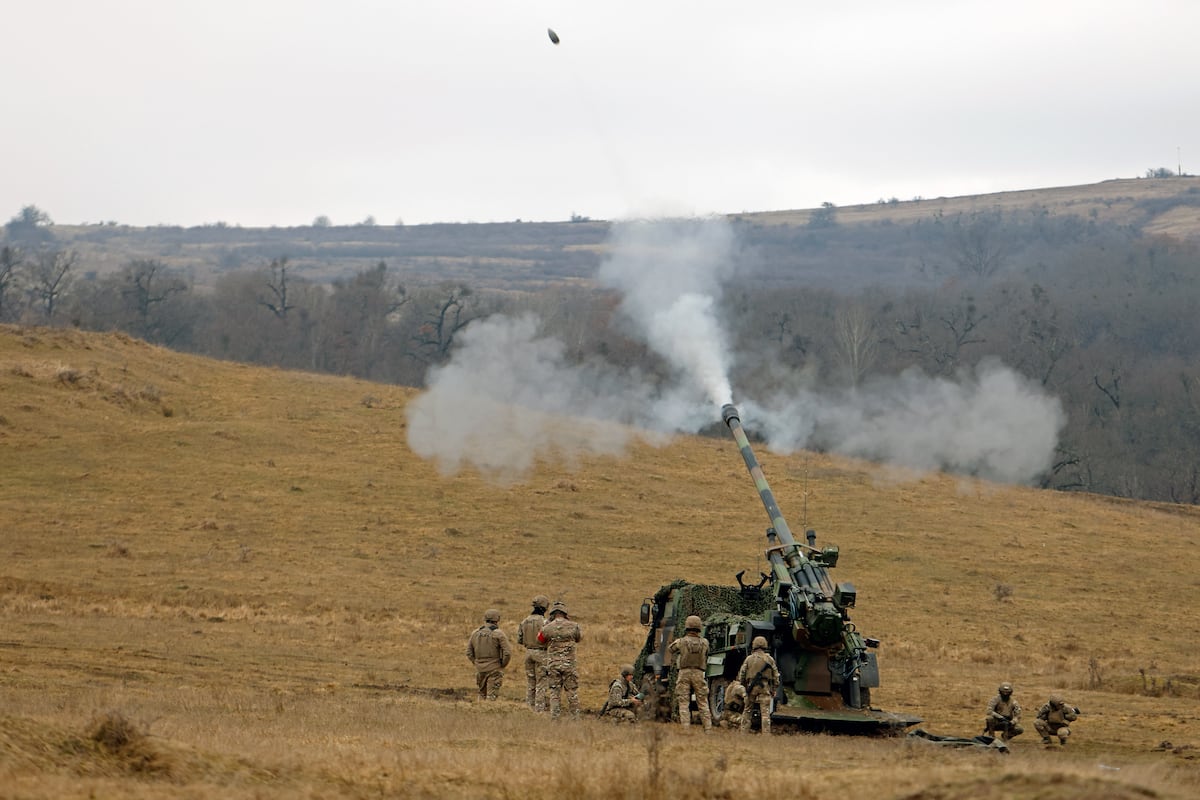
NATO artillery units recently conducted a significant multi-national drill across European training grounds, enhancing their ability to coordinate artillery fire in response to complex threats. The exercise, known as Dynamic Front, took place from January 26 to February 13, 2024, and involved participation from 23 nations.
The drill was designed to simulate the intense combat scenarios currently faced by troops in Ukraine, focusing on the interoperability of artillery systems among allied countries. Participants were tasked with executing 1,500 strikes and intercepting between 600 and 1,200 aerial threats each day, showcasing their readiness for a high-stakes European conflict.
Enhancing Artillery Coordination and Response
During a press briefing, Brig. Gen. Steven Carpenter, the leader of the 56th Multi-Domain Command Europe, emphasized that the drill aimed to create a deterrent effect through overwhelming artillery fire. He stated that the strikes would be “so unrelenting” that they would dissuade potential adversaries from engaging in conflict.
The participating units demonstrated remarkable efficiency, establishing command systems necessary for coordinating strikes in just one-sixth of the time required in previous iterations of the exercise. This improvement indicates a significant advancement in the collaborative capabilities of NATO forces.
A key component of this enhanced coordination is the encrypted software suite known as ASCA, or Artillery Systems Cooperation Activities. This digital tool facilitates connectivity between different national artillery and command-and-control systems. It allows for real-time targeting data sharing among troops stationed across various countries, thereby improving operational effectiveness.
Ongoing Development and Future Exercises
U.S. military officials have highlighted that the ASCA system is continuously refined based on feedback from exercises, ensuring it meets the evolving needs of NATO forces. Over a dozen member nations have integrated ASCA into their command-and-control frameworks, allowing for streamlined communication and coordination during operations.
The successful execution of this drill not only validates NATO’s artillery interoperability but also serves as a critical exercise in preparing for potential future conflicts. By simulating the scale and complexity of modern warfare, participating nations are better equipped to respond to emerging threats effectively.
The Dynamic Front exercise illustrates the commitment of NATO allies to strengthening their collective defense capabilities and enhancing their readiness for challenges in the evolving security landscape. The collaborative efforts showcased during this drill are a testament to the alliance’s determination to maintain peace and stability in Europe.