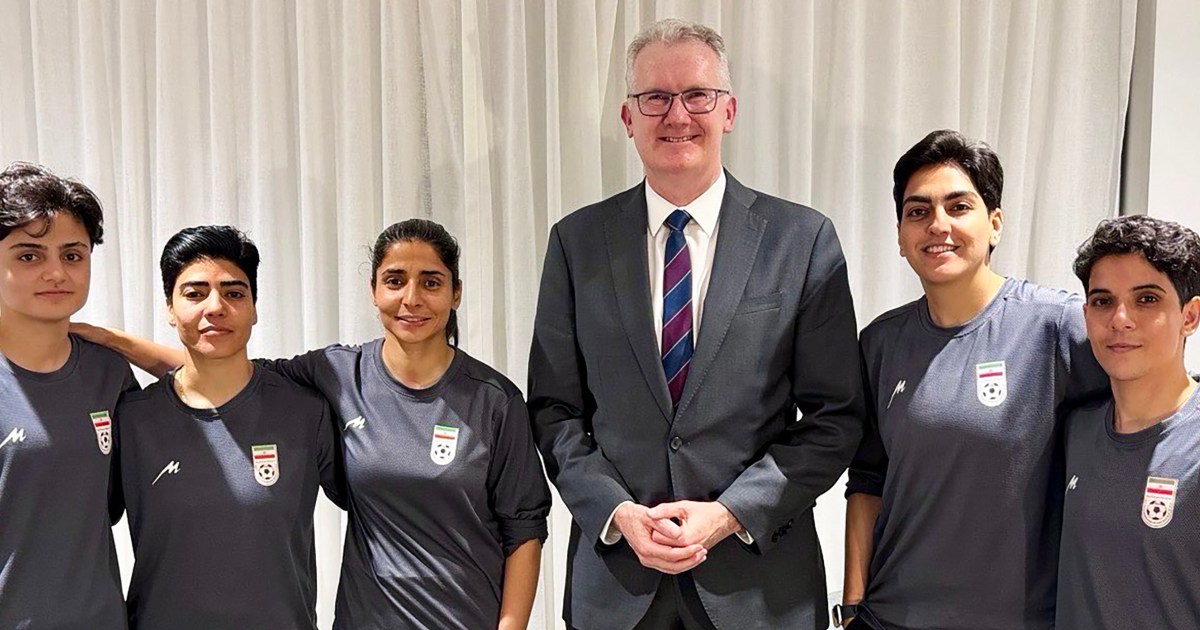
Only two members of the Iranian women’s soccer team remain in Australia after a significant shift in their asylum claims. This development follows the withdrawal of a fifth player who chose to leave the country, indicating a potential change in the players’ circumstances and decisions amid ongoing political tensions.
Australian Home Affairs Minister Tony Burke stated on Sunday that the government had endeavored to provide the players with “genuine choices.” He emphasized that while opportunities were offered, the players faced immense pressure when making these challenging decisions. Initially, six players and one support staff member accepted humanitarian visas to remain in Australia, while the rest of the team traveled from Sydney to Kuala Lumpur last week.
The situation escalated after the players refrained from singing the Iranian national anthem prior to their Asia Cup match against South Korea, occurring just two days after the United States and Israel’s military actions in Iran, which resulted in the death of Supreme Leader Ayatollah Ali Khamenei. Following this incident, the players were labeled “traitors” on Iranian state television. Subsequently, they sang the anthem in their next two matches but have remained silent on both the conflict and their actions.
The five players who abandoned their asylum claims are expected to reunite with their teammates in Malaysia, where the squad has been staying amid ongoing strikes in Iran. Burke and other officials had previously celebrated the players’ choice to seek asylum, describing the discussions during their departure from Sydney as “emotional.”
Despite the Australian government’s assurances, some Iranians in Australia have accused officials of pressuring the women, especially in light of remaining family members in Iran. Shahram Akbarzadeh, a professor at Deakin University specializing in Middle Eastern studies, asserted that the women were being exploited as pawns in a political game. He noted that while there could be repercussions for those who initially sought asylum, their lives were unlikely to be endangered.
“The regime will be embarrassed by this episode,” Akbarzadeh remarked to NBC News. He suggested that the regime might retaliate by temporarily banning the players from participating in games, rather than risking severe backlash.
In recent days, Iranian state media has softened its tone towards the players, suggesting they are welcome to return home. The semi-official Tasnim News Agency reported that the five women were “returning to the warm embrace of their family and homeland,” framing their departure as a failure of the American-Australian initiative.
Australia’s Assistant Immigration Minister Matt Thistlethwaite characterized the situation as “very complex,” acknowledging the deeply personal nature of the decisions made by the players. He reiterated the government’s respect for those choosing to return while affirming ongoing support for the two remaining in Australia.
As the Iranian women navigate these profound choices, their circumstances reflect the intricate intersection of sports, politics, and personal safety, shaping their futures both on and off the field.