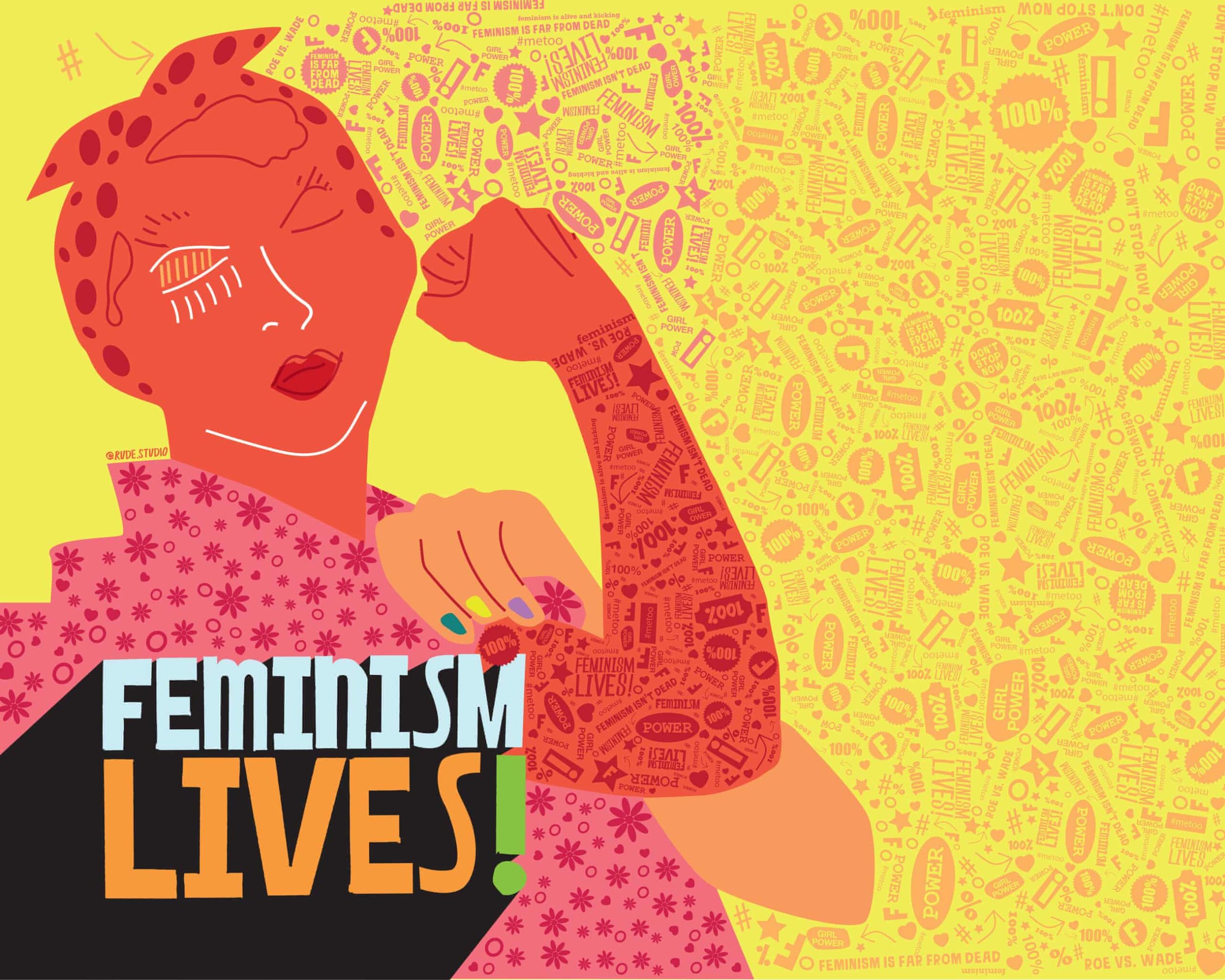
Feminism remains a vibrant and evolving movement, contrary to frequent claims of its decline. Over the past few decades, numerous discussions have emerged questioning its relevance, particularly after significant events such as the overturning of Roe v. Wade in June 2022 and the #MeToo movement. These narratives often stem from two misleading assumptions: that feminism’s journey has reached a conclusion and that specific events can serve as definitive measures of its success or failure.
The first misconception suggests that after over six decades since the feminist surge of the 1960s, any shortcomings signal a loss for the movement. Yet, it is unrealistic to expect the dismantling of centuries of entrenched patriarchy—embedded in laws, culture, and economic systems—to be completed in one lifetime. The fight for gender equality is ongoing, and significant progress has been made.
The second assumption posits that isolated incidents can be used as a gauge for feminism’s effectiveness. For instance, the narrative surrounding #MeToo often suggests its failure whenever high-profile cases of sexual abuse are reported. Critics overlook the profound impact this movement has had on public discourse and legislative reform. The #MeToo movement did not emerge in a vacuum; it was the culmination of years of feminist advocacy that educated society about the pervasive nature of gender violence.
To illustrate this, look at the legislative changes that followed the #MeToo movement. According to a session at the Practising Law Institute, prior to the movement, only three states had passed anti-harassment reforms. In stark contrast, 70 new workplace anti-harassment laws have been enacted across 40 US states since 2017, alongside over 3,000 pieces of related legislation. A landmark law passed in 2021 ended forced arbitration in cases of sexual harassment, allowing victims the right to take their cases to court. These changes have fostered greater accountability and protection for victims, even if they often go unnoticed due to their incremental nature.
The impact of #MeToo cannot be underestimated. For many, its success mirrors environmental victories, where the absence of disasters—like a river that remains unpolluted—signals effective change. The imprisonment of figures like Harvey Weinstein and others serves as a stark warning to potential abusers, illustrating a societal shift where victims are more likely to be heard and believed.
The ongoing saga surrounding the Epstein files further highlights this momentum. Investigative work, notably by journalists like Julie K. Brown at the Miami Herald, uncovered the extent of Epstein’s crimes and brought to light the stories of numerous victims. This has not only led to legal repercussions for Epstein but also sparked discussions about accountability among the elite who associated with him. The fallout continues to affect reputations and careers, indicating that the repercussions of these revelations are far-reaching and still unfolding.
Despite these advancements, challenges persist. The recent reversal of Roe v. Wade has raised alarms about reproductive rights in the United States. However, it is crucial to observe that the US is not the only country grappling with this issue. In recent years, nations such as Ireland, Spain, Mexico, and Argentina have expanded reproductive rights. According to the Center for Reproductive Rights, 60 countries have enhanced abortion rights over the past 30 years, while only four—including the US—have restricted them.
The narrative of feminism is not one of defeat but of ongoing struggle. Surveys indicate that a significant majority of Americans support legal abortion, with a 2024 poll showing that nearly two-thirds favor this right. This suggests that attempts to roll back rights may not endure in the face of public opinion.
A significant aspect of contemporary feminism is the increasing involvement of men in advocating for gender equality. The participation of male lawmakers, such as Thomas Massie and Ro Khanna, in the campaign for transparency regarding the Epstein files marks a shift from feminism being perceived solely as women’s work. This growing involvement indicates a recognition that gender equality cannot be achieved without the engagement of all members of society.
Reflecting on the past is essential for understanding the present. The transformation of societal attitudes towards gender roles has been profound, particularly in domestic life. Social scientists have noted a “gender revolution,” with women entering the workforce and men increasingly participating in family life. Although disparities remain, the dynamics of household labor have shifted considerably since the highly gendered divisions of the 1960s.
As the feminist movement continues to evolve, it faces both resistance and progress. The backlash against feminist gains is palpable, but it serves as a reminder of how far society has come. The struggle for equality is far from over, and acknowledging the advancements made over the past several decades is vital to motivating continued advocacy.
In conclusion, feminism is not merely a historical movement; it is a living, breathing force that adapts and responds to contemporary challenges. The narrative of feminism is one of resilience and transformation, and as society navigates its complexities, it is imperative to recognize and celebrate the progress made while remaining vigilant in the ongoing fight for equality.