Webb Telescope Uncovers a Dark, Barren Exoplanet Like Mercury Just 48.5 Light-Years Away
The James Webb Space Telescope has delivered a stunning breakthrough by detecting a nearby rocky exoplanet that looks more like Mercury than Earth. The planet, known as LHS 3844 b, orbits a star just 48.5 light-years away and presents an extreme environment with no atmosphere, scarce water, and a dark, weathered surface.
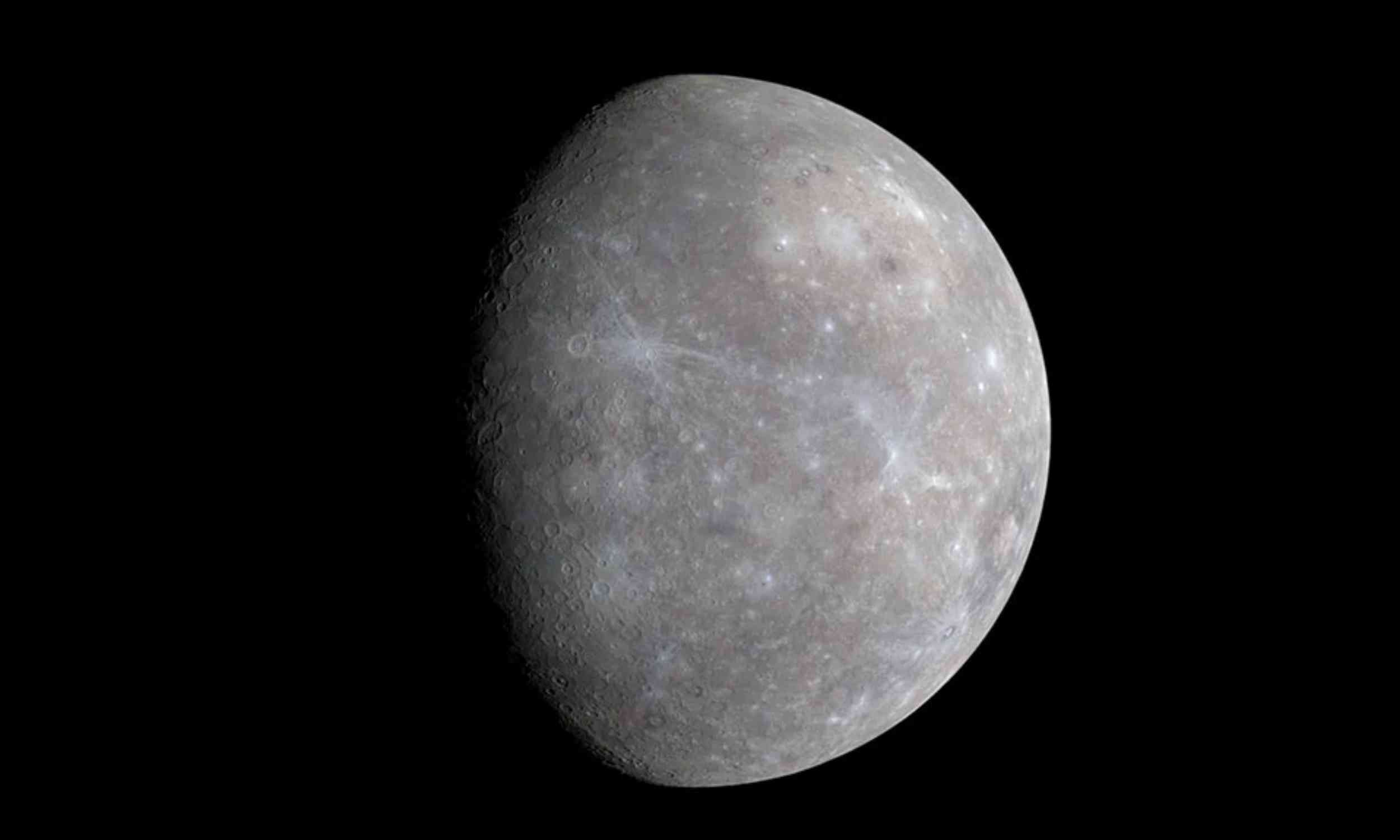
The exoplanet’s surface emits heat patterns that closely match dark volcanic rock or weathered material that has endured intense radiation and meteor impacts—much like the cratered surface of Mercury in our solar system. This discovery sheds urgent new light on how rocky planets lose their atmospheres and become barren over time, answering critical questions about planet evolution both near and far.
Dark, Hot, and Devoid of Atmosphere: Webb’s Measurement Unpacks Alien Surface
A team led by Dr. Sebastian Zieba at the Center for Astrophysics | Harvard & Smithsonian analyzed the heat glow from LHS 3844 b’s sun-facing side. Using Webb’s sophisticated Mid-Infrared Instrument, the researchers separated the planet’s faint thermal radiation from its host star’s light as the planet passed behind the star, revealing a surface unlike Earth’s bright, silica-rich crust.
“We see a dark, hot, barren rock, devoid of any atmosphere,” confirmed Dr. Laura Kreidberg, director at the Max Planck Institute for Astronomy in Germany. Unlike Earth, where water and plate tectonics create light-colored granite crust, LHS 3844 b’s crust is dominated by darker basalt-like rock or older surface material extensively weathered by cosmic impacts.
The intense conditions on LHS 3844 b are daunting: orbiting its star every 11 hours, one side bakes in permanent daylight at near 1,340 degrees Fahrenheit (727°C). This scorching heat, combined with LHS 3844 b’s proximity to its star, has stripped away any meaningful atmosphere or water, leaving a surface more akin to that of Mercury’s dry, cratered terrain.
Volcanism and Atmosphere Ruled Out in Atmospheric Gas Search
Webb’s data also rules out volcanic activity capable of replenishing an atmosphere. Common volcanic gases such as sulfur dioxide and carbon dioxide were undetectable at significant levels, with sulfur dioxide less than 10 microbars and carbon dioxide under 100 millibars — far thinner than Earth’s atmosphere. This weakens theories of recent volcanic eruptions delivering fresh gases to the surface atmosphere.
“This planet likely only contains little water,” Zieba said, emphasizing that the dark signature aligns better with an older, weathered surface than with fresh lava flows or volcanic resurfacing. Without an atmosphere, cosmic and stellar radiation relentlessly break down the surface rock into fine regolith dust, darkening and aging the visible crust.
Why This Discovery Matters for North Carolina and the U.S.
The findings mark a major leap in understanding the life cycles of rocky exoplanets beyond our solar system. For North Carolina’s robust research and tech communities, this underscores the growing importance of space science and advanced astronomical instruments in uncovering alien worlds. The discovery also fuels ongoing studies about planet habitability, atmospheric loss, and the evolution of planets—including Earth’s distant future.
What’s Next: Webb’s Follow-Up to Decode Surface Age and Composition
Scientists plan to utilize Webb’s heat reflection angles to distinguish whether LHS 3844 b’s surface is solid bedrock or loose, fine-grained regolith. Such measurements have proven useful in asteroid studies and could unlock more precise geological histories for exoplanets.
“This is just the beginning,” said Kreidberg. “Future Webb observations will refine our understanding of how rocky planets age, die, and lose their atmospheres—critical data for grasping Earth’s place in the cosmos.”
The groundbreaking study appears in Nature Astronomy, signaling a new era of exoplanet research focused not just on atmospheres but on the rocky surfaces themselves.