Hubble Space Telescope Celebrates 36 Years of Revolutionizing Astronomy
The Hubble Space Telescope, the iconic orbiting observatory, today marks 36 years of groundbreaking discoveries that have reshaped humanity’s understanding of the universe. Since its launch on April 24, 1990, aboard the space shuttle Discovery, Hubble has delivered an unmatched legacy of cosmic insight, stunning imagery, and scientific breakthroughs that continue to captivate the world.
Despite a rocky start with a flawed mirror that blurred its earliest images, a complex corrective mission in December 1993 restored Hubble’s vision, turning it into the most scientifically productive telescope ever built. As NASA celebrates this milestone, the space agency also released a fresh gallery of images showcasing planets, nebulae, and distant galaxies — vivid evidence of Hubble’s enduring power and precision.
NASA Official Hails 36 Years of Stunning Cosmic Research and Public Inspiration
“Hubble opened a new window to the universe when it launched 35 years ago,” said Shawn Domagal-Goldman, acting director of NASA’s Astrophysics Division. “Its stunning imagery inspired people worldwide, and the data revealed surprises about galaxies, planets, and cosmic phenomena.”
Since its restoration, Hubble has conducted nearly 1.7 million observations of approximately 55,000 celestial targets. These data have resulted in more than 22,000 peer-reviewed research papers and fueled a vast scientific dialogue with over 1.3 million citations. This unprecedented depth and breadth make Hubble the backbone of modern astrophysics.
The telescope’s archive, spanning more than 400 terabytes of images and spectra, remains publicly accessible, driving new discoveries each year from researchers worldwide. Hubble’s longevity uniquely enables astronomers to watch cosmic phenomena evolve over decades — from shifting seasons on Mars and Saturn to supernova remnants expanding in real-time.
Hubble’s Breakthroughs Redefined the Universe’s Size, Age, and Structure
Before Hubble, Earth-based telescopes could only glimpse part of the cosmos, struggling against atmospheric distortion. The telescope shattered those limits, unlocking views of galaxies more than 13 billion years old through its Deep Field images. It also refined measurements of the universe’s expansion rate and played a pivotal role in discovering dark energy — a key cosmic mystery that secured the 2011 Nobel Prize in Physics.
Among other groundbreaking achievements, Hubble measured atmospheres of exoplanets, confirmed supermassive black holes at galactic centers, and helped establish the prevalence of planets beyond our solar system. The mission’s success paved the way for observatories like the infrared-focused James Webb Space Telescope, currently complementing Hubble’s work.
Five Space Shuttle Servicing Missions Kept Hubble Operational and Advanced
Hubble’s design as a serviceable spacecraft proved visionary. Between 1993 and 2009, five shuttle missions upgraded Hubble’s instruments and repaired critical systems, effectively transforming it into a state-of-the-art astronomy powerhouse. This adaptability is now a guiding blueprint for NASA’s planned Habitable Worlds Observatory, slated for launch in the 2040s with far greater sensitivity and life-detection capabilities.
Even after the shuttle era ended, NASA engineers have innovated software fixes and remote troubleshooting to battle Hubble’s aging hardware, ensuring it remains fully operational. Today, Hubble and Webb collaborate on studying exoplanet atmospheres and distant galaxy formations, showcasing a potent multi-observatory synergy.
Hubble’s Cultural Impact Extends Far Beyond Science
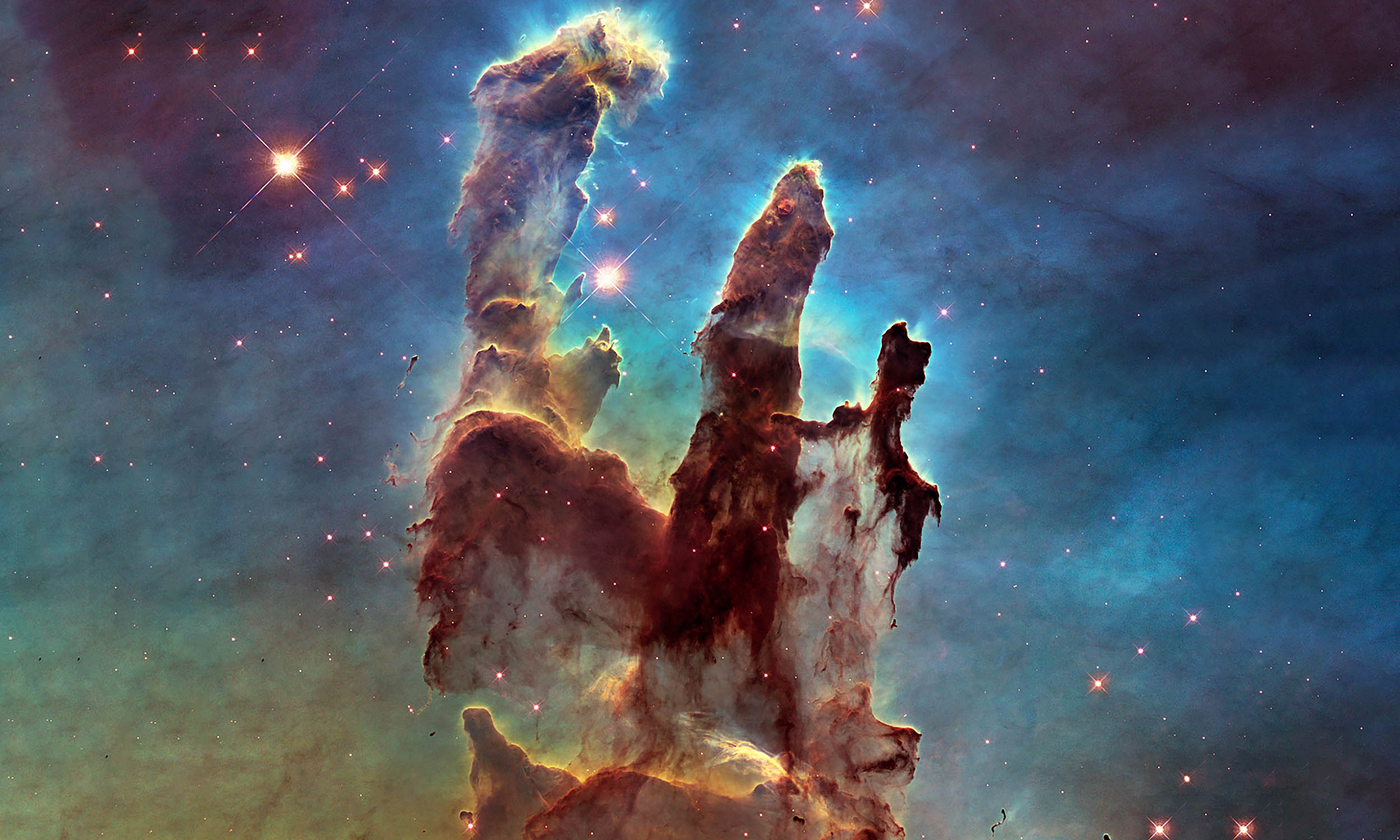
Hubble’s breathtaking images like the Pillars of Creation, the Eagle Nebula, and the Sombrero Galaxy have inspired classrooms, artists, filmmakers, and the public. Its clear, vibrant visuals translate complex astrophysics into accessible cosmic stories, igniting wonder and emphasizing that deep-space exploration belongs to everyone who looks skyward with curiosity and hope.
Looking Ahead: Transitioning to the Habitable Worlds Observatory
While Hubble continues its orbit around Earth every 97 minutes at about 330 miles altitude, its legacy is transitioning toward the upcoming Habitable Worlds Observatory. This next-generation telescope promises up to 100 times greater sensitivity, targeting Earth-size planets in habitable zones with the aim to detect signs of life beyond our solar system.
NASA plans to build HWO with serviceability in mind, applying lessons learned from decades of maintaining Hubble. But for now, Hubble endures — an agile cosmic sentinel continuing to open new windows on the universe and fuel humanity’s quest to understand its place among the stars.
With each passing day, Hubble adds fresh data and breathtaking views, proving that ingenuity and perseverance can unlock the universe’s deepest secrets right from low Earth orbit.