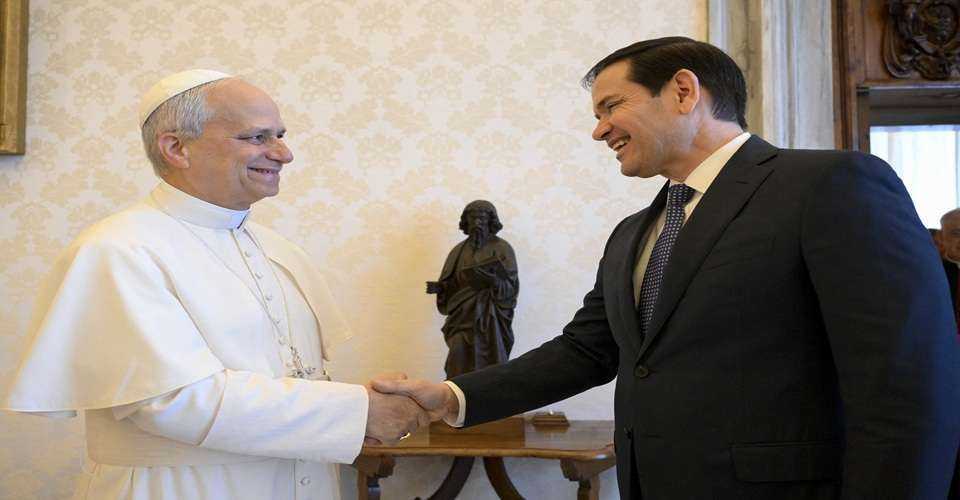
US Secretary of State Marco Rubio is in Rome May 6 through 8 for a high-stakes diplomatic mission to cool mounting tensions between the United States and the Vatican. This visit marks the first face-to-face meeting between a US official and Pope Leo XIV in nearly a year, aiming to shift relations from public conflict back to quiet diplomacy.
The State Department stated Rubio’s trip will focus on “advancing bilateral relations with Italy and the Vatican,” but observers confirm the effort is a clear response to weeks of sharp, public friction between Washington, Rome, and the Holy See. Rubio, a practicing Catholic, is uniquely positioned to bridge this diplomatic gap exacerbated by former President Donald Trump’s controversial remarks about the pope’s stance on Iran’s nuclear ambitions.
At the core of the conflict lies more than policy differences; the Vatican plays an outsized role in shaping international moral narratives that influence global alliances and public opinion—despite lacking military or economic power. When Pope Leo XIV calls war “unthinkable,” it sends ripples through worldwide diplomatic circles and challenges the legitimacy of policies backed by strong powers such as the US.
Trump’s direct comments attacking the pope’s position escalated tensions beyond normal diplomatic channels, devolving into a personal and theatrical dispute that overshadowed US-Vatican cooperation. Rubio’s current visit is designed not to hammer out new agreements but to “cool the rhetoric” and quietly restore the dialogue to stable institutional grounds where diplomacy can resume effectively.
This cooling off is critical for current US foreign policy, especially regarding contentious issues like Middle East peace and hemispheric security where US-Vatican alignment can impact broader international opinion and legitimacy of American actions.
Domestically, Rubio’s visit carries additional weight with American Catholics feeling uneasy about the White House’s public conflicts with the Church’s highest moral authority. As a prominent Catholic and senior diplomat, Rubio offers a symbolic reconciliation that signals respect for the Vatican’s global influence and the values it represents for millions of Americans.
According to diplomatic experts, this visit is less about concrete concessions and more about a subtle but essential semantic reset — an acknowledgment that Pope Leo XIV’s voice cannot be dismissed or sidelined in global discussions. Rubio’s engagement represents a deliberate step back from the confrontational rhetoric popularized earlier and a return to steady diplomatic presence and respect.
While no official statements are expected, this quiet diplomacy is a strategic move to preserve vital relationships that impact US interests in Europe and worldwide. It sets the stage for potential future realignments in US-Vatican ties with the long view of stabilizing a key moral and diplomatic axis.
The encounter also highlights how American foreign policy must navigate complex intersections of religion, diplomacy, and domestic politics. For many across North Carolina and the US who follow international affairs, Rubio’s Rome trip signals a turning point where diplomacy regains center stage after a period of public and damaging discord.
Observers will watch closely what messages Rubio conveys privately to Pope Leo XIV and Holy See leaders, and how this recalibration influences US strategic postures on sensitive zones like the Middle East.
This mission underscores the necessity of respectful dialogue in a global age where moral authority outweighs mere material power, ensuring the US remains connected to influential actors who shape international norms and perceptions.