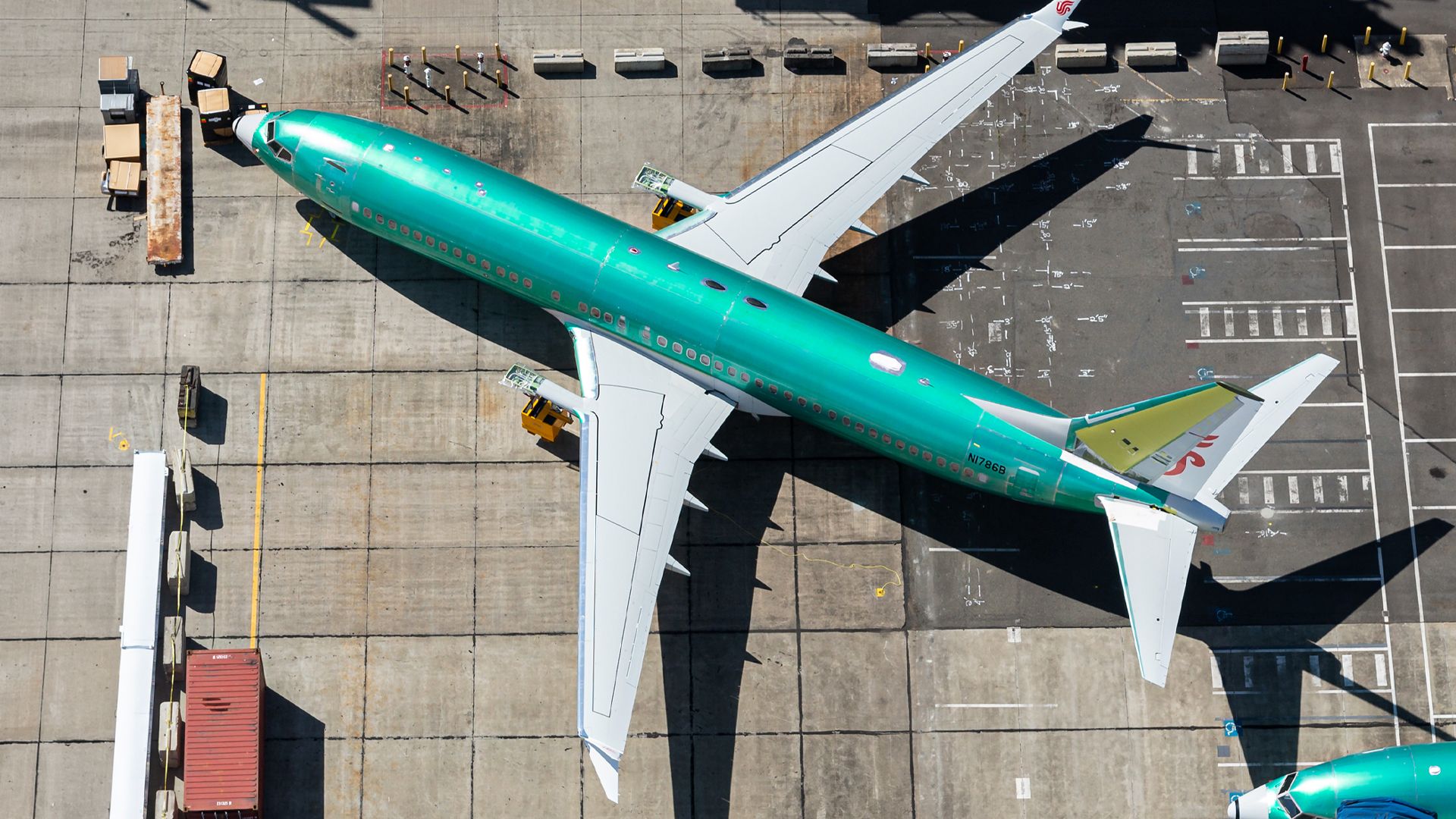
The demand for Boeing 737 MAX aircraft is on the rise as the company addresses production challenges and enhances its production capabilities. After a difficult period in the late 2010s and early 2020s, when Airbus gained significant market share, Boeing is now re-establishing its foothold in the narrowbody aircraft market.
Production Improvements Drive Demand
Boeing’s initial struggles with the 737 MAX, including a 20-month global grounding due to safety concerns, significantly affected its market position. The company faced production caps imposed by the Federal Aviation Administration (FAA) after manufacturing issues led to incidents such as the January 2024 grounding of the 737 MAX 9 following a door plug failure on an Alaska Airlines aircraft. At that time, Boeing was limited to producing only 38 planes per month, while Airbus’s A320neo family achieved production rates exceeding 50 aircraft per month.
Fast forward to 2026, and Boeing has ramped up its output to 42 aircraft per month, with plans to increase this to 47. The company is also working on acquiring Spirit AeroSystems to bring more production in-house, alongside the establishment of a new final assembly line in Everett, Washington, by summer 2026. This line will focus on the 737 MAX 10 variant, marking a significant milestone as it will be Boeing’s first narrowbody assembly line in Everett.
The 737 MAX 8: A Market Leader
The Boeing 737 MAX 8 is a standout success for the company, with over 4,800 orders placed to date. This figure is closing in on the 4,991 orders for the 737-800 and surpasses the 4,160 orders for the competing Airbus A320neo. The MAX 8 variant accounts for nearly 70% of all 737 MAX orders, benefiting from its efficient design and operational capabilities.
Air Canada marked a significant shift in North American orders for the 737 MAX back in 2013, transitioning from Airbus aircraft to the MAX series. Today, the airline operates 50 MAX 8 aircraft, reflecting a broader trend where major airlines, including Southwest, American, and Delta, have increasingly favored the 737 MAX.
As the 737 MAX gains traction, its advantages over the A320neo remain compelling. The MAX 8 is slightly larger, lighter, and offers improved range and payload capacity while maintaining similar fuel efficiency. This makes it suitable not only for transcontinental routes within the United States but also for shorter transatlantic flights.
In addition to Air Canada, several other airlines are adopting the 737 MAX 8, including WestJet, Flair, Aeromexico, and Copa Airlines. Within the United States, major carriers such as American Airlines, Alaska Airlines, and United Airlines are also integrating the MAX 8 into their fleets.
Future Prospects and Competitive Landscape
The 737 MAX 10 is positioned to compete more aggressively with the Airbus A321neo. Although it remains slightly smaller, Boeing claims that the MAX 10 will deliver lower per-seat costs, making it an appealing option for airlines. With a range of 3,100 nautical miles (5,700 kilometers), the MAX 10 is designed for short to medium-haul operations, enhancing its attractiveness to airlines looking for economical solutions.
Boeing’s recent successes include significant orders from American Airlines and Delta Air Lines, both of which previously relied on the A321neo for their large narrowbody needs. American Airlines has ordered 115 MAX 10s, while Delta has committed to 100. These notable victories validate Boeing’s claims regarding the economic advantages of the 737 MAX 10, particularly on certain routes.
As airlines navigate the complexities of fleet management, many are adopting a dual sourcing strategy, operating both Boeing and Airbus aircraft. This approach allows airlines to mitigate risks associated with production delays and quality control issues. For instance, American Airlines operates a fleet of 396 Boeing 737 aircraft alongside 484 A320 family aircraft, providing flexibility in managing operational disruptions.
With Airbus reportedly sold out of new A320neo family aircraft until the 2030s, the availability of the 737 MAX series presents a timely opportunity for airlines. Boeing’s competitive pricing, coupled with the efficiency of the 737 MAX, positions the company favorably in the ongoing battle for dominance in the narrowbody market.
As of now, the landscape looks promising for Boeing, with a renewed focus on production capabilities and a lineup of aircraft that meet the evolving needs of airlines globally.