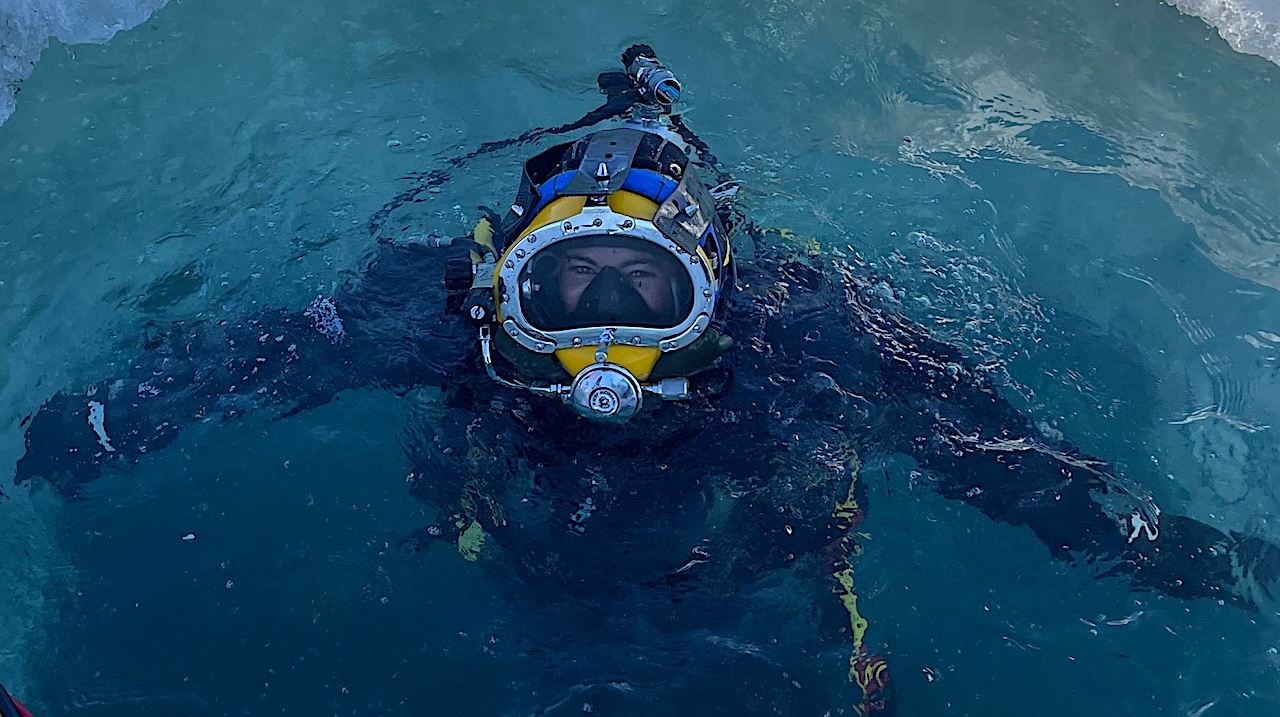
Lake Fryxell, situated in the McMurdo Dry Valley of Antarctica, has become a focal point for biogeochemical research due to its unique biological characteristics. In late 2025, Elisa Merz, a biogeochemist from the University of Konstanz, led an international team from a field camp to explore these features. The team navigated challenging conditions, including air temperatures plunging to minus 20 degrees Celsius, to study the lake’s distinctive microbial ecosystems.
The lake remains covered by four to five metres of ice year-round, creating a stable environment that supports a diverse array of microorganisms. According to Merz, the water in Lake Fryxell contains oxygen only up to a depth of approximately ten metres, which is unusual for lakes. “Such anoxic conditions are typically found in deep ocean waters or in very deep lakes, like Lake Constance,” she noted. This depth of ten metres is manageable for divers, allowing the team to conduct their research effectively.
Unique Microbial Ecosystems
Lake Fryxell is distinctive not only for its anoxic conditions but also for its lack of larger organisms. “There are no fish or large algae here, just a wealth of microorganisms,” Merz explained. The total ice cover prevents wind exposure and mixing, allowing researchers to observe the layered microbial mats at the lake’s bottom. Merz described these mats as looking “like lasagne,” showcasing the intricate layers formed by the microorganisms.
Despite the extreme temperatures outside, the water remains relatively warmer at around four degrees Celsius. Merz detailed the challenges of diving in such conditions, particularly the role of the team member responsible for managing the diving umbilical. This individual must maintain contact with the diver while enduring the frigid winds. “Although we take turns, standing outside for 45 minutes is the absolute limit,” she noted.
Research Conditions at McMurdo Station
The team operates from McMurdo Station, the largest research facility in Antarctica, which provides essential support for scientific expeditions. Merz’s research at Lake Fryxell aims to deepen understanding of microbial life in extreme environments, contributing vital data to the field of astrobiology. The insights gained could have implications for understanding life on other planets, where similar extreme conditions may exist.
For further details about Merz’s work and the research conditions at Lake Fryxell, readers can explore the in-depth report titled “In Her Element,” published by the University of Konstanz. This research not only highlights the unique ecosystems found in Antarctica but also underscores the collaborative efforts of scientists striving to uncover the mysteries of life in extreme environments.