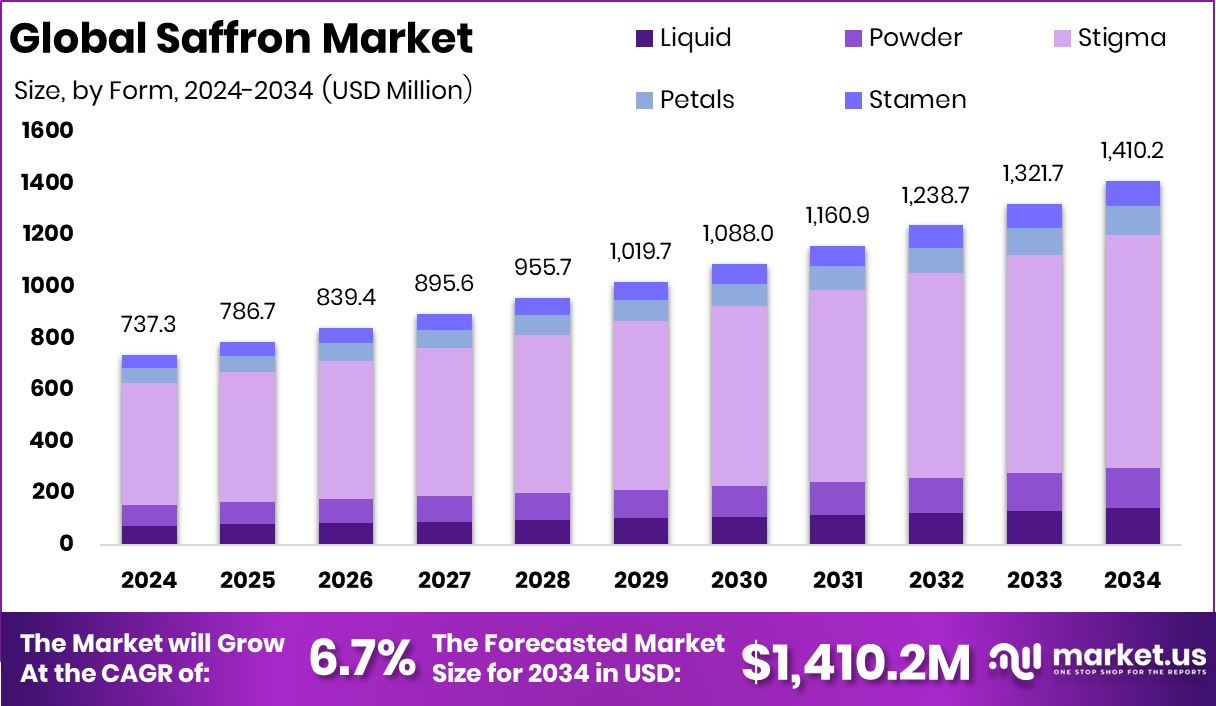
The global saffron market is poised for significant expansion, projected to reach approximately USD 1,410.2 million by 2034, up from USD 737.3 million in 2024. This growth reflects a compound annual growth rate (CAGR) of 6.7% between 2025 and 2034. The Middle East and Africa emerge as key players, holding a substantial share of 54.8% valued at USD 404.0 million. Saffron, known for its vibrant color, distinct aroma, and unique flavor, is derived from the dried stigmas of the saffron crocus flower and is highly regarded in culinary and wellness applications.
Saffron’s labor-intensive harvesting process contributes to its status as one of the world’s most premium spices. Beyond its culinary uses, it is increasingly incorporated into wellness supplements, traditional remedies, and personal care products due to its antioxidant properties. The market encompasses cultivation, processing, and international trade across various sectors, including food, beverages, and nutraceuticals.
Key Players in the Saffron Market
Several companies are leading the way in the global saffron trade, each contributing to the industry’s growth through quality products and innovative practices.
Esfedan Trading Company is a prominent Iranian exporter of premium saffron varieties, including Super Negin, Sargol, Pushal, and saffron powder. The company emphasizes quality control, grading standards, and efficient packaging and shipping services. Operating mainly in saffron processing and export, Esfedan plays a crucial role in meeting international demand for saffron.
Tarvand Saffron Co., also based in Iran, employs contract farming to ensure consistent quality in its saffron production. The company oversees all stages from cultivation to international trade and emphasizes traceability and export compliance. With a focus on quality assurance, Tarvand is a significant player in the global saffron distribution network.
Gohar Saffron, another key exporter from Iran, is known for its premium saffron products and holds licenses from Iran’s Ministry of Health. The company prioritizes regulatory compliance and export standards, reinforcing its reputation in international markets.
Rowhani Saffron Co., established in 2009, has expanded its reach to over 40 countries, including the United States. The company offers a variety of saffron grades and packaging formats, maintaining a commitment to high export quality standards.
In India, the Royal Saffron Company operates in Pampore, Jammu & Kashmir. The company has been active in the saffron trade since at least 2011, focusing on traditional saffron distribution and regional supply.
Mehr Saffron promotes organically grown saffron, highlighting hand-harvesting practices and purity. Their branding emphasizes high-quality saffron products, appealing to health-conscious consumers.
Safran Global Company S.L.U. and Saffron Business Company are also noted participants in the saffron trade, contributing to global supply and distribution efforts. While public details about these companies are limited, their presence is acknowledged in industry listings.
The Iran Saffron Company is primarily recognized in regulatory listings rather than as a publicly promoted exporter. This entity plays a role in the administrative context of the saffron industry association.
Market Trends and Future Outlook
The growth of the saffron market is driven by increasing consumer preference for natural and plant-based ingredients. As the demand for clean-label and functional food products rises, saffron’s versatility strengthens its relevance in both culinary and health sectors. The emerging focus on wellness and premium personal care formulations is likely to sustain saffron’s appeal.
Public interest in organic and high-quality ingredients underpins a broader momentum towards wellness-oriented products. Companies within the saffron sector are receiving increased funding to develop plant-derived bioactive substances and supplements, further boosting the demand for saffron.
Saffron’s rich heritage, combined with its unique qualities, positions it favorably in a competitive market. As consumers continue to seek authentic and high-quality products, the global saffron industry is expected to maintain steady demand, supported by its longstanding reputation for quality and authenticity.