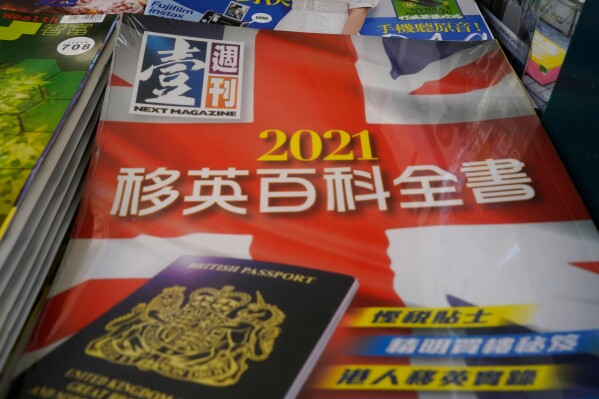
Prominent democracy advocate Jimmy Lai was sentenced to 20 years in prison on December 12, 2022, for violating a national security law imposed by China. Lai, a former media tycoon and founder of the now-defunct Apple Daily, has been a vocal critic of both the Hong Kong and Beijing governments. His journey from a stowaway child to a leading pro-democracy figure in Hong Kong reflects pivotal moments that shaped his activism.
From Stowaway to Media Mogul
Lai’s story began in China, where he worked as a child laborer in a glove factory. He moved to Hong Kong in the late 1960s and eventually ventured into the clothing business, founding the Giordano casual clothing chain in 1981. His trajectory shifted dramatically after the events of June 4, 1989, when the Chinese government violently suppressed pro-democracy protests in Tiananmen Square. Giordano supported the movement by producing T-shirts that expressed solidarity, sparking Lai’s interest in media as a platform for advocacy.
In 1990, he launched his first magazine, Next Magazine, aiming to “participate in delivering freedom.” He famously stated, “The more you are in the know, the more you are free,” a belief that would guide his future endeavors in journalism.
Establishment of Apple Daily and Rise to Prominence
The launch of Apple Daily in 1995 marked a significant milestone in Lai’s career. Just two years before the handover of Hong Kong to China, Lai promoted the tabloid as a voice for democracy. His advertisements featured him humorously biting into an apple while being shot at with arrows, underlining the paper’s slogan: “An apple a day keeps the liars away.” The publication quickly gained popularity for its sensational reporting and investigative journalism.
Lai’s activism became increasingly vocal. In 2003, he supported large-scale protests against a proposed national security law, which aimed to limit freedoms in Hong Kong. His newspaper distributed posters urging participation in the protests, which attracted around half a million demonstrators and ultimately resulted in the withdrawal of the proposed legislation.
In 2014, Lai joined the Umbrella Movement, advocating for genuine universal suffrage in Hong Kong. Wearing protective goggles, he participated in the demonstrations that called for electoral reforms. Following 79 days of protests, he was arrested while chanting, “I want genuine universal suffrage,” further solidifying his position as an emblem of the pro-democracy movement.
Legal Battles and International Repercussions
Lai’s activism intensified in 2019, when he played a prominent role in ongoing protests against the government. After protestors stormed the legislative building, he pushed for media coverage that would shed light on the protesters’ motivations. His meetings with prominent US officials, including Vice President Mike Pence and Secretary of State Mike Pompeo, drew ire from Beijing, escalating tensions between Hong Kong and mainland authorities.
In 2020, Lai was arrested under the national security law, which was introduced to maintain stability in Hong Kong. His arrest marked a significant moment, as he became one of the first high-profile figures prosecuted under this controversial legislation. The authorities conducted raids on his media company, sending shockwaves through the journalistic community in Hong Kong.
The situation worsened in 2021, when Apple Daily was forced to shut down after the arrests of its top executives and editors. In its final edition, the newspaper sold a remarkable 1 million copies, a testament to its lasting impact on Hong Kong’s media landscape.
Finally, on April 12, 2022, Lai faced a trial lasting 156 days, culminating in his conviction for conspiracy to collude with foreign forces and publishing seditious articles. The verdict raised alarms about the future of press freedom in Hong Kong and drew criticism from various international governments. The Hong Kong government maintained that the case was unrelated to media freedom.
Lai’s journey from a stowaway to a symbol of resistance underscores the complexity of Hong Kong’s evolving political landscape. His conviction serves as a stark reminder of the challenges faced by those advocating for democracy in a city grappling with increasing pressures from Beijing.