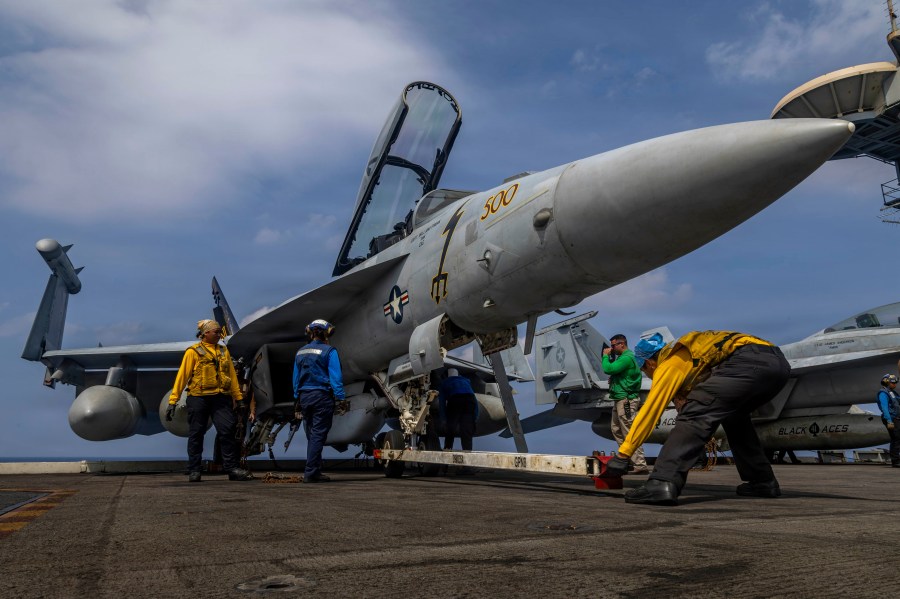
Yemen’s Iranian-backed Houthi rebels have issued threats of new attacks on vessels navigating the Red Sea, escalating tensions in the region as a U.S. aircraft carrier heads towards Iran. This announcement comes in response to heightened military threats from President Donald Trump, who has warned of potential military action against Iran due to its heavy-handed response to ongoing nationwide protests.
The Houthis’ statement indicates their intent to disrupt maritime traffic in the Red Sea corridor, a critical shipping route for global trade. In a short video released by the Houthis, they showcased their military capabilities, further emphasizing their readiness to engage in hostilities should their demands not be met.
Rising Tensions in the Region
The situation is particularly precarious given the backdrop of Iran’s recent crackdown on protests that have erupted across the country. The U.S. has expressed strong concerns regarding Iran’s actions, and the deployment of the aircraft carrier is part of a broader strategy to signal American resolve in the face of increasing aggression.
The Red Sea has historically been a vital corridor for international shipping, making any threats to maritime security particularly alarming for global trade. The Houthis’ threats come at a time when the U.S. and its allies are closely monitoring Iranian activities in the region, especially in light of ongoing tensions related to Iran’s nuclear program and its influence in Yemen through the Houthis.
Implications for Global Shipping
If the Houthi rebels follow through on their threats, it could lead to significant disruptions in one of the world’s busiest shipping lanes. Shipping analysts warn that attacks on vessels could escalate military responses from the U.S. and its allies, potentially leading to broader conflict in the region.
As tensions mount, the international community is calling for restraint from all parties involved. The potential for conflict not only threatens regional stability but also poses risks to global supply chains that depend on the safe passage of goods through the Red Sea.
The situation remains fluid, and further developments are expected as both the U.S. and Iran navigate this delicate geopolitical landscape. The coming days will be crucial in determining whether diplomatic efforts can de-escalate the rising tensions or if military actions will take precedence.