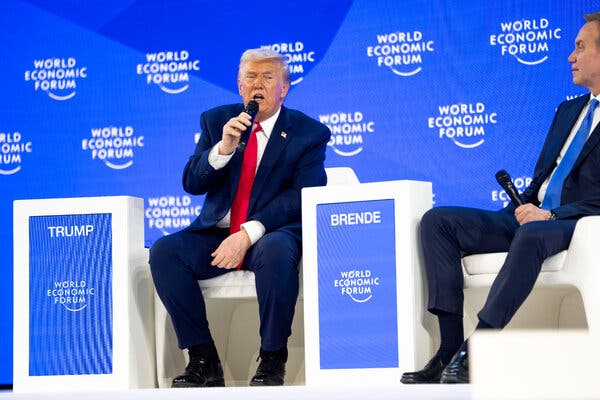
President Donald Trump has stirred significant turmoil in international trade discussions, threatening European nations with punitive measures if they do not comply with his demands regarding Greenland. Over the course of four days, these threats prompted a sharp decline in global stock markets and led European leaders to hold emergency meetings. They actively sought to contact the president while pausing a previously negotiated trade deal with the United States.
Following this escalation, Trump made a sudden pivot, announcing that he had established “the framework of a future deal” concerning Greenland and the Arctic. Though the specifics of this agreement remain unclear, Trump characterized it as a “great one” for the United States. He also declared that the tariffs he intended to impose on eight European countries starting on February 1, 2024, would no longer be necessary. This announcement resulted in a rebound in stock markets.
While Trump may have diffused an impending trade war, his actions have left a trail of uncertainty in global trade relations. The rapid sequence of events has raised questions about the reliability of the United States as a partner, causing some countries to reevaluate their positions. This situation potentially strengthens ties between nations looking to counterbalance American influence, particularly towards China.
Entering the second year of his second term, Trump has had numerous opportunities to reshape the global trading landscape. Yet, his tendency to disrupt existing agreements and threaten new tariffs continues to unsettle partners. Global businesses and foreign leaders had anticipated that 2024 would bring a decrease in tariff-related unpredictability. Instead, Trump’s latest maneuvers inject further chaos into an already volatile environment.
The implications of this trade turbulence extend beyond immediate market reactions. As nations reconsider their alliances, the potential for a more fragmented global trading system looms. Trump’s ongoing strategy appears to be more focused on maintaining a confrontational stance than achieving lasting agreements.
With the world closely observing these developments, the future of international trade remains uncertain. The president’s actions reflect an ongoing struggle to balance domestic priorities with the realities of a complex global economy. As trade negotiations continue, the impact of Trump’s leadership style on international relations will likely be felt for years to come.