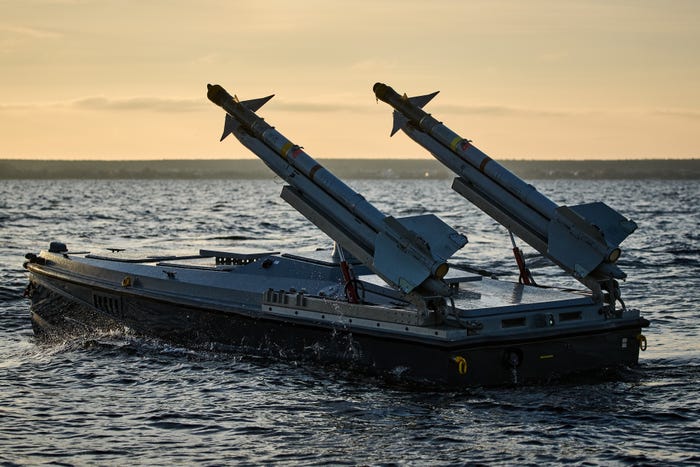
UPDATE: Russian helicopters are now avoiding Ukraine’s naval drones due to rising threats from missile-armed technology. A special forces commander revealed that these drones have become “easy targets” for Ukraine’s advanced weaponry.
The commander, known by the call sign Thirteen, leads “Group 13,” a unit within Ukraine’s defense intelligence agency, the GUR. He stated that as Ukraine’s naval drones, such as the Magura V7, evolved to include missiles, Russian helicopters have ceased operations in the area, recognizing their vulnerability.
Earlier this month, Thirteen shared these insights during a GUR showcase, emphasizing that Russian helicopters once posed a significant threat. “After arming our drones with missiles, the enemy stopped using helicopters against us altogether,” he said, highlighting a shift in aerial combat dynamics.
This change, while not precisely dated, indicates a growing effectiveness for Ukraine’s naval drones. The advancements have already led to notable victories against Russian naval assets, forcing the Black Sea Fleet to retreat to safer waters. Reports confirm that Ukraine claimed its first naval drone kill of a Russian helicopter in December 2022, marking a significant milestone in modern warfare.
As Russia repositions its air units, the implications are vast. The shift in strategy underlines the evolving battlefield where air superiority has become increasingly complex. Russian helicopters, which have previously been successful against Ukrainian ground forces, are now facing substantial risks from Ukraine’s evolving naval drone capabilities.
Ukrainian naval drones have transitioned from simple explosive-laden vessels to sophisticated units equipped with missile systems capable of targeting a variety of aerial threats. The impact on Russian operations is profound; they are now engaging in air patrols with heightened caution, as they must contend with both naval drones and enhanced Ukrainian air defenses.
As the conflict escalates, the strategic significance of these drone capabilities becomes increasingly clear. Not only have they helped mitigate Russia’s naval dominance, but they have also empowered Ukraine to reclaim some measure of control over its skies. This is particularly crucial for Ukraine, which lacks a traditional navy but is leveraging innovation to address its vulnerabilities.
Future developments to watch include potential updates from Ukrainian officials on new drone capabilities and any further shifts in Russian aerial tactics. The battlefield landscape continues to transform, with each side adapting to the other’s advancements.
This ongoing situation underlines the critical importance of remote warfare technology in modern conflicts, showcasing how innovations can dramatically alter tactical scenarios. As both nations advance their drone capabilities, the world watches closely, anticipating what comes next in this high-stakes conflict.