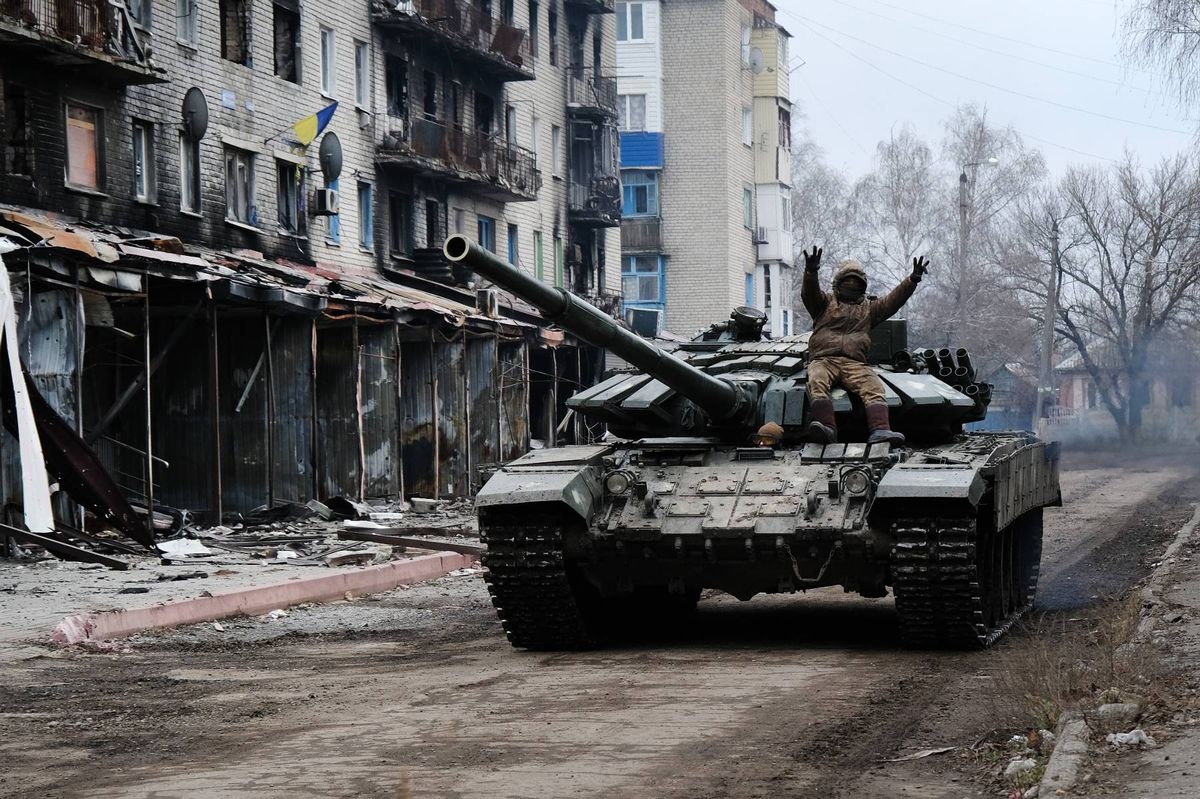
Vladimir Putin has directed Russian military forces to escalate operations in Ukraine, ordering the seizure of additional territories in the Sumy and Kharkiv regions. This aggressive move undermines a peace proposal crafted by former U.S. President Donald Trump, signaling a significant escalation in the ongoing conflict. General Valery Gerasimov, the Chief of the General Staff of the Armed Forces of the Russian Federation, announced these orders during a visit to a frontline command center, marking a pivotal moment in the war.
According to Gerasimov, the offensive is framed as an extension of a “buffer zone” aimed at securing Russian territories. The directive illustrates Putin’s refusal to meet American demands to cease hostilities. The new military strategy is perceived as a response to unverified allegations that Ukraine conducted a drone strike on Putin’s Valdai palace, a claim widely regarded as lacking evidence.
Gerasimov reported that Russian forces have made significant advancements, capturing over 700 square kilometers (approximately 270 square miles) of territory in December alone. He stated, “The troops of the joint grouping are confidently advancing deeper into the enemy’s defences.” This rapid progress has led to the completion of operations in the Kursk region, where a security buffer is being established along the border with Ukraine.
In reaction to the alleged drone strike, Trump expressed his frustration upon learning of the situation from Putin, who described the palace as one of the most fortified locations globally. However, skepticism emerged from the United States regarding the credibility of Putin’s claims. Matthew Whitaker, the U.S. NATO ambassador, suggested uncertainty about the legitimacy of the alleged attack, stating, “It is unclear whether it actually happened.” He emphasized that such actions would not align with Ukrainian interests in pursuing a peace agreement.
Ukrainian President Volodymyr Zelensky dismissed the allegations, calling them a “hoax” and asserting that no attack occurred. Reports from railway employees working near the palace indicated no signs of air defense activations, further casting doubt on the Russian narrative. Analysts interpret these allegations as a potential “false flag” operation aimed at derailing peace negotiations, allowing Putin to continue military actions.
As the conflict escalates, Russian forces have again targeted civilian areas, particularly in the Black Sea port city of Odesa. Recent strikes led to heating and electricity outages amid freezing temperatures, with tragic consequences including the deaths of a seven-month-old infant and two other children, aged eight and fourteen. Local MP Oleksiy Goncharenko described the situation in Odesa as a “disaster,” stating, “Part of the city is without electricity, heat, and water.”
Additionally, strikes in the Kyiv region have resulted in injuries to civilians as residential buildings were hit. Ukraine has responded with a series of strikes on Russian military facilities, achieving a record number of attacks on energy infrastructure. A recent strike ignited a strategic oil plant in Tuapse, located in the Krasnodar region, and damaged a gas pipeline and dock in a nearby Black Sea port, causing injuries to at least two people.
The latest developments underscore the deepening humanitarian crisis in Ukraine and the challenges facing any potential peace efforts. As both sides prepare for continued conflict, the prospect of a diplomatic resolution appears increasingly distant.