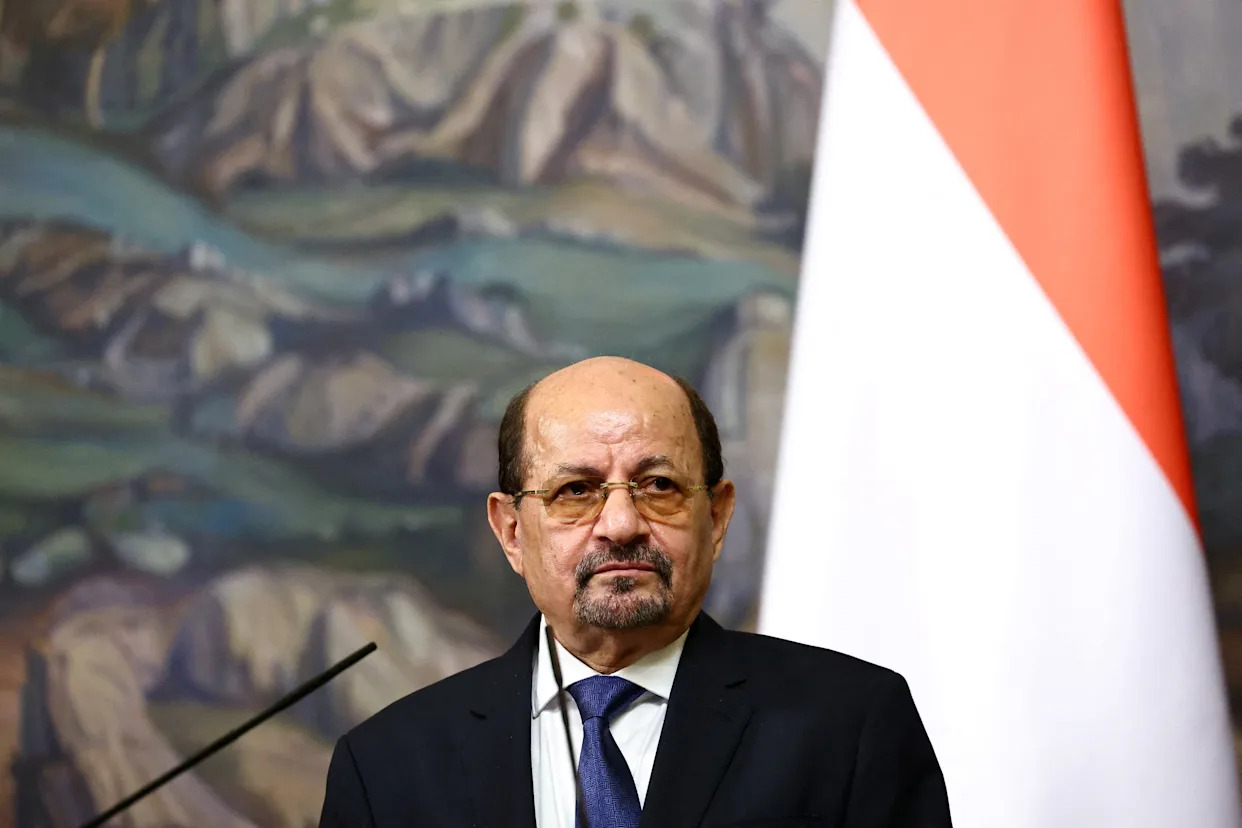
Yemen’s presidential leadership council has officially appointed Foreign Minister Shaya Mohsin al-Zindani as the new Prime Minister, succeeding Salem bin Breik, who submitted his resignation. The decision was confirmed by the state news agency Saba on Thursday, marking another significant shift in the country’s political landscape amid ongoing tensions between regional powers.
Al-Zindani’s appointment follows a tumultuous period for Yemen, particularly regarding the influence of southern separatist groups. The Southern Transitional Council (STC), which has been backed by the United Arab Emirates, expanded its control over parts of southern and eastern Yemen last December, raising security concerns for neighboring Saudi Arabia. The kingdom viewed the STC’s advances as a potential threat to its borders, prompting Saudi-backed forces to regain those areas.
The geopolitical dynamics in Yemen have been complex, with Saudi Arabia and the UAE previously cooperating in a coalition against the Iran-aligned Houthi movement, which has contributed to a severe humanitarian crisis in the region. However, recent months have seen an escalation in tensions between the two Gulf nations over various issues, including oil production and territorial disputes.
On the same day as al-Zindani’s appointment, the presidential council dismissed Faraj Salmeen Al-Bahsani, a vice president of the STC who had been receiving medical treatment in the UAE. The council cited his support for the STC’s actions and his previous statements as reasons for his removal. Al-Bahsani’s dismissal follows the earlier ousting of STC leader Aidarous al-Zubaidi, who fled to the UAE after being accused of “high treason.”
In an interview prior to his dismissal, Al-Bahsani expressed concerns over the Saudi-led coalition’s control, stating that southern forces would not agree to unify under its command. He urged Saudi Arabia to allow southern factions to meet outside the kingdom, suggesting that discussions in Riyadh would be influenced by pressure.
The political shifts are accompanied by financial support from Saudi Arabia. The kingdom pledged $90 million on Thursday to cover two months of salaries for Yemeni public servants and servicemen. This announcement came just a day after Saudi Arabia committed an additional $500 million for humanitarian projects in Yemen, highlighting its ongoing involvement in the country.
As al-Zindani prepares to form a new cabinet, the political landscape in Yemen remains uncertain. The recent changes underscore the intricate relationships and competing interests among the various factions, as well as the significant role external powers play in shaping Yemen’s future.