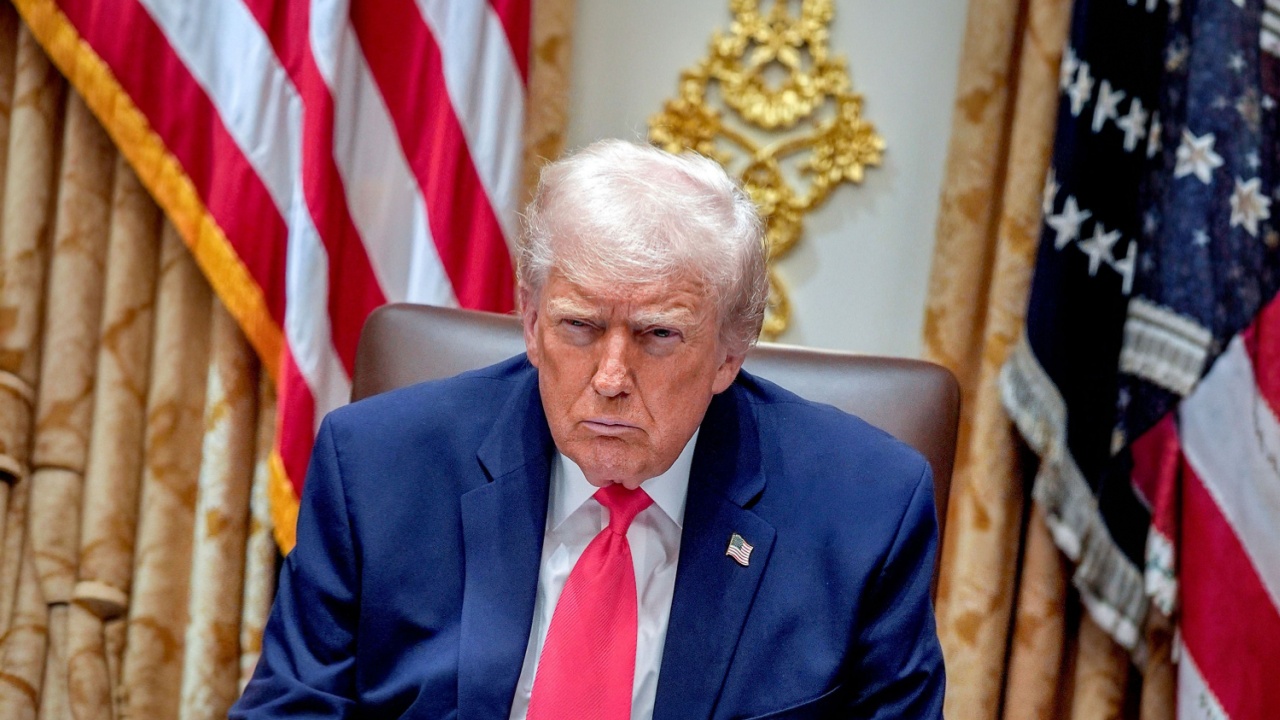
President Donald Trump has shifted the United States’ approach to Greenland, moving from a stance of intimidation to one of cooperation. Following a week of threats towards European allies—including France, Germany, and others—over their military presence in Greenland, Trump’s remarks at the World Economic Forum in Davos highlighted a more diplomatic strategy. He announced a new security framework involving NATO Secretary-General Mark Rutte and retracted previous tariff threats aimed at countries supporting military deployments in the region.
This pivot indicates a significant change in how the U.S. plans to engage with its European partners regarding Greenland. Recent protests in the territory, featuring slogans like “Greenland First” and “Greenland Is Not for Sale,” reflect a deeper challenge: in a world defined by competition for influence, winning hearts and minds is as crucial as military strength.
The Arctic is becoming a focal point for global geopolitical rivalry, particularly involving Russia and China. As climate change accelerates ice melt, new maritime routes are emerging, prompting both nations to expand their influence. Russia has enhanced its military presence in the Arctic, reactivating old bases and upgrading missile systems. Meanwhile, China, despite having no territorial claims in the Arctic, has declared itself a “near-Arctic state,” positioning itself through investments and infrastructure projects, notably in Greenland.
Greenland holds strategic importance for the United States. It is vital to the U.S. missile defense architecture and houses critical resources, including rare earth minerals necessary for advanced technologies. These materials are essential for devices ranging from smartphones to military hardware. As China dominates the global supply chain for these minerals, access to Greenland’s resources has become increasingly critical for U.S. interests.
Despite its vast landmass, Greenland faces unique security challenges. With a population of about 56,000, the territory lacks the necessary manpower and infrastructure to defend itself against external threats. Since gaining increased autonomy from Denmark in 2009, Greenland has the right to pursue independence, but this would come with significant risks, including loss of NATO protection.
Historically, the United States has shown interest in acquiring Greenland, dating back to the 19th century. Trump’s administration is simply vocalizing a long-standing strategic understanding. The framework emerging from Davos aims to modernize the 1951 U.S.-Danish defense agreement, allowing for greater military cooperation while respecting Danish sovereignty. This includes potential deployment of the “Golden Dome” missile defense system in Greenland, emphasizing the need for a united front against external threats.
Trump’s earlier aggressive rhetoric, suggesting U.S. intentions to acquire Greenland “one way or the other,” drew backlash from both Copenhagen and Nuuk. The reaction underscored the necessity for a more engaging and respectful approach. Previous conflicts have shown that military interventions are not the path to winning support.
A more nuanced strategy should involve enhancing diplomatic relations, focusing on cultural exchanges and educational programs, and increasing economic investment in Greenland. Such initiatives could foster goodwill and strengthen ties, ultimately benefiting both Greenlanders and U.S. interests.
The stakes for the U.S. are clear, particularly as it navigates relationships with European allies. Tensions can lead to confusion and anxiety, undermining security objectives. Recognizing Greenland as pivotal to U.S. and NATO security is essential, but the means to that end must prioritize charm and collaboration over coercion.
If the U.S. is to solidify its interests in Greenland, a diplomatic approach informed by respect and mutual benefit is critical. The framework revealed in Davos may mark the beginning of a more constructive relationship, but success will depend on the ability to engage positively rather than through threats.