The U.S. military successfully captured Venezuelan President Nicolas Maduro on January 3, 2024, utilizing significant space support, according to U.S. Space Command (SPACECOM). This operation, named Operation Absolute Resolve, showcased how space capabilities are integral to modern military engagements.
A spokesperson for SPACECOM emphasized that spacepower is vital for military operations, providing essential support for communication, positioning, and navigation. This layered tactical advantage was crucial for the Joint Force’s operational success during the mission. “Spacepower not only underpins the military’s ability to shoot, move, and communicate as designed, but delivers layered effects as overwatch,” the spokesperson stated. Overwatch, a military tactic where specific units protect others during an operation, was vital in ensuring the Joint Force’s freedom of maneuver.
While operational details remain undisclosed due to security protocols, the SPACECOM representative highlighted the importance of space-based capabilities. These include positioning, navigation, and timing (PNT) systems, as well as satellite communications (SATCOM). “To protect the Joint Force from space-enabled attacks and ensure their freedom of movement, U.S. Space Command possesses the means and willingness to employ combat-credible capabilities,” the spokesperson added.
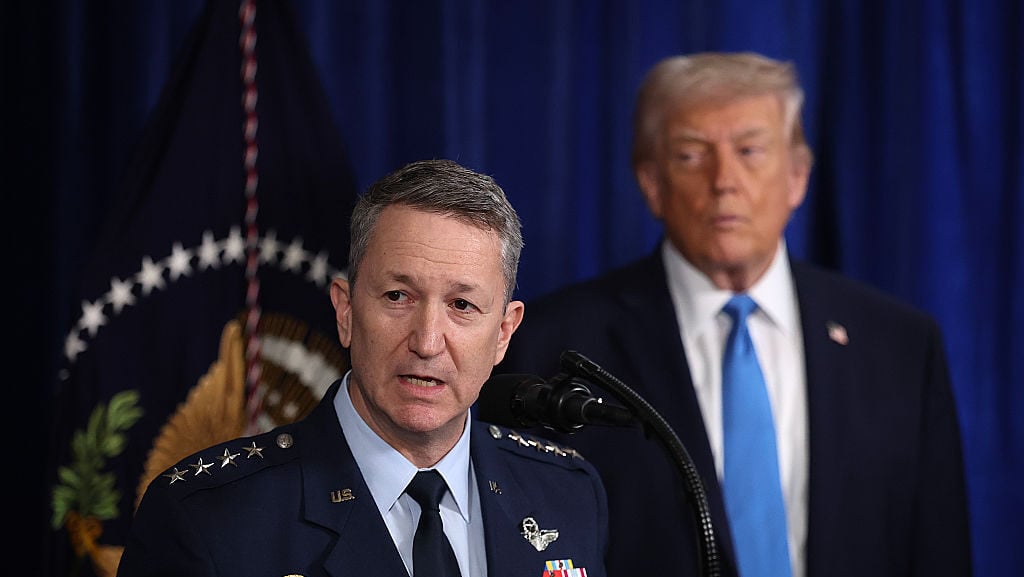
During a press conference on January 3, Gen. Dan Caine, Chairman of the Joint Chiefs of Staff, commended SPACECOM’s role in the mission. He described the initial phases, where extraction forces flew into Venezuela at low altitude, highlighting the coordinated efforts among various military branches. “As they approached Venezuelan shores, the United States began layering different effects provided by SPACECOM, CYBERCOM, and other interagency members to create a pathway overhead,” Caine remarked.
The integration of space capabilities into military operations has reportedly reached new heights. John Shaw, former SPACECOM deputy, noted the enhanced coordination between SPACECOM and other military commands. “The integration of space into joint warfighting has reached a new apogee,” he stated, referencing prior operations like Midnight Hammer. Shaw suggested a direct correlation between these successful operations and the effective use of space capabilities.
Experts like Todd Harrison, a senior fellow at the American Enterprise Institute, stressed that SPACECOM’s support is often underestimated but critical for military planning. “SPACECOM would have been directly involved in setting up secure SATCOM links, monitoring GPS jamming attempts, and tracking missile launches that could threaten U.S. aircraft or ships in the region,” he explained.
Additionally, two key Intelligence Community agencies, the National Reconnaissance Office (NRO) and the National Geospatial-Intelligence Agency (NGA), played crucial roles in the success of Operation Absolute Resolve. Harrison noted that these agencies likely conducted extensive surveillance and mapping of the compound where Maduro was captured, enhancing the operational planning process.
The role of CYBERCOM also came into focus during the press conference. Gen. Caine indicated that non-kinetic effects were utilized to suppress Venezuelan defenses, while President Donald Trump mentioned that “the lights of Caracas were largely turned off due to a certain expertise that we have.” While specific details were not provided, some experts theorized that CYBERCOM deployed tactics to disrupt the power grid, potentially cutting internet access during the operation.
Emily Harding, vice president at the Center for Strategic and International Studies (CSIS), remarked that modern warfare often incorporates such tactics. “This is the way that modern wars are fought, especially if you’re in the United States,” she stated.
Anthony Vinci, a senior fellow at the Center for a New American Security, agreed that offensive cyber tactics might have been used to disable Caracas’s power grid. Nonetheless, he acknowledged the possibility that ground personnel could have also contributed to the power disruption. Vinci emphasized that tactics targeting infrastructure are likely to remain a strategy for future military conflicts.
Caine’s remarks suggested that electronic warfare tactics were indeed employed to dismantle Venezuela’s air defense systems. Experts from CSIS noted that these combined operations not only suppressed air defenses but also created communication disruptions, which significantly impaired Venezuela’s capacity to respond effectively.
By employing such advanced tactics, the U.S. military is likely to set a precedent for future operations, with potential implications for its main adversaries, including China, Russia, North Korea, and Iran. As military operations evolve, lessons learned from the U.S. engagement in Venezuela will undoubtedly influence future strategies in cyber warfare and military coordination.