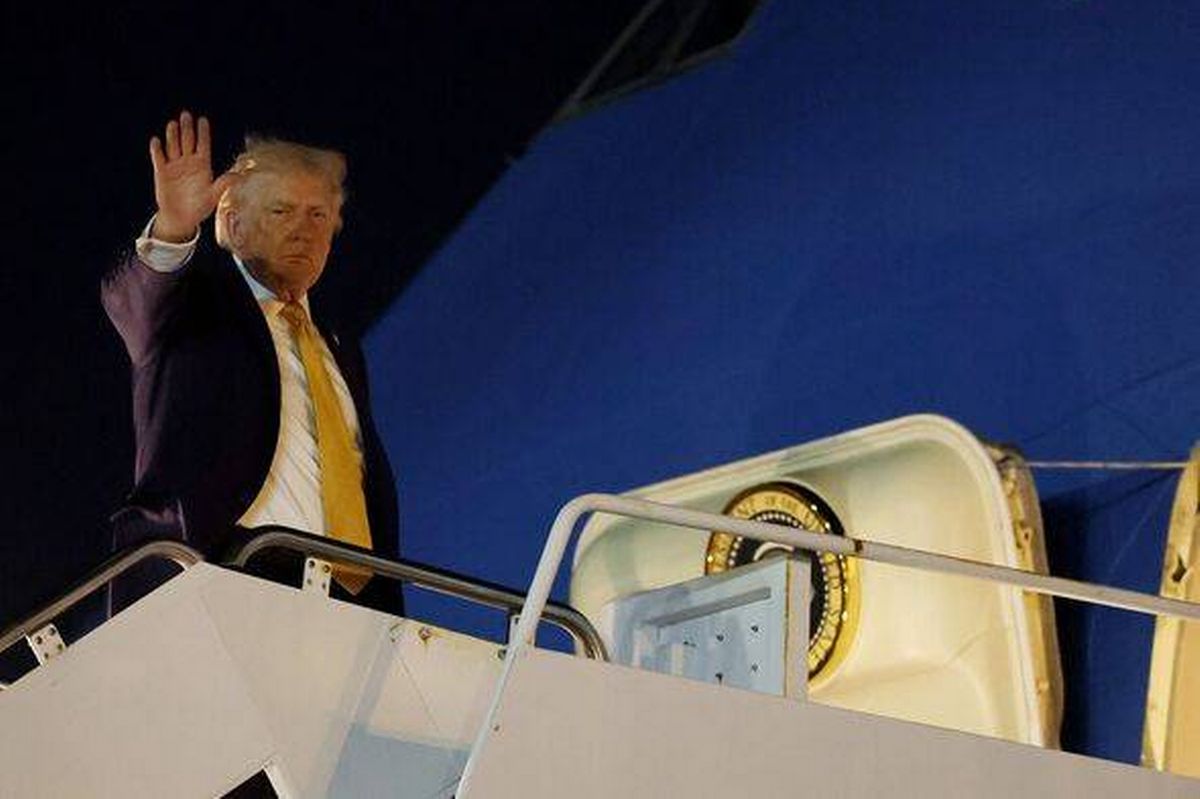
The recent decision by U.S. President Donald Trump to authorize military strikes on Venezuela has elicited swift condemnation from major geopolitical adversaries, including China, Russia, and Iran. The strikes, which aimed to capture former Venezuelan President Nicolás Maduro, have been characterized as a violation of Venezuela’s sovereignty and international law by these nations. Cuba, a close ally of Venezuela, also denounced the U.S. actions, with Trump suggesting that these developments could destabilize the Cuban government.
Countries closely affiliated with the Maduro regime are now assessing the potential ramifications of this unilateral U.S. action. While the financial impact may vary, the broader message conveyed by Trump may have significant geopolitical consequences. According to Ryan C. Berg, director of the Americas Program at the Center for Strategic and International Studies, this marks the beginning of a new phase in global power dynamics. He noted, “Some of the rules, some of the unthinkables, some of the things that we wouldn’t have previously imagined being part of the operation are now on the table as options.”
China’s Reaction and Implications for Oil Trade
China, which has been a primary buyer of Venezuelan oil, expressed deep shock at the U.S. actions. The Chinese Foreign Ministry stated that the U.S. had “clearly violated international law.” Wang Yi, the Chinese Foreign Minister, emphasized that the sovereignty and security of all countries should be fully respected under international law. Analysts suggest that although China may refrain from direct military intervention, it will likely take a leading role in rallying international opinion against the U.S. at the United Nations.
China’s economic ties with Venezuela are significant, with approximately 80% of Venezuela’s crude oil exports going to China. However, Venezuelan oil production has dramatically declined, with exports averaging less than one million barrels per day in 2025, compared to around three million barrels two decades ago. If the U.S. successfully restores Venezuelan oil production, there could be substantial financial implications for China, which has relied on these supplies to service its debts.
Berg stated, “There’s a huge risk here for China that some of its energy security is redirected away from China and toward the United States or other markets.” He noted that the outcome of increased production in Venezuela could significantly alter China’s energy strategy, especially as it grapples with other pressures, such as sanctions on Iran.
Responses from Russia and Iran
In Russia, the reaction has been similarly critical. While President Vladimir Putin has not publicly commented, former President Dmitry Medvedev labeled the U.S. actions as “illegal” and “destabilizing.” He acknowledged the consistency in Trump’s approach to defending U.S. national interests, particularly given Venezuela’s vast oil reserves. Berg pointed out that Trump’s actions resonate with a philosophy held by Russia, which has historically sought exclusive spheres of influence.
Iran is facing its own internal challenges with ongoing protests against the government. Trump has stated that the U.S. is prepared to intervene if the Iranian regime continues to suppress dissent violently. The Iranian Supreme Leader, Ayatollah Ali Khamenei, has vowed not to yield to external pressures, blaming the U.S. and Israel for the unrest. Despite the Iranian government’s defiance, there are indications that Trump’s actions might inspire hope among some Iranians for similar pressure against their own leadership.
The U.S. operation against Venezuela has sparked discussions about potential consequences for neighboring Cuba. Following the strikes, Trump remarked that “Cuba looks like it is ready to fall,” suggesting that the Cuban government, heavily reliant on Venezuelan oil, may be vulnerable. Berg noted that if Venezuelan oil shipments to Cuba cease, the island nation could face severe economic challenges.
In conclusion, Trump’s military actions against Venezuela have sent shockwaves throughout the international community, particularly among nations with vested interests in the region. The evolving geopolitical landscape raises questions about the future of U.S. relations with these countries and the potential for new power dynamics in global affairs.