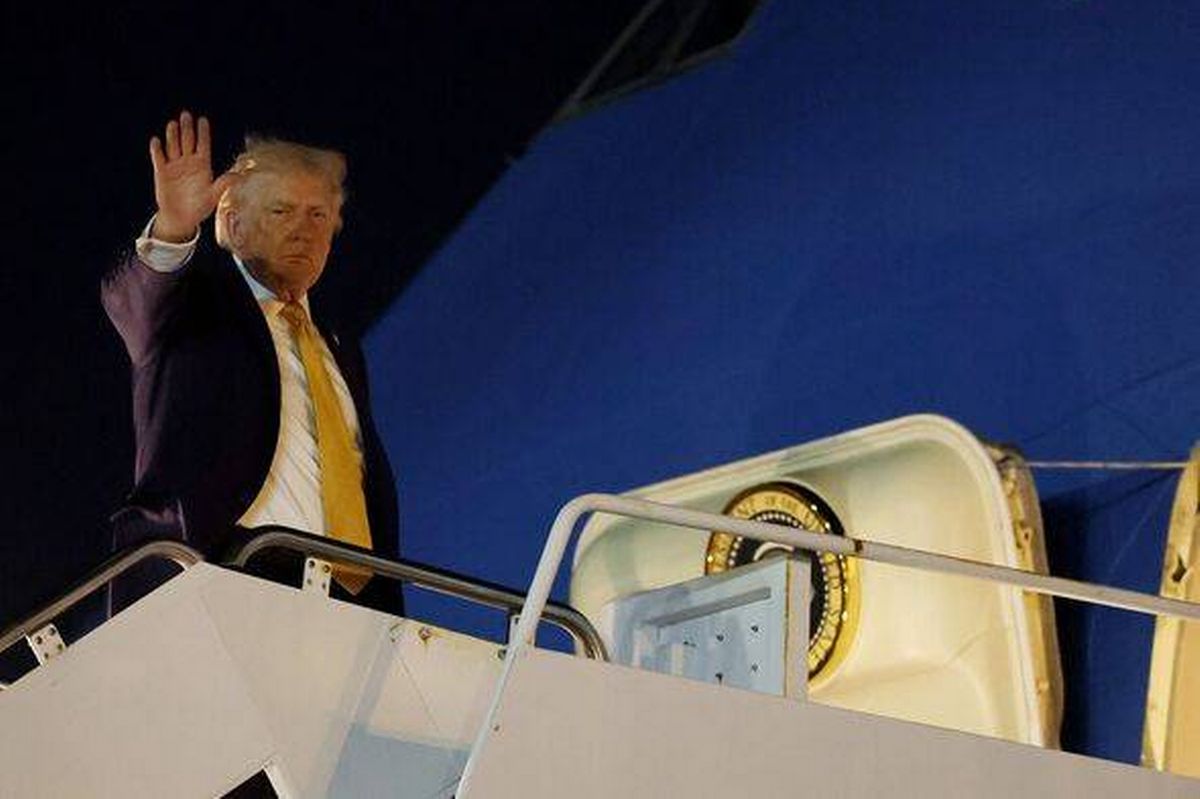
President Donald Trump has reignited discussions about Greenland following the capture of Venezuelan leader Nicolás Maduro, raising concerns in Denmark over potential U.S. intentions regarding the Arctic territory. As Trump departed from Palm Beach, Florida, on March 2, 2024, aboard Air Force One, he emphasized the importance of the region to U.S. security interests and hinted at future discussions about Greenland.
During the flight back to Washington, D.C., Trump remarked on the geopolitical significance of the area, stating, “This isn’t a country that’s on the other side of the world… We’re in the business of having countries around us that are viable and successful.” He indicated that discussions regarding the reopening of an American embassy in Caracas might take place, suggesting a shift in U.S. diplomatic strategy in Latin America.
Trump’s comments came just hours after Maduro’s arrest on drug trafficking charges, leading to heightened speculation that the U.S. may be considering an assertive stance on Greenland. In a provocative social media post, Katie Miller, spouse of Trump’s Deputy Chief of Staff, shared an image of Greenland adorned with the U.S. flag, captioned simply as “SOON.” This sparked immediate backlash from both Greenlanders and Danes, who value their independence and the territory’s rich resources.
Denmark’s U.S. ambassador, Jesper Moller Sorensen, responded to Miller’s comments by affirming the robust defense partnership between Denmark and the United States. He reiterated the importance of mutual respect in international relations, stating, “We are close allies and should continue to work together as such.” Sorensen highlighted Denmark’s commitment to Arctic security, noting a planned investment of $13.7 billion in 2025 for operations in the Arctic and North Atlantic.
Danish Leadership Responds to Rising Tensions
Danish Prime Minister Mette Frederiksen echoed Sorensen’s sentiments, condemning Trump’s provocative remarks during her annual New Year’s address. Frederiksen characterized Trump’s threats as a form of intimidation and emphasized Denmark’s commitment to its sovereignty. “We will stand firm on what is right and wrong,” she stated, addressing the implications of foreign aggression on Danish territory.
In light of the escalating rhetoric, Frederiksen announced plans to enhance Denmark’s military capabilities and bolster Arctic security measures. “We are in full swing, strengthening Danish defense and preparedness,” she declared, highlighting the urgency of national security in a rapidly changing geopolitical landscape. Frederiksen noted, “Never before have we increased our military strength so significantly. So quickly.”
The prime minister’s comments reflect a broader concern within Denmark regarding the potential for U.S. military actions that could impact the Arctic region. As tensions rise, Frederiksen reiterated the importance of collective defense, stating that allowing one nation to dominate could pave the way for further aggression, particularly from Russia.
International Reactions and Human Impact
The fallout from Trump’s remarks extends beyond diplomatic tensions. The recent U.S. military operation in Venezuela, which reportedly resulted in the deaths of approximately 40 civilians and military personnel, raises serious questions about U.S. foreign policy and its implications for regional stability. The operation, which was conducted in Caracas, has drawn scrutiny regarding its humanitarian impact, with no U.S. casualties reported but an undisclosed number of injuries among American troops.
The arrest of Maduro, aged 63, and his wife, Cilivi Flores, aged 69, has intensified discussions about U.S. intervention in Latin America. Trump’s administration has previously accused Venezuela of being a conduit for drugs and gang members entering the United States. The implications of this operation, coupled with Trump’s comments on Greenland, suggest a potential shift in U.S. foreign policy that could have lasting ramifications both in the Arctic and South America.
With Denmark strengthening its military presence and reaffirming its commitment to NATO, the international community watches closely as these developments unfold. The focus now shifts to how the U.S. will navigate its relationships in the Arctic and beyond, amidst growing concerns over territorial integrity and international security.