In December, former President Donald Trump ordered the Department of Justice to expedite the rescheduling of cannabis, a directive that promised to ease research restrictions and benefit businesses and consumers. However, this initiative appears increasingly to be more of a public relations maneuver than a tangible policy change, as opposition within the administration and the conservative sector mounts. Advocates for rescheduling now estimate that the process may take years, or even decades, to complete.
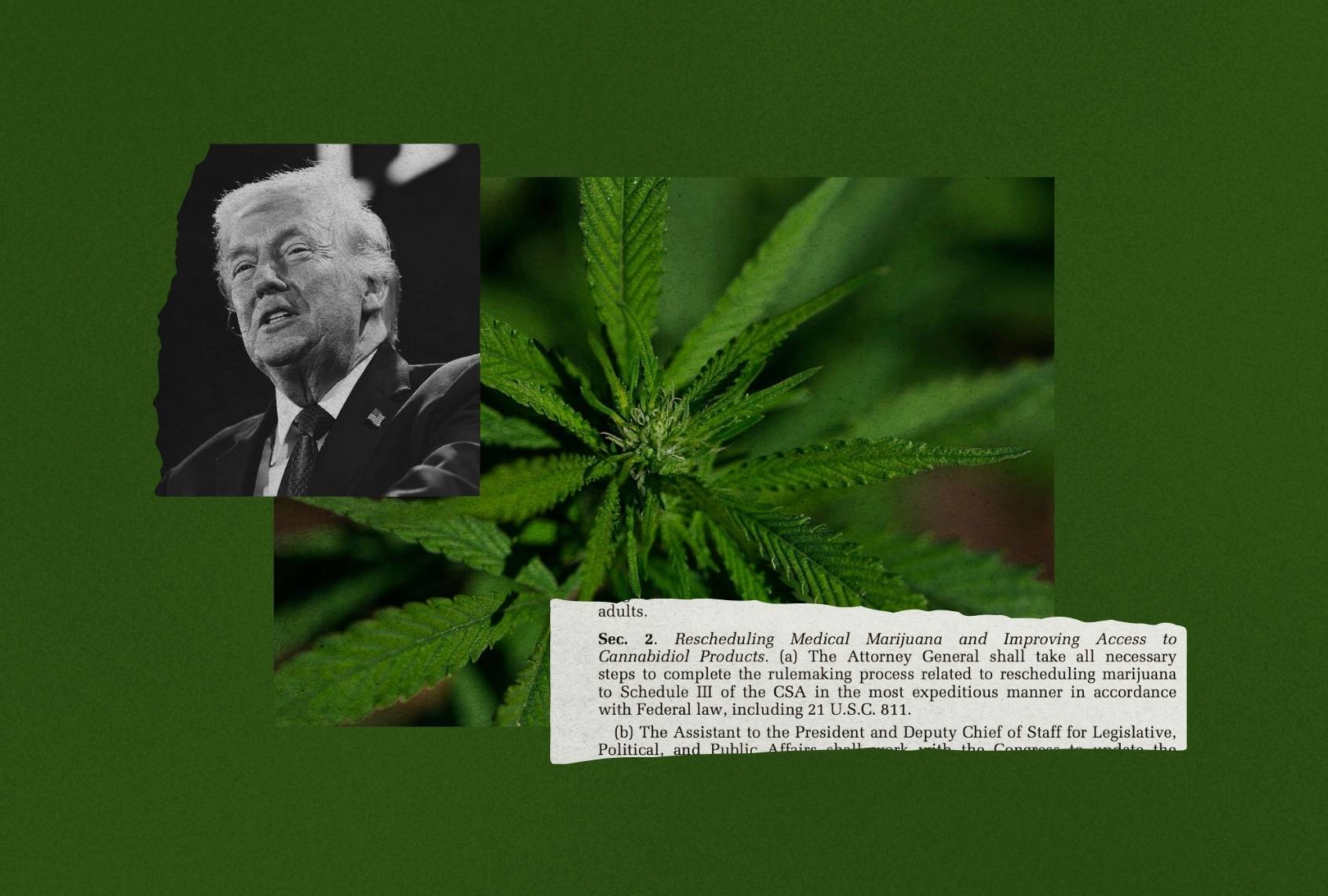
Under the Controlled Substances Act, established by former President Richard Nixon, drugs are classified into five schedules based on their potential for harm and medical use. Currently, cannabis and its extracts fall under Schedule I, the most restrictive category, which complicates research and hinders bank access for cannabis companies. On December 18, 2022, Trump instructed, “The Attorney General shall take all necessary steps to complete the rulemaking process related to rescheduling marijuana to Schedule III of the CSA in the most expeditious manner.” This move could reduce regulatory barriers for a substance used by nearly 20 million Americans in states that have legalized its use.
Despite the initial optimism, the language of “most expeditious manner” has not resulted in any immediate changes. According to Paul Armentano, deputy director of the National Organization for the Reform of Marijuana Laws (NORML), the rescheduling process is likely to be lengthy. “If parties want to drag this process out, the mechanisms exist within the administrative process that allow them to do so nearly indefinitely,” he stated.
Armentano also pointed out that past rescheduling efforts have taken years to resolve. The longest petition, filed by NORML in 1972, was not concluded until 1994. This history suggests that current efforts may follow a similar trajectory, with no quick resolution in sight.
Since cannabis was criminalized, advocates have argued for its legalization, highlighting its relative safety compared to alcohol and tobacco, which are not classified under any schedule. Although 24 states have relaxed cannabis regulations for recreational use, federal laws have remained stringent. The current push for rescheduling traces back to October 2022, when former President Joe Biden directed the Department of Health and Human Services to reassess cannabis’s legal status. The government is currently engaged in the formal rulemaking process, overseen by the Drug Enforcement Administration (DEA) and HHS.
The protracted nature of this rulemaking process can be attributed to its design, which allows for significant delays if stakeholders within or outside the government wish to prolong the timeline. Armentano emphasized that this is not an oversight but a feature of how the process was structured.
Within the Trump administration, opposition exists from figures like Pam Bondi, the Attorney General and a longstanding opponent of cannabis reform. Bondi has historically argued that cannabis functions as a gateway drug, despite a lack of substantial evidence supporting this claim. Critics cite research barriers created by cannabis’s Schedule I status as a reason for the absence of conclusive findings.
Republican members of Congress have also expressed resistance to cannabis rescheduling. Senators James Lankford from Oklahoma and Ted Budd from North Carolina have attempted to introduce amendments to prevent the executive branch from rescheduling cannabis, though these efforts have not succeeded.
The legal landscape surrounding cannabis remains complex, with over 200,000 arrests for cannabis-related offenses occurring nationwide in 2024, predominantly for possession. Even in states where recreational cannabis is legal, such as Illinois, cannabis-related arrests constitute a significant portion of total drug arrests.
Industry stakeholders have voiced concerns that the focus on rescheduling does not adequately address the need for a regulatory framework that reflects actual cannabis use and risks. Corey Coleman, co-founder of Sky High Brands, suggests that descheduling, rather than rescheduling, would be a more effective solution. He noted the arbitrary distinctions between cannabis and hemp, which are essentially the same plant but regulated differently based on THC content.
Coleman warned that moving cannabis to Schedule III could inadvertently favor large pharmaceutical companies, risking disadvantage for smaller operators who have been instrumental in developing the industry. “I think it’s a step in the right direction. You know, the biggest fear with Schedule III then is, you know, it pushes things more towards Big Pharma or the major corporations, making it harder for the smaller business operators that actually started this industry,” he explained.
In response to inquiries about the rescheduling efforts, a Justice Department official stated, “DOJ is working to identify the most expeditious means of executing the EO.” While the intention to streamline cannabis regulations exists, the reality of the process indicates a formidable journey ahead.