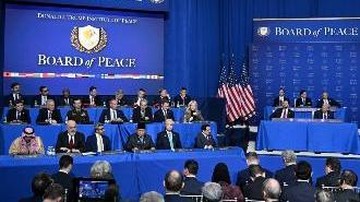
Recent polling indicates that a significant portion of Donald Trump’s supporters may lean toward isolationist views, diverging from traditional Republican foreign policy positions. This inclination raises questions about the evolving nature of voter sentiment as the 2024 Presidential Election approaches.
According to a report by the Pew Research Center, a majority of Americans—including many Republicans—continue to endorse the foreign policy principles championed by former President Ronald Reagan. Reagan’s approach, characterized by a commitment to international alliances and proactive engagement, contrasts sharply with the more insular tendencies observed among Trump’s base.
The Pew study highlights that about 55% of Republicans express a preference for prioritizing domestic issues over international concerns. This marks a notable shift from previous decades, where strong support for global involvement was a hallmark of the party’s identity. In contrast, Trump’s rhetoric often emphasizes a transactional approach to foreign relations, which resonates with his supporters.
As the political landscape shifts, Trump’s isolationist sentiments appear to have gained traction, particularly among voters disillusioned with foreign military engagements and globalist policies. This trend poses a challenge for the Republican Party as it navigates the complexities of foreign policy while seeking to unify its base ahead of the upcoming election.
The implications of this shift are significant. Should Trump’s isolationist stance continue to dominate, it may reshape the party’s platform and influence candidate selection. Moreover, it raises questions about how the Republican Party will reconcile these views with the more traditional elements that have historically defined its approach to foreign affairs.
In a landscape where public opinion can change rapidly, understanding the motivations behind these isolationist tendencies among Trump’s voters is crucial. As the election date approaches, it will be vital to monitor how these dynamics evolve and whether they will impact the broader political discourse within the Republican Party.
The findings from Pew Research serve as a reminder that party alignment on foreign policy is not static. Voter attitudes reflect a complex interplay of domestic priorities and global responsibilities, which will likely influence the strategies employed by candidates across the political spectrum. As these isolationist sentiments gain visibility, the challenge will be to foster a cohesive narrative that resonates with both traditional and newer segments of the Republican electorate.