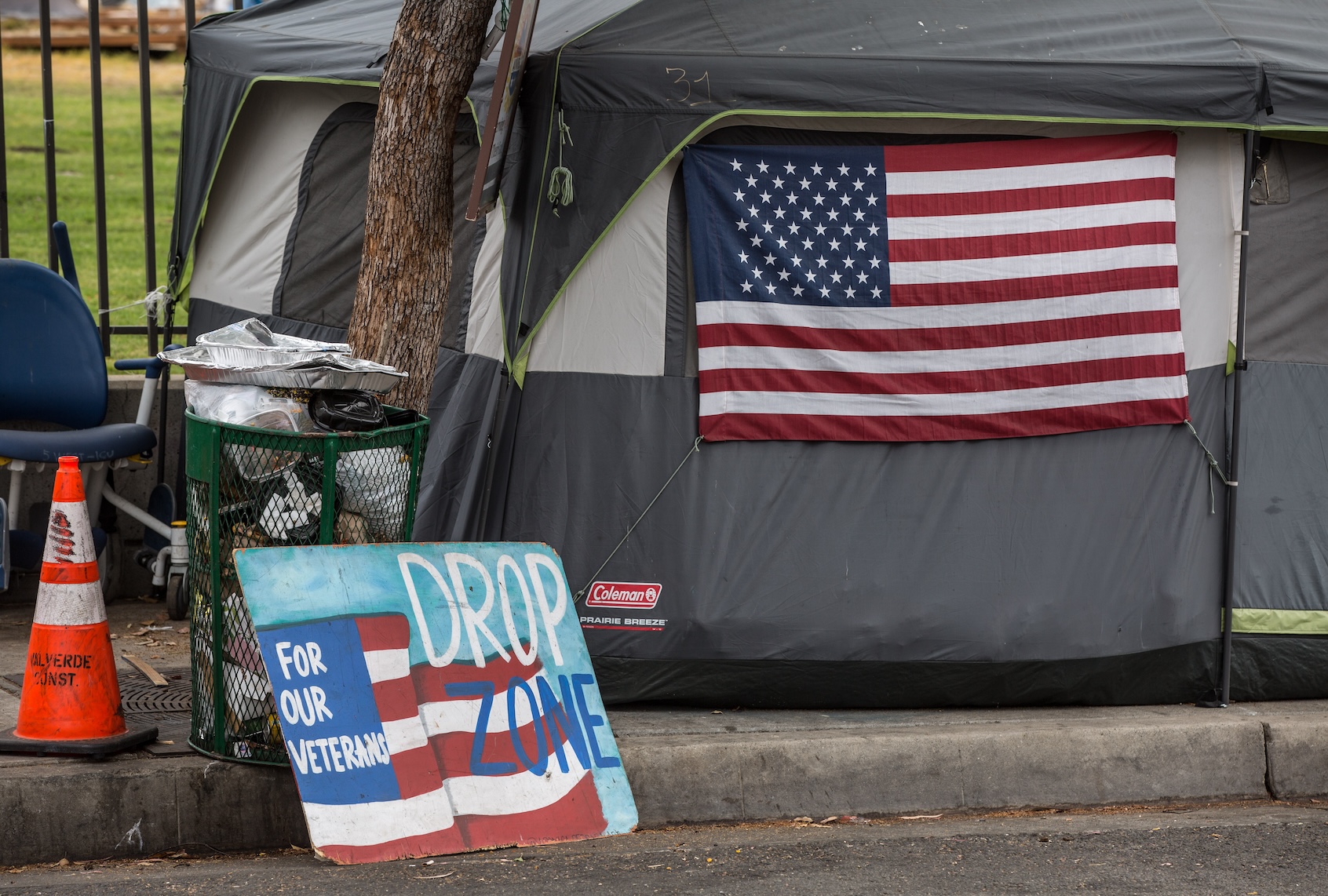
A new pilot program initiated by the U.S. Department of Justice and the Department of Veterans Affairs (VA) aims to assist homeless veterans by establishing legal guardianships for those unable to care for themselves. Announced on March 13, 2025, this initiative has raised significant concerns among veterans’ advocates across the nation.
The program, authorized by the Trump administration, allows the DOJ to appoint VA attorneys as special assistant U.S. attorneys. This will enable them to serve as legal guardians and oversee conservatorships for approximately 700 homeless veterans. The initiative grants these attorneys the authority to commit veterans to involuntary hospitals for mental or physical health reasons. VA Secretary Doug Collins expressed that this new partnership reflects a commitment to ensuring veterans receive timely and appropriate care, even in complex cases.
Pam Bondi, the Attorney General, emphasized the initiative’s intention to provide veterans with “the support and dignity they deserve.” She stated that the program would offer legal representation and essential assistance in complex medical decisions.
The announcement follows a directive from President Donald Trump in 2025, which sought to increase hospitalizations, even involuntarily, as a method to reduce homelessness and perceived disorderly behavior among veterans. The VA, however, has denied any direct connection to this executive order, focusing instead on ensuring veterans receive “appropriate” care, as reported by the Wall Street Journal.
The issue of homelessness among veterans remains critical, with nearly 33,000 homeless veterans reported in 2024, according to the National Coalition for Homeless Veterans. Approximately 5.3% of the nation’s homeless population comprises male and female veterans.
Despite the program’s intentions, significant criticism has emerged from veterans’ rights advocates. Amy Fairweather, policy director at the veterans’ support organization Swords to Plowshares, described the initiative as “counterproductive.” She warned that the perception of the VA could deteriorate, leading homeless veterans to avoid seeking help.
“They’ll run away. They value their liberty, just as anyone else does,” Fairweather stated. She believes that while legal guardianships can be necessary in severe cases, they should come with stringent oversight. Fairweather noted that the homeless veteran population has been declining, attributing this success to the existing system, which includes housing, case management, and mental health care.
“Let’s strengthen it,” she urged, pointing out that effective solutions are already in place.
Skepticism about the program has also arisen within Congress. Senator Richard Blumenthal, the ranking member of the Senate Veterans Affairs Committee, stated that the policy change raises many unanswered questions and insisted that legal guardianship should be considered a last resort for veterans.
“Congress and veterans deserve immediate answers before the VA and DOJ take any further action,” Blumenthal said in a recent statement.
Paul Sullivan, national vice chair of Veterans for Common Sense, echoed similar sentiments, emphasizing that trust between veterans and the VA is vital. “When a homeless veteran sees a VA employee offering help, they should have a sense of trust that VA assistance will focus on known and effective solutions,” Sullivan remarked. He highlighted the need for quality health care, benefits, and a return to the successful Housing First program.
The Housing First initiative, expanded under President Barack Obama, focuses on securing housing for veterans as a foundational step in a comprehensive care plan. This approach has successfully housed over 170,000 veterans since its inception in 2012. However, funding for the program was cut in July 2025 at President Trump’s direction, who criticized it as “a terrible model.”
Sullivan cautioned that altering VA policy to remove decision-making from veterans could lead to negative consequences. “If the VA shifts towards a one-size-fits-all immediate institutionalization, then veterans may avoid VA employees,” he warned.
As the new program unfolds, the balance between providing care and preserving the autonomy of homeless veterans remains a contentious issue. Advocates continue to call for solutions that foster trust and prioritize the dignity and liberty of those who have served their country.