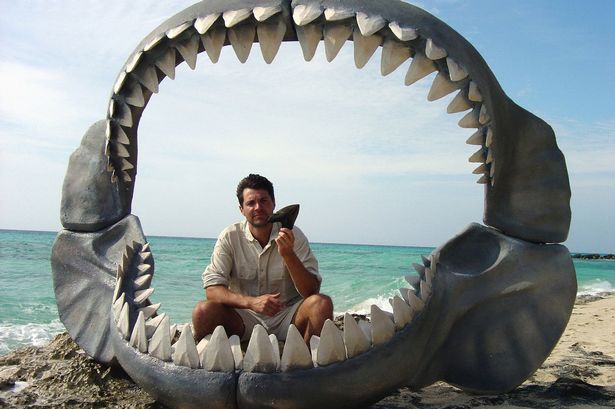
A peculiar sound, known as the “bloop,” had scientists speculating about unknown marine life off the coast of Florida. Initially attributed to a giant creature like the long-extinct Megalodon or an undiscovered underwater species, further research revealed a more mundane origin.
For years, the sound captivated both scientists and the public, leading to wild theories about lurking leviathans in the ocean’s depths. According to Discovery UK, some researchers believed the bloop resembled an amplified call from a whale, yet its volume surpassed any known marine animal. This discrepancy fueled excitement and speculation, even connecting the phenomenon to the mythical creature Cthulhu, created by author H. P. Lovecraft.
While the scientific community pondered these possibilities, geographers offered alternative explanations. They suggested that underwater volcanic activity and tectonic plate movements could produce similar sounds. Historical data indicated that such geological events often generate deep, unsettling noises.
In 2005, the National Oceanic and Atmospheric Administration (NOAA) made significant progress in understanding the bloop. The agency deployed hydrophones to monitor seafloor volcanoes and earthquakes, eventually tracing the sound back to an icequake. Icequakes occur when icebergs break off from glaciers, and NOAA confirmed that the bloop originated from this natural phenomenon in Antarctica.
The NOAA stated: “As the years passed, PMEL researchers continued to deploy hydrophones ever closer to Antarctica in an ongoing effort to study the sounds of seafloor volcanoes and earthquakes. It was there, on Earth’s lonely southernmost land mass, that they finally discovered the source of those thunderous rumbles from the deep in 2005.” The agency noted that with global warming, the frequency of icequakes has increased, resulting in more ice breaking away and melting into the ocean.
The revelation has sparked mixed reactions online. One Reddit user voiced disappointment at the explanation, expressing a desire for scientists to discover a significant, previously unknown life form. “I know there’s a ton of species down there we haven’t discovered, but they’re probably all going to be tiny or not much bigger than a small dog. I want science to discover something HUGE,” they commented.
Another user questioned the timeline of NOAA’s findings, asking why it took so long to attribute the sound to icebergs. “Wasn’t there a bunch of experts saying that it was almost certainly organic in nature? Is there any explanation as to why this instance of iceberg cracking was so loud?”
Despite the scientific community’s efforts and the eventual identification of the bloop’s source, the allure of the unknown continues to fascinate the public. The ocean remains one of the least explored areas on Earth, and while the bloop was not the discovery of a legendary creature, it serves as a reminder of the mysteries still hidden beneath the waves.