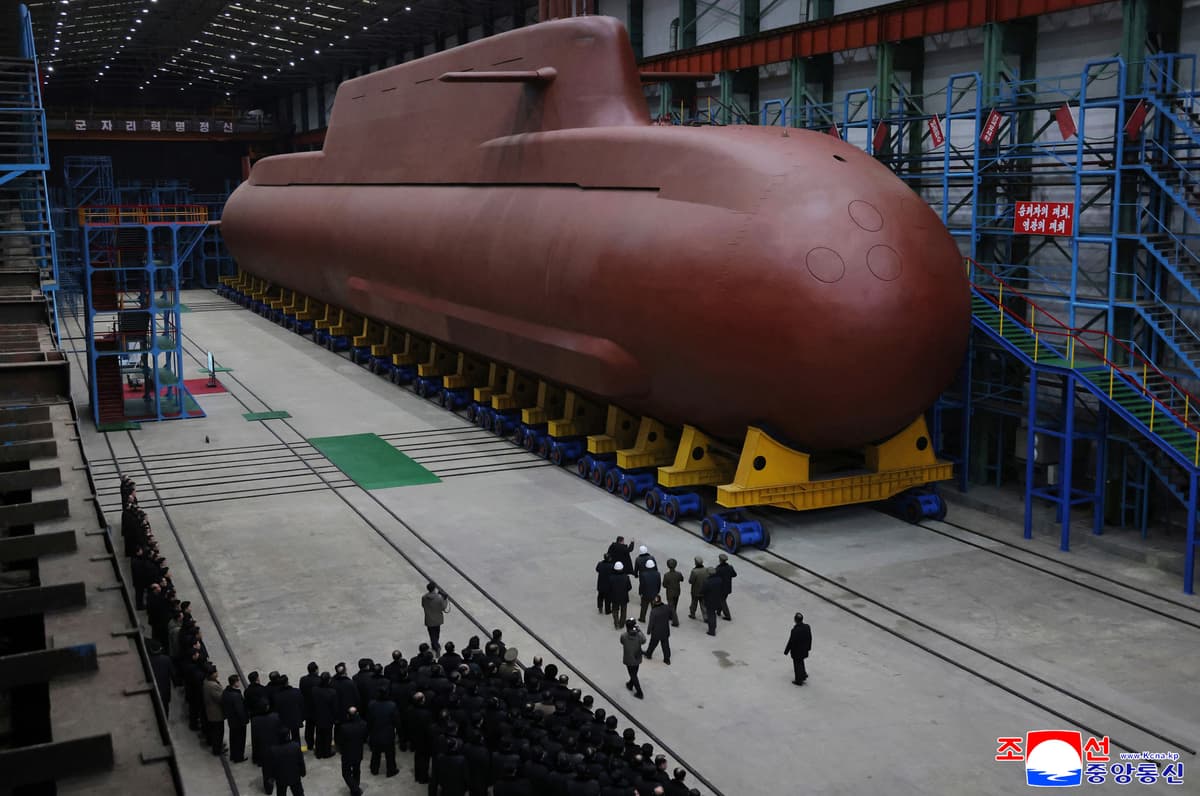
Tensions on the Korean Peninsula are escalating as both North and South Korea advance their nuclear submarine programs. North Korea is nearing the completion of its first nuclear-powered submarine, a move that could significantly alter the regional balance of power. Meanwhile, South Korea has announced plans to construct its own nuclear submarine at a shipyard in Philadelphia, marking a significant milestone in its defense capabilities.
North Korea’s announcement comes as its leader, Kim Jong-un, emphasizes the need for a robust naval force to protect the nation. The new vessel is expected to enhance North Korea’s strategic deterrence capabilities, allowing for more versatile and stealthy operations in the region. According to the North Korean state media, the submarine is designed to carry ballistic missiles, which would extend the range of North Korea’s nuclear strike capabilities.
In response, the South Korean government, led by President Yoon Suk-yeol, is committed to bolstering its naval power. The decision to build a nuclear submarine in the United States highlights South Korea’s defense partnership with the U.S. Navy. This program aims to enhance South Korea’s ability to counter threats from the North and ensure regional stability. The shipyard in Philadelphia is expected to commence construction by April 2024, with the goal of delivering the submarine within several years.
The developments reflect a broader arms race on the Korean Peninsula. Both countries are investing heavily in military modernization, driven by perceived threats from each other. The proliferation of nuclear submarines raises concerns among neighboring countries and may prompt a reevaluation of military strategies in the region.
International experts warn that the arms buildup could lead to increased tensions and miscalculations. The presence of nuclear-powered submarines significantly alters the strategic landscape, as these vessels can operate undetected for extended periods and launch strikes from concealed positions.
As both nations continue their military advancements, the potential for conflict remains high. Diplomatic efforts to reduce tensions have been complicated by ongoing military exercises and defense posturing. The international community is closely monitoring these developments, with calls for dialogue to prevent an escalation that could destabilize the region further.
The situation underscores the fragile state of peace on the Korean Peninsula. As North Korea solidifies its nuclear capabilities and South Korea enhances its defense systems, the balance of power may be shifting, raising questions about the future of security in East Asia.