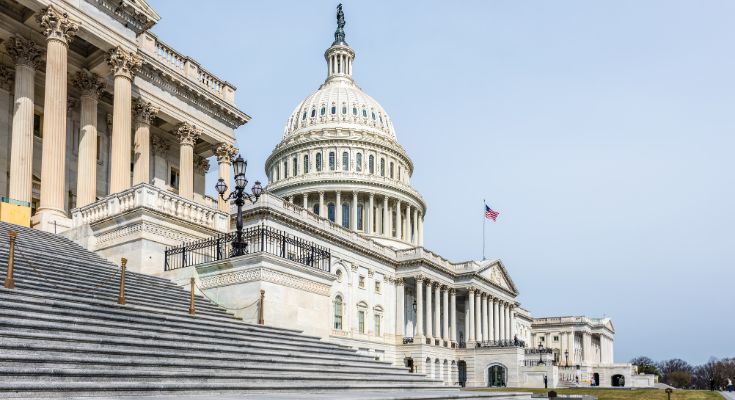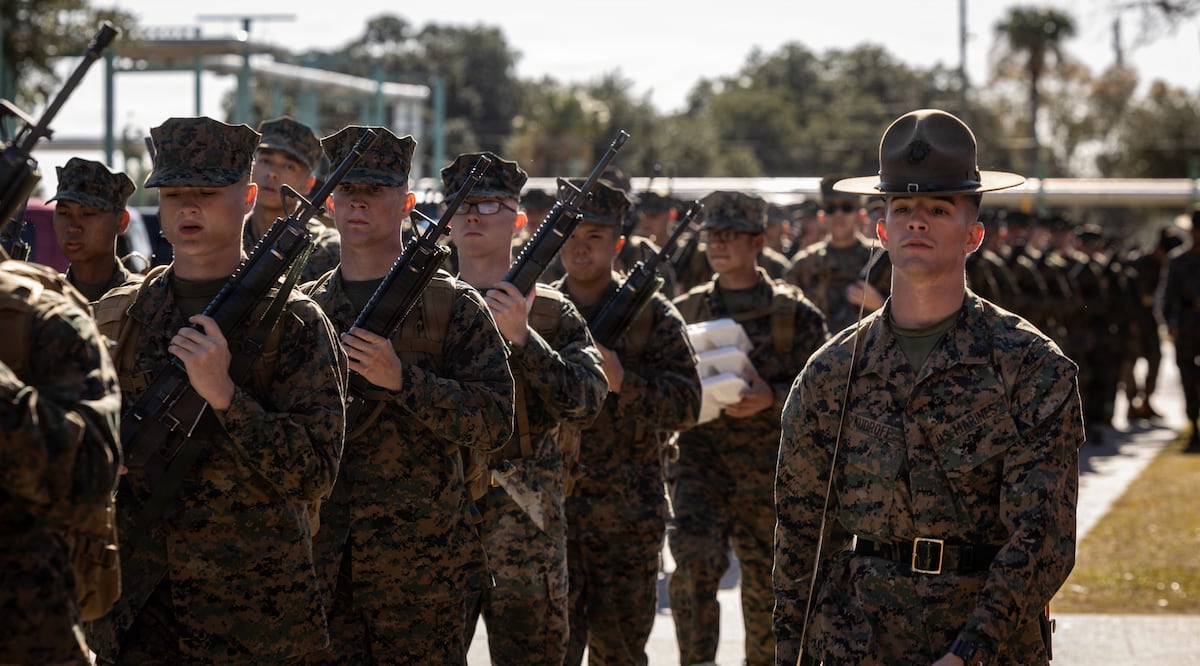
In a significant move, the **National Defense Authorization Act** (NDAA) has revived a long-dormant military exercise known as **Nifty Nugget**, originally conducted in 1978. This initiative aims to assess the United States Armed Forces’ ability to mobilize effectively in response to high-intensity conflicts, particularly in the **Indo-Pacific region**. The act, signed into law by **President Donald Trump** in early December 2025, mandates a comprehensive study focused on the mobilization of Reserve forces.
The original Nifty Nugget exercise was a 21-day operation that simulated the global mobilization of U.S. military forces in the event of a major conflict. The exercise involved approximately two dozen military commands and aimed to prepare for a hypothetical scenario in Europe. However, significant planning and logistical shortcomings led to disastrous outcomes, with up to **400,000 U.S. casualties** reported due to delays in troop deployment. Despite these failures, the exercise provided crucial insights, ultimately contributing to the establishment of the **U.S. Transportation Command** in 1987.
The newly mandated study will evaluate the military’s capacity to “rapidly mobilize, deploy, and sustain active and reserve component forces” during conflicts in areas such as the **Taiwan Strait** and the **South China Sea**. This requirement comes amid escalating tensions regarding China’s threats to invade Taiwan. While the U.S. has maintained a policy of **strategic ambiguity** concerning military intervention, the potential for a Taiwan invasion remains a serious concern for global security.
Key Components of the Study
The NDAA stipulates that the **Secretary of Defense**, along with the **Chairman of the Joint Chiefs**, must collaborate with the commander of **U.S. Indo-Pacific Command** to conduct the evaluation. The study will encompass several critical aspects, including:
– An assessment of **strategic lift, sustainment, and logistics capabilities**.
– A review of **interagency coordination procedures**.
– An evaluation of **joint and allied interoperability**, focusing on collaboration with **Japan**, **Australia**, the **Philippines**, and **Taiwan**.
– A detailed inventory of civilian skills within the military’s Reserve component, covering areas such as **foreign language proficiency**, advanced degrees, and expertise in high-demand fields like **cybersecurity**.
The report resulting from this study is due within two years and must include findings and recommendations on best practices for mobilization. Additionally, it will analyze the availability of reservists to reinforce active units during the critical first 30, 60, and 90 days of a major conflict in the Pacific.
Recent assessments, such as a **2024** report from the **Center for a New American Security**, found that mobilizing and deploying conscripts for the first time since the Vietnam War would face significant challenges. The report indicated that, under optimal conditions, it would still take approximately **seven months** to mobilize **100,000 conscripts**. In less favorable circumstances, this timeline could extend to **three-and-a-half years**.
Implications for Military Readiness
The NDAA’s emphasis on reviving the Nifty Nugget concept indicates a growing recognition among lawmakers of the need to address the complexities of modern warfare. **Katherine Kuzminski**, the primary author of the CNAS report, noted that the findings highlighted the human cost of war, which is often overshadowed by discussions of equipment and technology.
Kuzminski stated, “When Nifty Nugget was run back in 1978, the headline from it was, it was a total failure. But as an exercise, it was not a failure. The point of the exercise is to expose where all the gaps and problems would be if you were in a crisis situation.” She emphasized that the renewed focus on mobilization exercises reflects a serious approach to potential conflict in the Indo-Pacific.
The study will also consider how technological advancements and social factors, including the impact of social media, may influence the willingness of reservists and conscripts to respond to mobilization orders.
Kuzminski concluded, “I think there are a lot of gaps and seams that will be uncovered in a 2025 scenario, just like we had in 1978. That coverage of the gaps and seams being identified can’t be framed as if the military is failing. No — that’s why we’re running this exercise: to identify where those gaps and seams might be.”
As the U.S. military prepares for potential conflicts in the region, the revival of Nifty Nugget serves as a reminder of the lessons learned from past exercises, ensuring that readiness and human impact remain at the forefront of military planning.