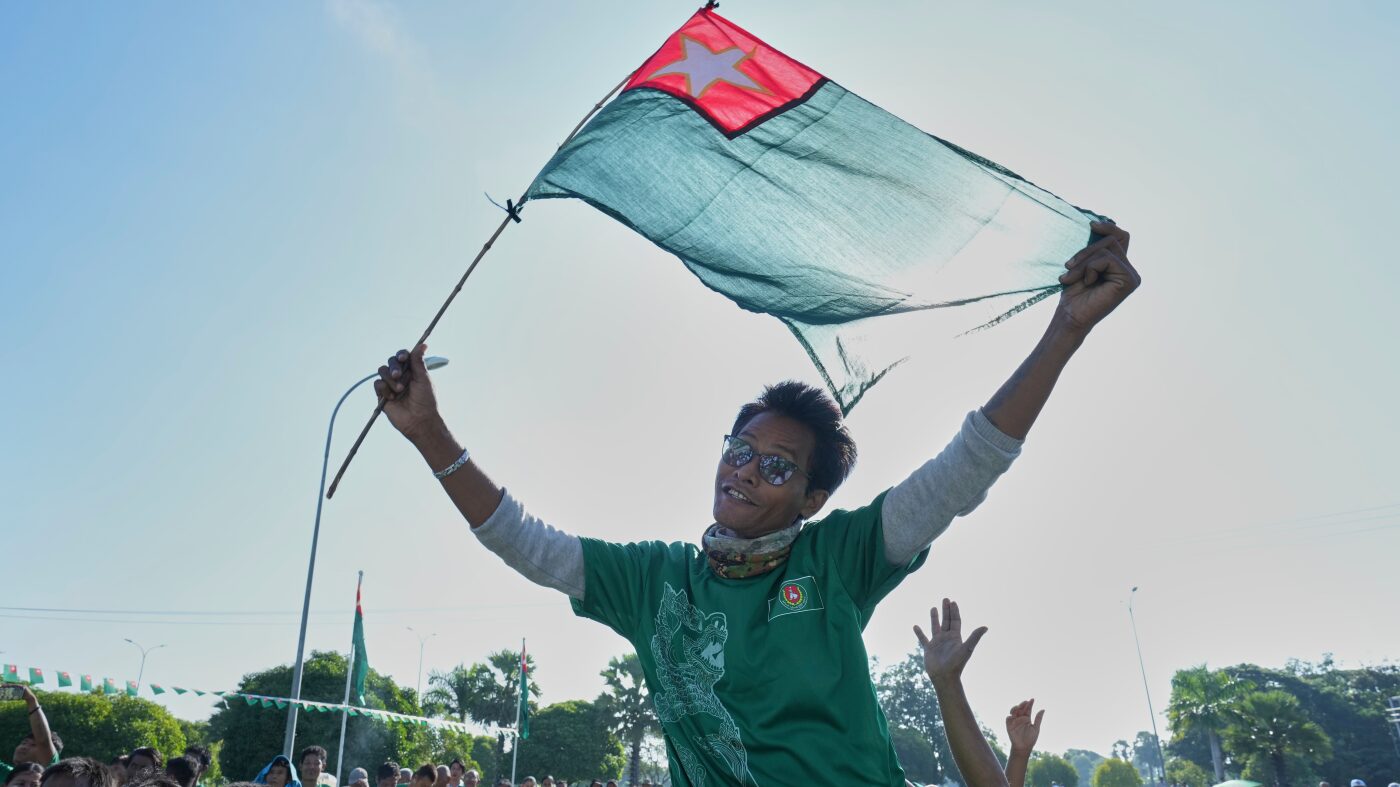
Myanmar’s military government is preparing to conduct staggered general elections starting on December 28, 2023, with the final phase expected to conclude in late January. The junta aims to restore some stability to the country while attempting to alleviate its international diplomatic isolation. This electoral process unfolds against the backdrop of a brutal civil war that erupted following the military coup in February 2021, which has plunged Myanmar into chaos.
Since the coup, the military regime has bombarded civilian areas indiscriminately, imprisoned tens of thousands, and displaced millions. Humanitarian agencies report that over 11 million people are experiencing food insecurity. United Nations Secretary-General António Guterres expressed skepticism about the elections at a recent summit of the Association of Southeast Asian Nations in Malaysia, stating, “Is there anyone who believes that there will be free and fair elections in Myanmar? It is quite obvious that… the conditions for free and fair elections are not there.”
In a bid to control the election process, the military has enacted a new law prohibiting what it terms “interference” in the elections. According to Human Rights Watch, nearly 100 people had been detained under this law by November, a number that has since doubled. Detainees include individuals charged for social media posts criticizing the electoral process, with some facing lengthy prison sentences for merely ‘liking’ critical comments online. The military acknowledges that elections will not be held in many contested or rebel-held areas, which comprise almost half the country.
Most Western governments have declined to send observers, labeling the upcoming elections a “sham.” Critics argue that the military’s primary goal is to establish a parliament dominated by the Union Solidarity and Development Party (USDP), a proxy party that suffered a crushing defeat in the 2020 elections against the National League for Democracy (NLD). The NLD, now banned, saw its leader, Aung San Suu Kyi, and several party officials imprisoned following the coup. Her son, Kim Aris, expressed concern for her safety, stating, “For all I know, she could be dead.”
As the military seeks to regain territory lost to opposition forces, it has begun to show signs of recovering from earlier catastrophic losses. Morgan Michaels, a Southeast Asia security analyst at the International Institute for Strategic Studies, noted that the military’s conscription campaign, improved drone capabilities, and better battlefield organization have contributed to this shift. However, opposition groups remain fragmented and have made several strategic errors, complicating their efforts.
China, one of the few countries endorsing the elections alongside Russia and India, views Myanmar’s military as a necessary stabilizing force amid the chaos. Yun Sun, director of the China programme at the Stimson Center, explained that while China does not favor the military, it prioritizes stability in Myanmar, crucial for its infrastructure projects and geopolitical ambitions in the region. She stated, “Myanmar being China’s corridor leading to South Asia, Southeast Asia, and also to the Indian Ocean. When the country is in a civil war, the China-Myanmar economic corridor leads to nothing.”
The junta has also pressured ethnic armed organizations to relinquish territory captured from the regime, complicating the opposition’s capacity to mount major offensives. According to Michaels, the absence of arms supplies has severely weakened the opposition’s capabilities.
Another critical factor favoring the military is an emerging sense of fatigue among the populace, particularly the youth who initially joined the armed struggle. Analyst Min Zaw Oo noted that many young fighters are relocating to neighboring countries like Thailand, seeking better livelihoods. Despite this, some remain dedicated to the cause, including rebel commander Ko Ta Mar, who transitioned from a medical career to combat. He expressed frustration over the opposition’s lack of direction but maintains that this is a crucial moment for the country’s future.
“There are good times and bad times in this revolution,” Ko Ta Mar said, emphasizing the need to continue fighting against the military’s prolonged grip on power. He metaphorically described the elections as “injecting steroids into a patient,” suggesting temporary relief but ultimately worsening the situation in the long run.
As Myanmar endures nearly five years of war, economic hardship, and displacement, many citizens are yearning for any semblance of relief. David Mathieson, a long-time analyst, pointed out that the shadow National Unity Government, a political successor to the ousted government, is struggling to resonate with the public. He noted a growing sentiment among citizens that, while they despise the military regime, it appears to have a clearer plan for stability compared to the alternative.
The second and third rounds of elections are set to take place in January, with the junta hoping to achieve its objectives of restoring order domestically while easing its international isolation. As the situation evolves, the outcome of these elections remains uncertain amid ongoing conflict and humanitarian crises.