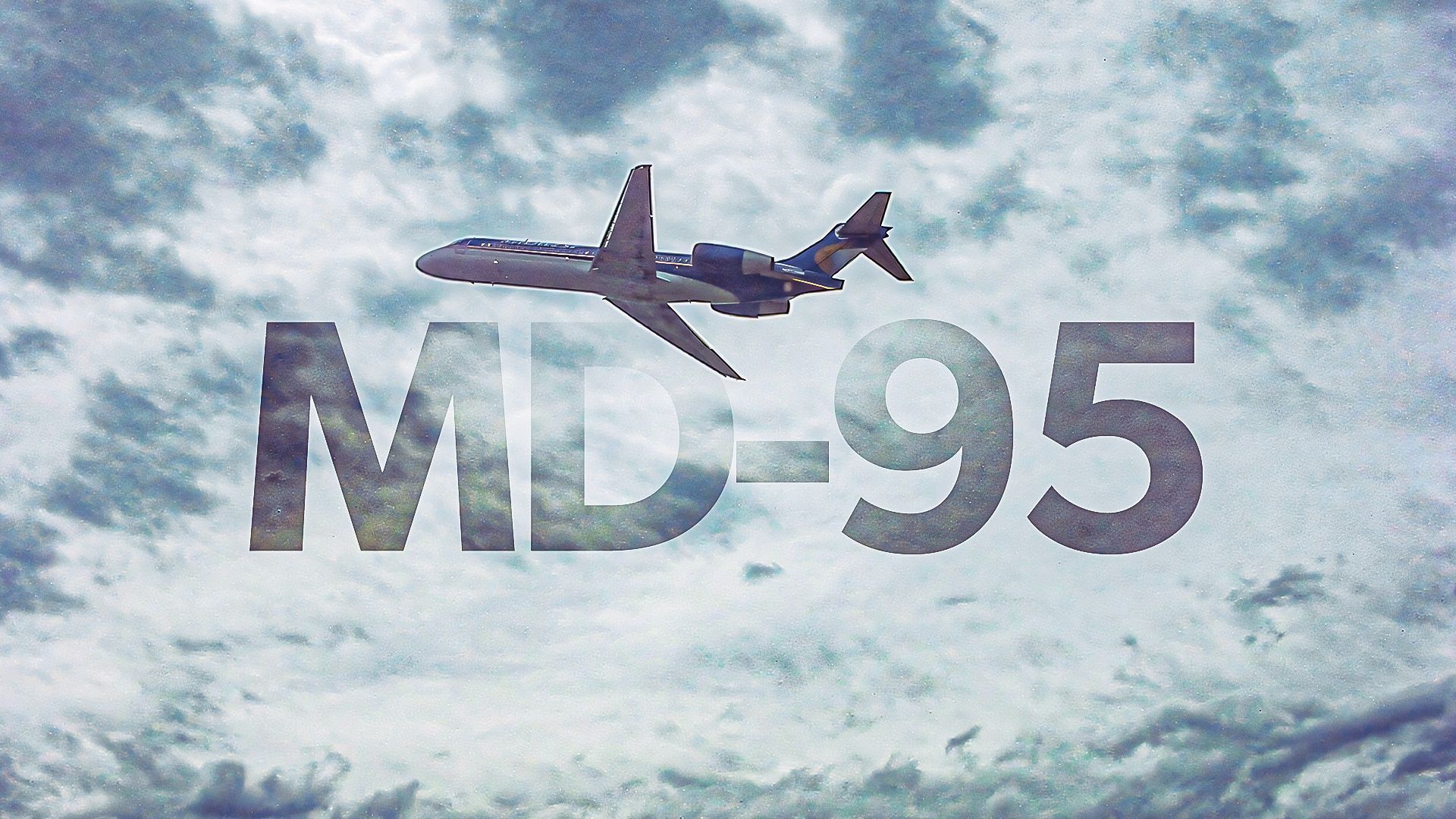
In the early 1990s, McDonnell Douglas sought to design a modern successor to its iconic DC-9, targeting the 100-seat short-haul market with the MD-95. This aircraft aimed to fill a niche overlooked by larger jets like the Boeing 737 and Airbus A320. However, upon its readiness for flight, the aviation landscape had dramatically shifted. In 1997, McDonnell Douglas merged with Boeing, which rebranded the MD-95 as the Boeing 717. Today, the 717 is often overshadowed by more famous models but has quietly carved a niche in the aviation industry.
Origins of the MD-95 Program
The MD-95 emerged from a long-term initiative to introduce a new version of the Douglas DC-9. This endeavor began as early as the 1980s with the concept of the DC-9-90, which was eventually shelved in favor of the smaller MD-87. By 1992, McDonnell Douglas revived the idea, presenting the MD-95 at the Paris Air Show. This aircraft was designed to incorporate a new-generation engine, enhancing fuel efficiency and reducing noise.
In October 1995, the program received a significant boost when low-cost carrier ValuJet placed an order for 50 MD-95s, worth over $1 billion. ValuJet evaluated the aircraft against competitors like the Airbus A319 and Boeing 737-600, ultimately choosing the MD-95 due to concerns over engine reliability with competing models. Despite this initial success, further orders were limited, and full-scale production had yet to commence when Boeing acquired McDonnell Douglas.
The Boeing-McDonnell Douglas Merger
Boeing’s acquisition of McDonnell Douglas on August 1, 1997, marked a pivotal moment in aviation history. This merger, structured as an all-stock transaction, transformed McDonnell Douglas into a Boeing subsidiary while retaining Boeing’s name and leadership. The deal solidified Boeing’s position as the dominant player in both commercial and military aircraft development, consolidating its best-selling models, including the 737 and 747.
The merger was largely driven by the need for airlines to reduce costs amid increasing competition from Airbus. Regulatory scrutiny was intense, particularly from European authorities concerned about market competition. In the aftermath, Boeing focused on its core jet families while the MD-95 transitioned to the Boeing 717, becoming the sole McDonnell Douglas commercial aircraft to survive the merger.
The Boeing 717’s Operational Impact
The Boeing 717 took its first flight in 1998, securing FAA certification and entering service with AirTran Airways in October 1999. It quickly established itself as a reliable short-haul workhorse, known for its Rolls-Royce BR715 engines and rapid gate turnaround times. The aircraft was ideally suited for high-frequency routes, designed to accommodate around 100 passengers efficiently.
Despite its strong start, the 717 faced challenges following the September 11 attacks, which led to a downturn in the aviation industry. Boeing’s reluctance to market the 717 alongside its flagship 737 family further limited its appeal. In total, only 156 aircraft were produced before production ceased in 2006.
The 717 found a loyal following primarily through Delta Air Lines, which acquired the aircraft when it absorbed AirTran’s fleet. Delta began operating the 717 in October 2013, using it to replace smaller regional jets on domestic routes. As of January 2026, there are 91 active Boeing 717s in service, with a notable fleet of 19 operated by Hawaiian Airlines for inter-island flights.
Future of the Boeing 717’s Successor
As the Boeing 717 ages, its successor is not defined by a single aircraft but rather a range of options filling similar roles. Delta, the largest operator of the 717, has already started leaning towards the Airbus A220, which offers comparable capacity and modern efficiencies. The transition appears seamless, given Delta’s existing fleet of A220s.
For Hawaiian Airlines, the future is less certain. The airline’s parent company, Alaska Air Group, has indicated a need to replace its aging 717s, with potential candidates including the Boeing 737 and newer 100-130 seat models like the A220 or Embraer E2. The choice will hinge on operational costs, especially in a high-frequency flying environment.
In conclusion, while the Boeing 717 may not have achieved the same iconic status as its larger counterparts, it remains a significant chapter in aviation history. Its legacy is marked by reliability and versatility, serving smaller markets effectively. The aircraft’s journey, shaped by a critical merger and evolving market dynamics, underscores the complexities of the aviation industry. As new models emerge, the contributions of the Boeing 717 will certainly be remembered by aviation enthusiasts and industry analysts alike.