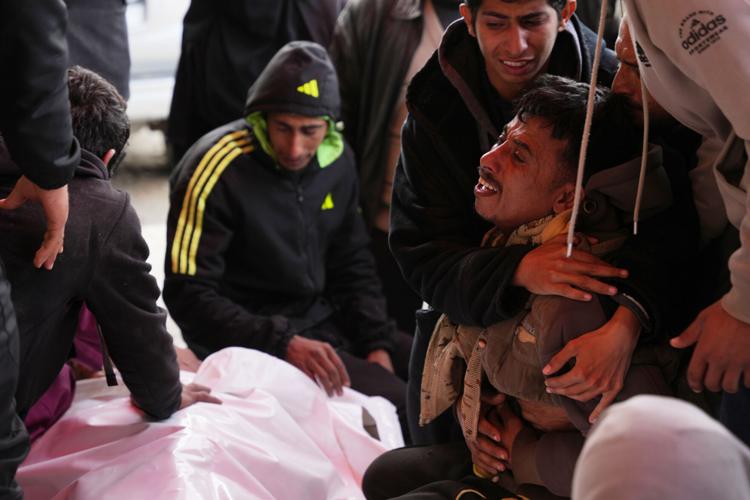
Israeli airstrikes in Gaza on Wednesday resulted in the deaths of at least 11 Palestinians, including two 13-year-old boys, three journalists, and a woman. This incident marks one of the deadliest days in the region since the ceasefire between Hamas and Israel took effect on October 10, 2023. Hospitals in Gaza reported the casualties, revealing a tragic escalation in violence amid ongoing tensions.
Among the deceased, three Palestinian journalists were killed while filming near a displacement camp in central Gaza. According to Mohammed Mansour, a spokesperson for the Egyptian government committee managing the camp, the journalists were documenting humanitarian efforts when an Israeli strike hit their vehicle. This attack occurred approximately five kilometers (3 miles) from Israeli-controlled territory, raising questions about the military’s targeting practices.
The two 13-year-old boys were killed in separate incidents. One boy was struck alongside his father and a 22-year-old man by Israeli drones in the Bureij refugee camp. Al-Aqsa Martyrs Hospital officials confirmed that the fatalities were reported to them. The second boy was shot by Israeli troops in Bani Suheila, as stated by Nasser Hospital. The heart-wrenching response of the boy’s mother, Safaa al-Sharafy, underscores the profound human cost of the conflict. She recounted that her son left their home that morning to gather firewood, never to return.
In addition to the journalists and children, a Palestinian woman was reported killed by Israeli fire in the Muwasi area of Khan Younis. The violence continued with a tank shelling in Bureij camp that claimed the lives of three brothers, as per reports from local medical facilities. The Gaza health ministry indicated that over 470 Palestinians have died from Israeli fire since the ceasefire began, with at least 77 fatalities occurring near the ceasefire line dividing Israeli-held areas from the Palestinian population in Gaza.
The U.S. is actively engaged in attempts to advance the ceasefire agreement, which includes complex negotiations surrounding the return of hostages and the release of Palestinian detainees. As of now, nearly all hostages have been returned to Israel, with one notable exception. The family of 24-year-old police officer Ran Gvili, who was killed in the October 7 attack that initiated the current conflict, continues to seek clarity regarding his remains. His mother, Talik Gvili, expressed her determination to keep his memory alive, urging both the Israeli government and U.S. President Donald Trump to assist in locating her son’s body.
In a related development, Israeli military operations extended beyond Gaza. Strikes were reported against sites in southern Lebanon linked to the Hezbollah group, targeting weapons storage facilities and smuggling routes near the Lebanese-Syrian border. The Lebanese health ministry reported that 19 individuals, including journalists, sustained injuries from these strikes in the village of Qennarit. Lebanese President Joseph Aoun condemned the attacks as “systematic aggression.”
The ongoing violence and loss of life highlight the urgency for a renewed focus on humanitarian conditions in Gaza and the broader implications for regional stability. As international journalists face significant barriers to reporting from the area, local journalists have become crucial in documenting the realities on the ground, often at great personal risk. The Committee to Protect Journalists has noted that over 200 Palestinian journalists have been killed since the onset of hostilities in 2023, emphasizing the need for accountability and protection for media personnel in conflict zones.
The environment in Gaza remains charged, with calls for investigations into the recent deaths as the situation continues to develop.