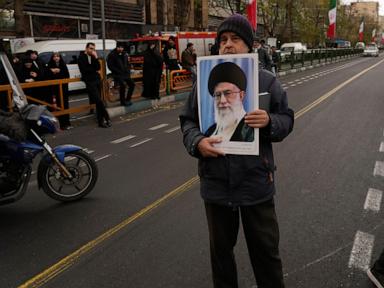
Iran’s Supreme Leader, Ayatollah Ali Khamenei, has publicly denounced U.S. President Donald Trump, labeling him a “criminal” for his support of protests in Iran. Khamenei’s remarks, made during a televised speech on January 7, 2023, follow a wave of protests that erupted on December 28, 2022, which he claims led to “several thousand” deaths. This statement marks the first acknowledgment from Iranian leadership regarding the scale of casualties from the unrest.
Khamenei accused Trump of encouraging what he termed “seditious” actions, stating, “In this revolt, the U.S. president made remarks in person, encouraged seditious people to go ahead and said: ‘We do support you, we do support you militarily.’” He reiterated long-standing accusations against the United States, asserting that it seeks to dominate Iran’s economic and political resources. The Supreme Leader characterized the protesters as “foot soldiers” of U.S. interests, accusing them of committing acts of violence, including the destruction of mosques and educational institutions.
In response, Trump criticized Khamenei’s leadership, stating, “The man is a sick man who should run his country properly and stop killing people.” He described Iran as “the worst place to live anywhere in the world because of poor leadership,” and called for a change in leadership within the country. This exchange of rhetoric comes after Trump expressed a more conciliatory tone regarding Iran’s recent decision to halt the execution of over 800 individuals, although he did not specify the source of his information on this matter.
Khamenei’s speech also included allegations that rioters were armed with live ammunition imported from abroad, though he did not specify from which countries these arms originated. He emphasized that while Iran does not seek war, it will hold both domestic and international offenders accountable for their actions during the protests.
As the situation in Iran evolves, reports indicate a return to a fragile calm following the severe crackdown on demonstrations, which has resulted in at least 3,095 fatalities, according to the U.S.-based Human Rights Activists News Agency. This figure represents the highest death toll from protests in Iran in decades and echoes the turmoil surrounding the 1979 Iranian Revolution. The organization, which relies on a network of activists within the country, has consistently provided accurate casualty figures, although independent verification remains challenging.
Iranian officials have continuously accused the United States and Israel of inciting unrest within the nation. On January 6, 2023, Iranian President Masoud Pezeshkian reiterated these claims during a phone call with Russian President Vladimir Putin, alleging foreign interference in the protests.
In recent days, Tehran has seen a noticeable decline in public protests, with daily life returning to a semblance of normalcy. State media reports indicate that there have been no significant demonstrations for several days. Following a complete internet blackout on January 8, 2023, limited internet services and text messaging were briefly restored, raising questions about the government’s control over communications.
Despite calls from exiled Crown Prince Reza Pahlavi for renewed protests over the weekend, there appeared to be little response from the public by Saturday afternoon. Pahlavi, whose father was deposed during the 1979 revolution, continues to advocate for leadership change in Iran but has struggled to gain substantial support within the country.
The Iranian authorities remain vigilant as they assess the situation, with Khamenei urging officials to pursue those responsible for the unrest. As tensions persist, the international community watches closely for developments in Iran’s complex political landscape.