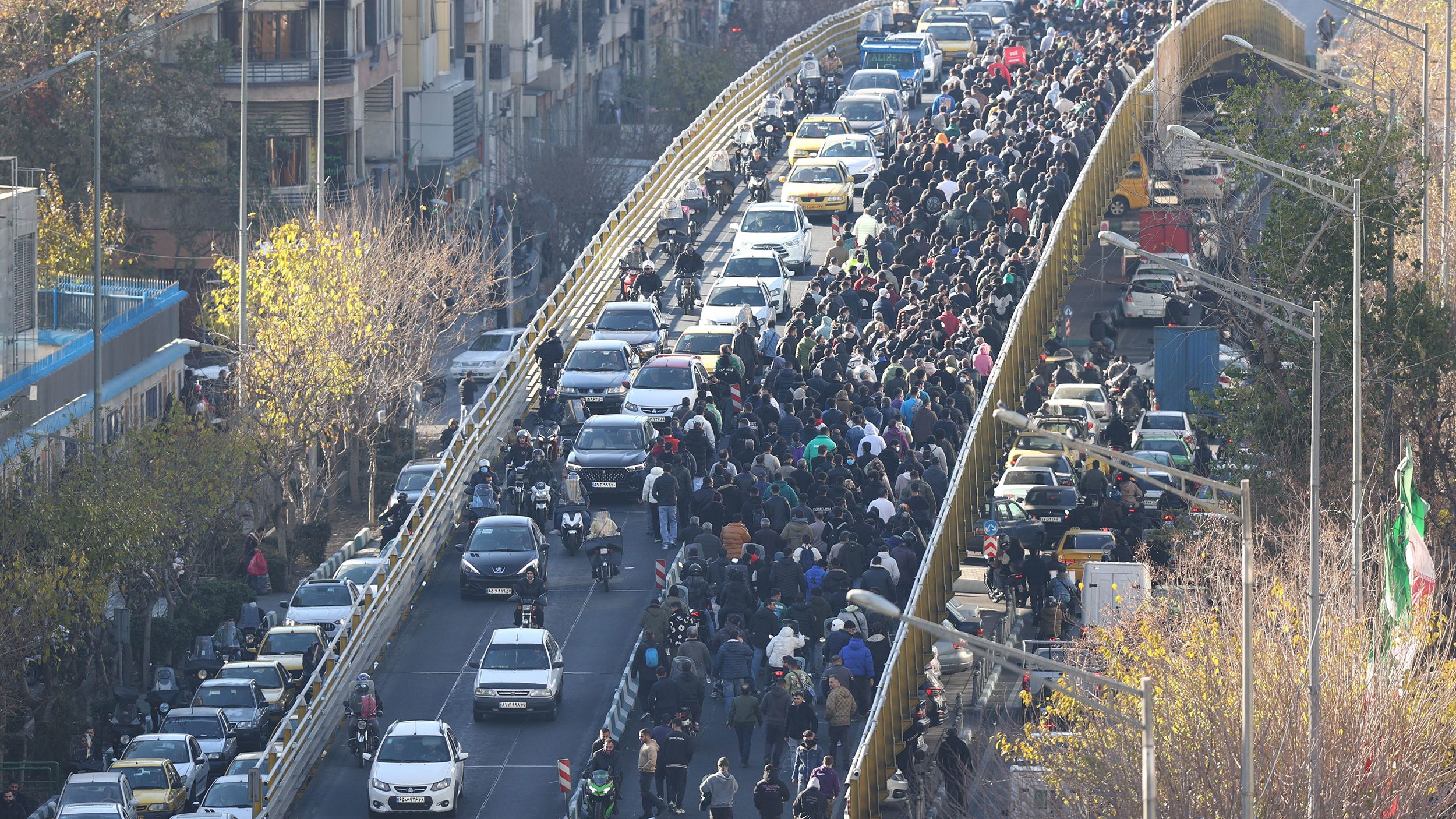
Iran has appointed a new governor for its central bank in response to an ongoing economic crisis that has resulted in widespread protests. On Wednesday, the Cabinet led by President Masoud Pezeshkian named Abdolnasser Hemmati, a former economics minister, as the new head of the Central Bank of the Islamic Republic of Iran. This decision follows the resignation of Mohammad Reza Farzin, who stepped down on Monday after large-scale protests erupted across the nation due to the rial’s significant decline against the U.S. dollar.
The Iranian currency has hit a record low, trading at 1.38 million rials to the dollar, a drastic increase from 430,000 rials when Farzin took office in 2022. Experts attribute the public unrest to a staggering inflation rate of approximately 40%, which has severely impacted the purchasing power of households. Many traders and shopkeepers closed their businesses on Sunday and joined protestors in cities including Tehran, expressing their frustrations over the soaring cost of living.
Hemmati’s primary focus will be on stabilizing the currency and controlling inflation. The government’s spokesperson, Fatemeh Mohajerani, indicated that his agenda would also address issues related to the mismanagement of banks. Hemmati, aged 68, previously served as Iran’s Minister of Economic and Financial Affairs, although his tenure was cut short in March when he was dismissed by Parliament over allegations of mismanagement that reportedly weakened the rial.
The economic turmoil has been exacerbated by Western sanctions imposed on Iran due to its nuclear program, which have further strained household budgets. Recent changes in gasoline prices are expected to contribute to inflationary pressures. Prosecutor General Mohammad Movahedi Azad warned that any attempts to shift the focus of protests to issues of insecurity or foreign interference would meet with a robust response.
The Iranian economy faced significant challenges following the 2015 nuclear accord, which saw the rial valued at 32,000 rials to the dollar. The agreement, aimed at lifting international sanctions, unraveled after former U.S. President Donald Trump withdrew from it in 2018.
On Wednesday, local judiciary official Hamed Ostevar denied claims that a young man was killed during the protests. Ostevar, who heads the justice department in the southern city of Fasa, reported that protests turned violent when demonstrators broke into the governor’s office, resulting in injuries to three police officers and the arrest of four protesters. Witnesses noted that merchants and traders continued to keep their shops closed in major bazaars in Tehran, as well as in the southern city of Shiraz and the western city of Kermanshah.
As the situation develops, the newly appointed Hemmati faces the critical task of restoring confidence in Iran’s economy and addressing the grievances of a populace increasingly frustrated by economic hardship.