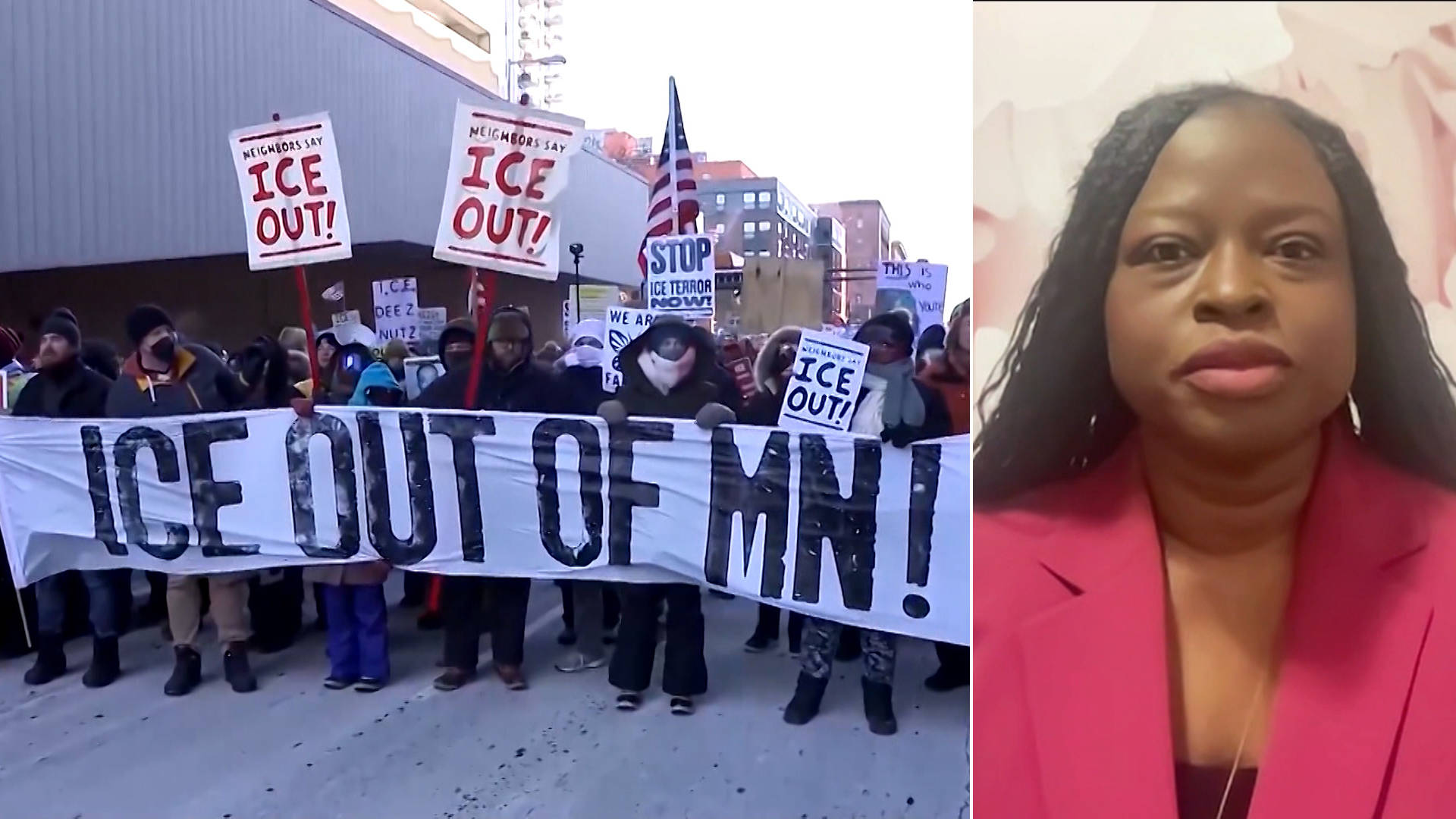
Civil rights attorney and activist Nekima Levy Armstrong was arrested on January 25, 2026, during an anti-Immigration and Customs Enforcement (ICE) demonstration at Cities Church in St. Paul, Minnesota. Armstrong, who is also a minister, was released from federal custody the following day. Her arrest has drawn significant attention, with Armstrong claiming that the charges against her are politically motivated.
Armstrong participated in a protest at Cities Church, where David Easterwood, a local pastor, also oversees an ICE field office. The demonstration was part of broader dissent against federal immigration policies. Armstrong criticized the government’s actions, stating, “They have altered the facts, just as they altered my image as a way of trying to criminalize nonviolent, peaceful protests.”
According to Pam Bondi, the state Attorney General, Armstrong’s arrest was part of a “coordinated attack” on a house of worship. The White House further fueled controversy by releasing an altered image that depicted Armstrong crying during her arrest, a claim she refutes, asserting that she was not crying at that moment.
Allegations of Unlawful Charges
Armstrong and her fellow protesters face charges under the Freedom of Access to Clinic Entrances (FACE) Act, which prohibits obstruction of religious practices. She maintains that the protest did not disrupt worshippers, stating, “There were folks who were still praying, who were still worshiping, who were still singing while we were there during the demonstration.”
Despite the charges levied against her, Armstrong emphasized that the real issue lies with the actions of federal agents, particularly following the recent deaths of two individuals, Renee Good and Alex Pretti, allegedly at the hands of ICE agents. She described the situation as a “war in the streets of Minneapolis and the Twin Cities,” highlighting what she sees as the federal government’s failure to uphold constitutional rights.
Call for Accountability and Action
During a conversation with journalist Amy Goodman, Armstrong expressed her dismay at the government’s response to immigration enforcement. She stated, “We have to understand that what they’re doing is unconstitutional, it is diabolical, it is illegal, and it is unacceptable.” Armstrong remains committed to using her platform to advocate for justice and accountability.
The protest and subsequent arrest have sparked a larger conversation about immigration policies and the treatment of dissenting voices in America. Armstrong’s case is emblematic of growing tensions between activists and federal authorities, raising questions about the boundaries of lawful protest and the government’s role in immigration enforcement.
As the situation develops, Armstrong continues to call for solidarity and action against what she considers authoritarian practices, urging others to join her in speaking out against these injustices. The larger implications of her arrest may resonate beyond Minnesota, potentially influencing national discussions on civil rights and immigration policy.