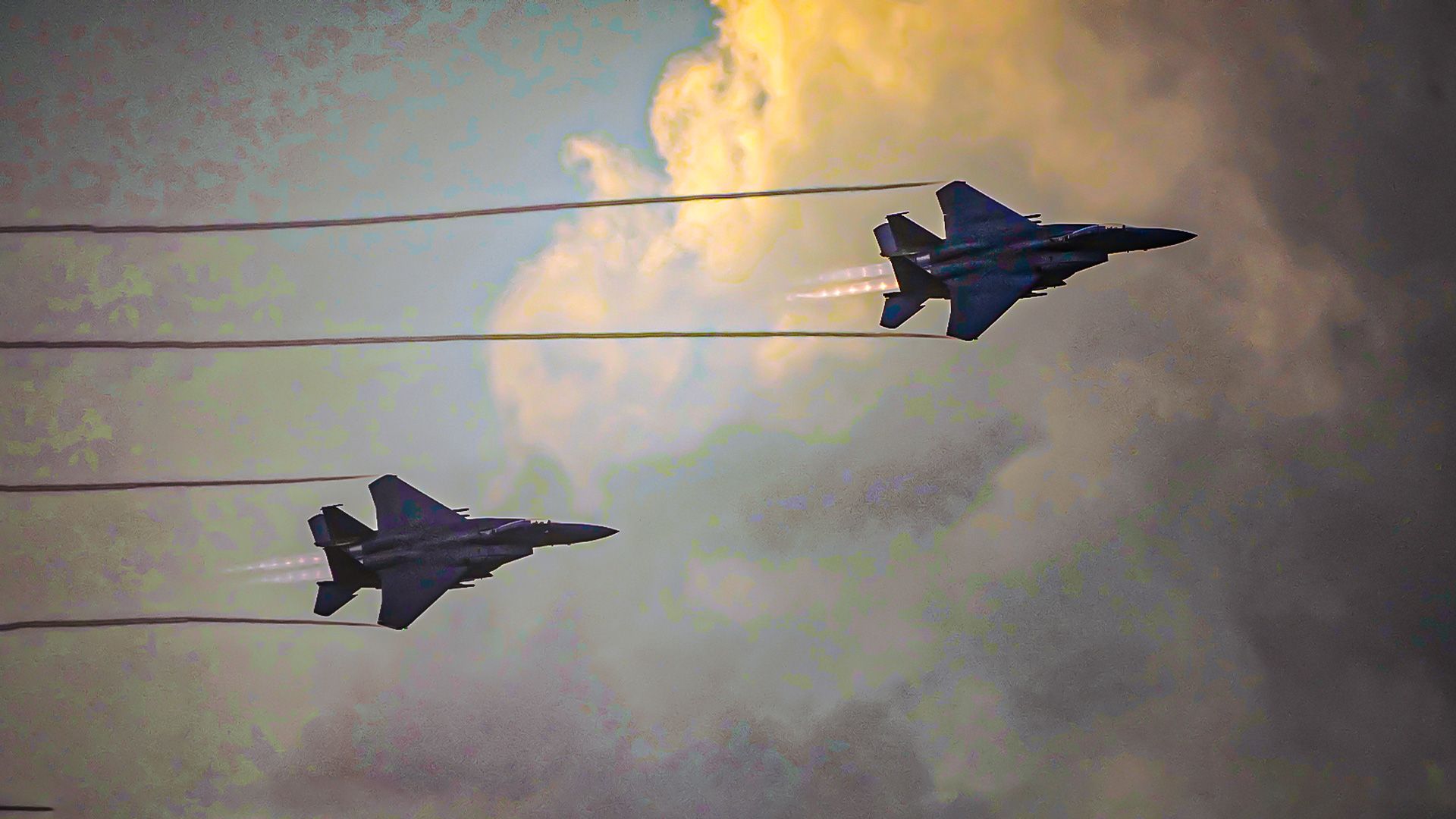
As Super Bowl LX unfolded on February 13, 2026, at Levi’s Stadium in Santa Clara, California, a robust aerial security operation ensured the safety of one of the world’s most-watched sporting events. The skies above were patrolled by F-15 Eagle fighter jets from the California Air National Guard’s 144th Fighter Wing, providing a vigilant defense against potential airborne threats.
The Super Bowl, designated a National Special Security Event by federal authorities, necessitated a comprehensive air defense strategy. This included military readiness, Temporary Flight Restrictions (TFR), and quick-reaction alert aircraft. The operation not only showcased military capabilities but also highlighted the intricate coordination between various agencies responsible for national security.
California’s Air Defenders on High Alert
Before the kickoff, the Federal Aviation Administration (FAA) established a TFR extending approximately 30 miles above the stadium. This airspace was continuously monitored by NORAD and the FAA to prevent unauthorized aircraft from entering the area. The F-15C Eagle jets, stationed at Fresno Air National Guard Base, played a crucial role in safeguarding this airspace. Their presence signified a commitment to rapid response; the fighters were prepared to scramble at a moment’s notice if any unauthorized aircraft, including drones, entered the restricted zone.
The F-15 Eagle, renowned for its speed and reliability, was particularly well-suited for this mission. With a top speed of Mach 2.5, advanced radar systems, and a proven combat record, the aircraft has never been shot down in air-to-air combat. Pilots from the 144th Fighter Wing trained rigorously in simulated intercepts leading up to the event, practicing detection and response procedures alongside the Civil Air Patrol.
Highlighting Heritage Through Aerial Coordination
The culmination of aerial security efforts was the meticulously planned flyover during the Super Bowl’s halftime show. This year marked a unique collaboration between the Air Force and Navy, featuring an impressive formation that included two B-1B Lancer bombers, two F-15C Eagles, and two F/A-18 Super Hornets, along with two F-35C Lightning II fighters. This display not only celebrated the 250th anniversary of the U.S. armed forces but also showcased the seamless teamwork between different military branches.
The flyover was timed to coincide with the final note of the National Anthem, underscoring the event’s patriotic spirit. Each aircraft’s participation required extensive rehearsal flights and coordination with the FAA to ensure precision timing and formation integrity. This collaborative effort illustrated the U.S. military’s dedication to public engagement while reinforcing the importance of air security during high-profile events.
The integration of various aircraft types in the flyover represented the diverse capabilities of the military. While typically operating under separate training structures, the joint mission demonstrated interoperability and highlighted the importance of collaboration in national defense.
The Future of Air Security at Major Events
The necessity for fighter jets at large public gatherings raises questions about airspace safety. The primary role of these aircraft is risk management, especially in light of increased security protocols following the September 11 attacks. The presence of rapid-response fighters serves as both a deterrent and a safety measure, addressing concerns about unauthorized airspace incursions by private pilots or commercial drones.
The 144th Fighter Wing’s role exemplifies the evolving responsibilities of the National Guard. While historically associated with local responses, modern Guard units now balance state emergencies with federal defense duties, showcasing their adaptability in various scenarios.
As aerial threats continue to evolve with advancements in drone technology and autonomous systems, the methods used to secure events like the Super Bowl will also advance. Enhanced radar networks, integrated civil-military command systems, and coordinated monitoring will likely improve air safety in the future.
Despite these technological advancements, the human element remains critical. The pilots and crews of the 144th Fighter Wing are tasked with the important role of safeguarding events, blending tradition with operational excellence. Their dedication ensures that major cultural and sporting occasions like the Super Bowl are secure, allowing millions to enjoy the spectacle with peace of mind.