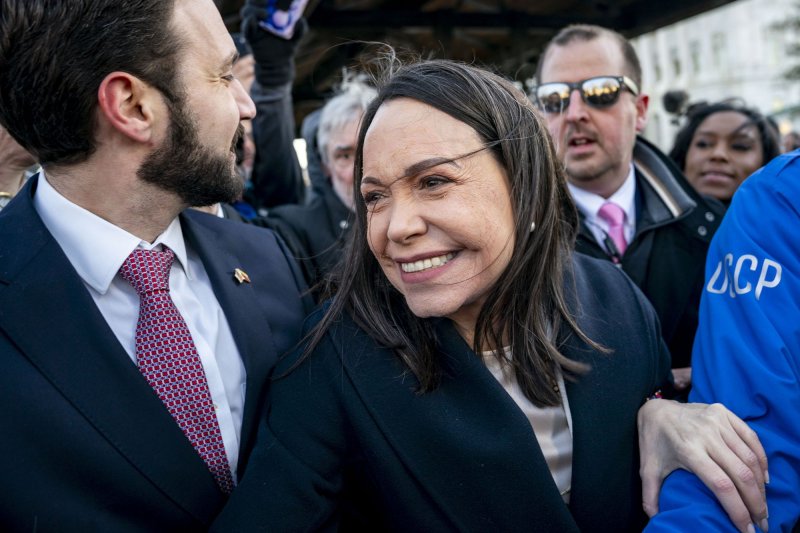
UPDATE: In a dramatic display of solidarity, Venezuelan opposition leader Maria Corina Machado presented her Nobel Peace Prize medal to President Donald Trump during a White House meeting on January 15, 2024. This unprecedented moment underscores the growing political tensions in Venezuela as Machado continues her fight for democratic rights against the backdrop of an enduring authoritarian regime.
Machado, who leads the center-right Vente Venezuela party, emphasized the significance of the medal as a symbol of unity between the Venezuelan people and the United States. “It is also a profound expression of gratitude for the invaluable support of President Trump and the United States for the Venezuelan people in this decisive struggle for our independence and the restoration of popular sovereignty,” she stated.
In a post on his Truth Social platform, Trump expressed his admiration, declaring, “It was a Great Honor to meet Maria Corina Machado today. She is a wonderful woman who has been through so much.” He added that receiving the Nobel medal from Machado was a “wonderful gesture of mutual respect.”
The meeting comes as Machado aims to position herself as a key player ahead of Venezuela’s 2024 election, in which she has been banned from running against Nicolas Maduro. Despite her efforts to challenge Maduro’s regime, the political landscape remains fraught with challenges. Following her primary bid, which was perceived as a victory, the state-run election agency controversially declared Maduro the winner, prompting Machado to leave the country.
Trump’s long-standing ambition for a Nobel Peace Prize has drawn renewed attention with this presentation, although the Nobel Committee has clarified that the title of a Nobel laureate is non-transferable. The committee reiterated that “Once a Nobel Prize is announced, it cannot be revoked, shared or transferred to others. The decision is final and stands for all time.”
During her visit to Washington, Machado also engaged with lawmakers from both the Republican and Democratic parties, urging them to support Venezuela’s liberation. “I want to assure you that we are going to turn Venezuela into a free and safe country, and into the strongest ally the United States has ever had in this region—when Venezuela is free,” she declared.
Amidst this backdrop, Delcy Rodriguez, the interim leader of Venezuela and former vice president, fired back at Machado’s visit, asserting, “If one day, as acting president, I have to go to Washington, I will do so with my head held high, not on my knees.” This statement reflects the ongoing internal strife and the power struggle within Venezuela.
As the political situation evolves, all eyes will be on Venezuela’s path toward democracy and the U.S. response to its ongoing crisis. The international community watches closely, as Machado’s visit marks a significant moment in U.S.-Venezuelan relations and could impact future diplomatic efforts.
Stay tuned for further updates on this developing story.