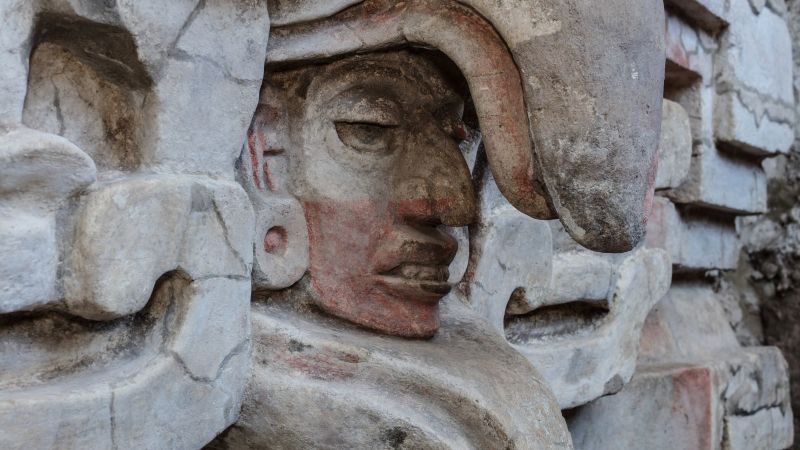
BREAKING: Archaeologists have unveiled a stunning 1,400-year-old Zapotec tomb in San Pablo Huitzo, Oaxaca, a discovery hailed as “the most significant archaeological discovery of the last decade” by officials. This remarkable find, confirmed by Mexico’s National Institute of Anthropology and History (INAH), features intricate carvings and a striking sculpture of an owl positioned above the entrance to the burial chamber.
The tomb, dating back to approximately 600 AD, showcases a wealth of well-preserved details, including a sculpture of a man’s head nestled within the owl’s beak. This element may represent the individual interred within, according to INAH officials. The owl, an important symbol for the Zapotec people, embodies concepts of night and death, underscoring the tomb’s profound cultural significance.
In addition to the owl, the site is adorned with vibrant murals depicting powerful symbols of life and death. Notably, carvings of two human figures, possibly the tomb’s guardians, can be found at the threshold, each holding various artifacts. Inside the burial chamber, an “extraordinary” mural rendered in ocher, white, green, red, and blue illustrates a procession of individuals carrying bags of copal, a sacred resin used in ceremonial incense.
President Claudia Sheinbaum emphasized the importance of this archaeological find during her daily news conference last Friday, stating, “It’s the most significant archaeological discovery of the last decade in Mexico due to the level of preservation and the information it provides.” Culture Secretary Claudia Curiel de Icaza echoed this sentiment, calling it an “exceptional discovery” that offers valuable insights into Zapotec culture, social organization, funerary rituals, and belief systems.
A multidisciplinary team from INAH is currently working to safeguard the site and conduct further research. This includes urgent efforts to stabilize the murals, which are in a “fragile state” due to environmental conditions and biological threats, such as tree roots and insects.
As this story develops, the significance of the discovery continues to resonate, not only for the archaeological community but also for the descendants of the Zapotec people, as hundreds of thousands still identify with this rich cultural heritage across Mexico today.
Stay tuned for more updates on this groundbreaking discovery as officials work to uncover and protect the secrets of the past.