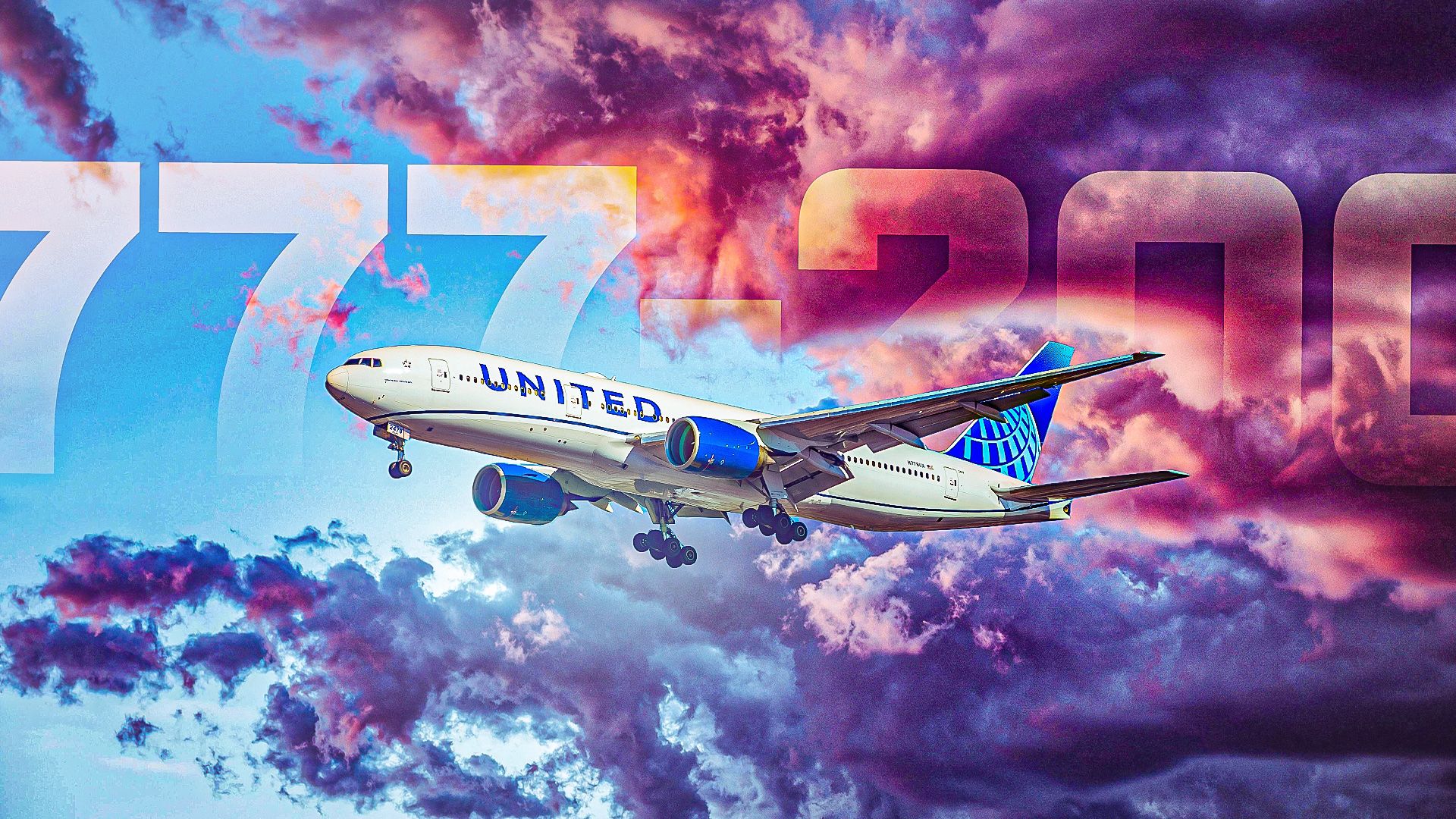
United Airlines stands out as the largest and only operator of the Boeing 777-200 in the United States. Having been the launch customer for this aircraft variant, United continues to operate the majority of the remaining fleet, showcasing its commitment to the Boeing 777-200, which has been a vital part of its operations since it entered service in June 1995.
The Boeing 777-200, introduced by Boeing in 1990, has a storied history, with its prototype rolled out in 1994. Currently, only 22 standard 777-200s are still in regular service globally, with United Airlines operating 18 of these aircraft primarily for domestic flights. Other operators include All Nippon Airways of Japan and Nigeria’s MaxAir, each with two and one aircraft, respectively. The aircraft also serves the Gabonese Air Force as its sole military operator.
Specifications and Operations of the Boeing 777-200
The Boeing 777-200 features a flexible seating arrangement, typically configured in three classes, accommodating between 301 and 368 passengers. Its range is impressive, spanning between 6,030 and 9,840 miles (approximately 9,700 to 15,840 kilometers), making it suitable for medium to long-haul flights. Known for its distinctive features such as large-diameter turbofans and raked wingtips, the 777-200 was the first Boeing aircraft to employ fly-by-wire technology.
United Airlines has configured its 777-200 fleet with a higher density of economy seating. The aircraft is set up to carry up to 364 passengers, divided into 28 United First, 102 Economy Plus, and 234 United Economy seats. Passengers enjoy amenities such as onboard Wi-Fi, personal device connectivity, and a modern entertainment system.
As of February 2026, United Airlines remains a significant player in the commercial aviation sector, operating a diverse fleet that includes both narrowbody and widebody aircraft. The average age of its fleet is around 17.1 years, with the Boeing 777-200s ranging from 25.52 to 31.62 years old.
The Future of United’s Boeing 777-200 Fleet
The 777-200 is gradually being phased out as United Airlines transitions to newer aircraft. The Boeing 787-10 Dreamliner is set to replace the aging fleet, with United having ordered approximately 150 of these aircraft. This shift is part of a broader strategy to enhance fuel efficiency and reduce operating costs while providing a more modern passenger experience.
United has already begun deploying the 787-10 on select international routes, including a groundbreaking direct connection from San Francisco to Adelaide, Australia. This service marks the first time an international carrier has directly linked South Australia with the United States.
For the time being, United Airlines is maximizing the utilization of its 777-200s on key domestic routes, including multiple daily flights from Los Angeles to Honolulu and other significant corridors such as Denver and San Francisco to Hawaii. As the airline looks towards the future, the transition from the 777-200 to the more efficient Dreamliners is expected to reshape its operational landscape.
In summary, while the Boeing 777-200 remains a crucial part of United Airlines’ operations, the airline is actively preparing for a new era with the introduction of the Boeing 787-10. This transition not only reflects changes in fleet management but also highlights United’s commitment to enhancing the flying experience for its passengers.