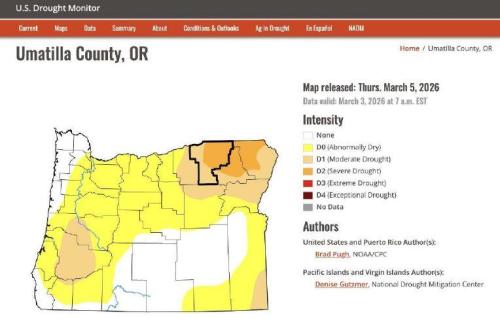
UPDATE: Umatilla County has officially declared a drought as of March 4, 2023, following a significantly drier winter. The entire county is now under a moderate drought, with approximately half facing severe drought conditions, particularly on the eastern side, according to the latest assessment from the U.S. Drought Monitor.
County emergency manager Sage Delong outlined the pressing situation during a recent board meeting. “These conditions persist despite recent precipitation and reflect an ongoing seasonal deficit impacting soil moisture, runoff potential, and water supply outlook,” Delong stated. With snowpack levels reported at 15% to 45% below median, farmers are bracing for potential shortages in irrigation water this growing season.
The implications of this declaration are immediate and significant. If drought conditions persist, it not only threatens agricultural output but could also limit municipal water supplies and worsen wildfire risks across the region. This declaration enables the Oregon Governor to potentially declare a state of emergency, unlocking vital resources for affected farmers and ranchers.
County Commissioner and Board Chair Dan Dorran emphasized the importance of this action, noting, “As long as the declaration is endorsed by the state, it allows for federal funding for agricultural producers.” He anticipates a decision from the governor on the emergency declaration within the next two weeks, which would facilitate water transfers from the Columbia River to alleviate pressure on local groundwater systems.
Local water expert JR Cook, director of the Northeast Oregon Water Association, highlighted the advantages of the declaration. “This makes it easier and quicker for the state to allocate existing water resources to our most valuable crops,” he explained. Farmers require clarity on their water availability as they prepare for the upcoming season, and with the current snowpack, there’s little hope of recovery even with a wet spring.
Drought conditions are compounded by rising input costs, including fuel and fertilizer, driven by ongoing geopolitical tensions. Cook warned, “We’re too far along to not see major impacts. This is probably one of the worst perfect storms for agriculture we have seen for decades.”
Despite these challenges, regional efforts to improve water supply systems have been ongoing. Cook noted that improvements in aquifer storage and recovery over the past decade have bolstered resilience. “You can’t plan for a drought the year it happens. That’s why we’ve been building these regional systems,” he stated.
As the situation unfolds, farmers in Umatilla County are preparing for a tough year ahead. The drought declaration is a critical step in mobilizing state and federal assistance, but the road ahead remains uncertain. Stakeholders are urged to stay alert for further announcements and developments in this urgent situation.