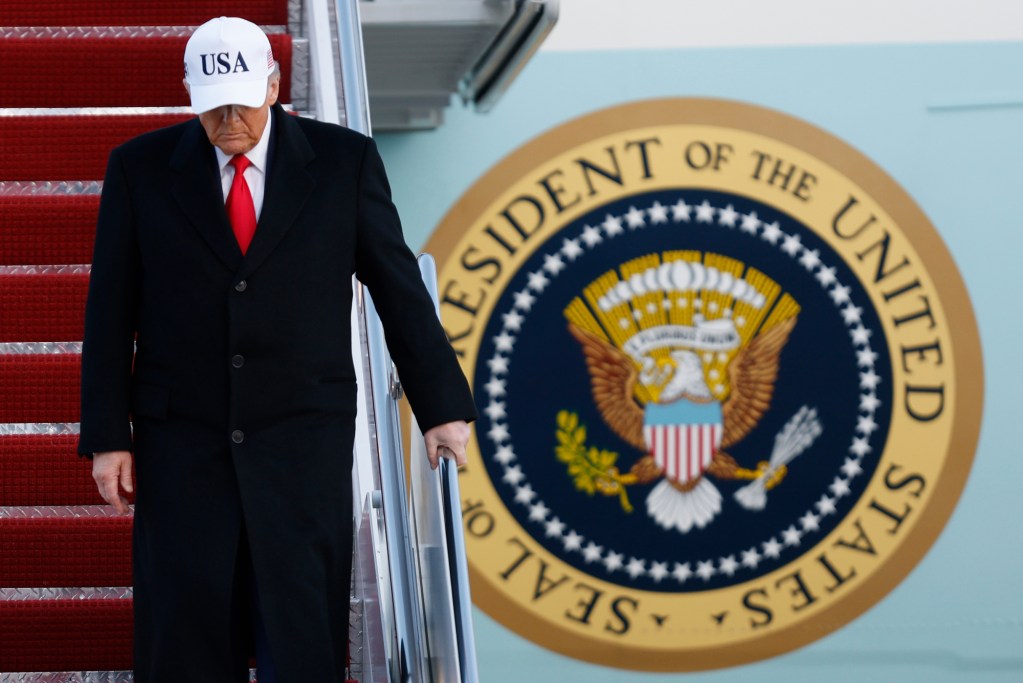
UPDATE: President Donald Trump has just announced that beginning on February 1, he will deny federal funding to states and local governments that fail to enforce his administration’s immigration policies, targeting sanctuary cities across the United States. This significant move could affect numerous jurisdictions, particularly those led by Democratic officials.
During a speech at the Detroit Economic Club, Trump declared, “We’re not making any payments to sanctuary cities or states having sanctuary cities, because they do everything possible to protect criminals at the expense of American citizens.” His comments underscore an escalating confrontation over immigration policies that has profound implications for millions of residents.
This newly announced policy aims to expand on Trump’s earlier attempts to withhold federal funds from sanctuary jurisdictions, which are generally characterized by limited cooperation with Immigration and Customs Enforcement (ICE). Past efforts to cut funding have faced legal hurdles, as federal judges previously ruled against the administration’s attempts to penalize these cities.
Trump’s latest threat comes amidst ongoing challenges to federal funding initiatives. Just last week, the U.S. Department of Health and Social Services announced it would halt $515 million in funding to certain Medicaid programs in Minnesota, marking a broader trend of financial pressure on states that resist federal immigration directives.
Trump emphasized the urgency of his plan, stating, “It’ll be significant” when asked what types of funding would be affected. The implications of this funding cutoff could ripple through various social programs, impacting healthcare, education, and public services for millions of Americans.
The Justice Department has previously identified a list of nearly three dozen jurisdictions considered to be sanctuary cities, predominantly located in states such as California, Connecticut, and New York, which have been vocal in their resistance to federal immigration enforcement.
“This is about protecting American citizens and ensuring that those who break the law face consequences,” Trump asserted during his announcement.
States and cities that could face funding cuts include Baltimore County, Maryland, and Cook County, Illinois, among others. Legal experts anticipate significant challenges to this initiative, as previous court rulings have blocked similar funding cuts.
In the backdrop of these developments, the federal government has already begun to implement funding halts in various sectors. The U.S. Department of Agriculture has threatened to cut administrative funds for states that refuse to provide data on Supplemental Nutrition Assistance Program recipients. As legal battles over these funding cuts unfold, the uncertainty surrounding state finances continues to grow.
The impact of Trump’s announcement will be felt immediately, with local governments scrambling to respond to the potential loss of crucial federal funds. As communities weigh the consequences, this situation remains fluid, with further developments expected as the February deadline approaches.
As this situation unfolds, many are left wondering how these funding decisions will affect local economies and services. The next few weeks will be critical as states prepare to respond to the impending cuts and navigate the legal landscape surrounding Trump’s controversial policies.