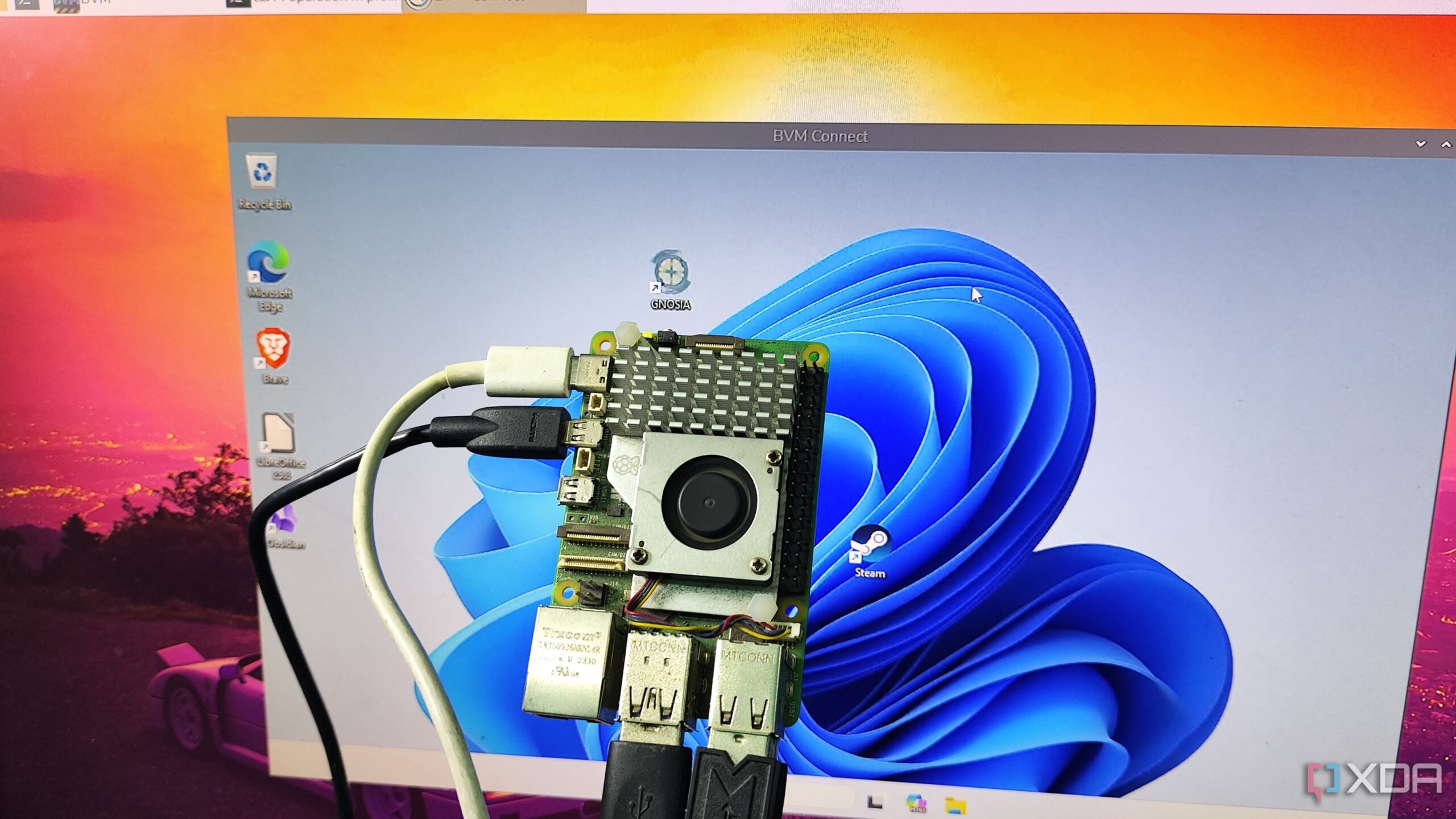
URGENT UPDATE: A groundbreaking development has emerged for tech enthusiasts as users can now run Windows 11 virtual machines (VMs) on a Raspberry Pi without significant performance issues. As of October 2023, this advancement opens new doors for DIY projects and server tasks, challenging previous limitations of the popular single-board computer.
Developers have confirmed that with the efficient use of Canonical MicroCloud on Raspberry Pi, users can deploy multiple VMs, making it a viable option for lightweight applications. This news comes after previous attempts with other virtualization platforms like Proxmox faced compatibility setbacks, particularly with the Raspberry Pi 5.
The latest tests indicate that users can effectively run two minimal VMs alongside containers on a Raspberry Pi equipped with 8GB of RAM and even push the limits to four VMs under optimal conditions. This is especially significant for those interested in utilizing the Raspberry Pi for server tasks or software engineering projects.
A standout feature of this new setup is the Botspot VM, which simplifies the process of installing Windows 11. Available via Pi-Apps, the installation process is user-friendly, requiring only a few settings adjustments. The result is a surprisingly responsive Windows 11 experience on the Raspberry Pi, particularly when using a 1080p display instead of a 4K monitor.
While the performance for gaming and heavy tasks remains limited, this advancement is a game-changer for developers and enthusiasts eager to explore PowerShell scripts, Visual Studio projects, and more from a Raspberry Pi. The combination of power and flexibility allows users to harness the potential of this affordable device like never before.
Despite the impressive capabilities of running VMs, experts still recommend relying on container technologies like Docker and Kubernetes for extensive applications. Containers are lightweight and can function effectively on Raspberry Pi, enabling users to manage numerous applications simultaneously without taxing the system’s resources.
As the community continues to innovate, this breakthrough in Raspberry Pi virtualization signifies a shift in how developers and hobbyists can leverage this technology for various applications. The implications for educational purposes, DIY projects, and even small-scale server management are profound.
Stay tuned as more updates on Raspberry Pi advancements are expected in the coming weeks! This development is not just a technical achievement; it represents a growing movement towards accessible computing for everyone. Share your thoughts and experiences with Raspberry Pi VMs today!