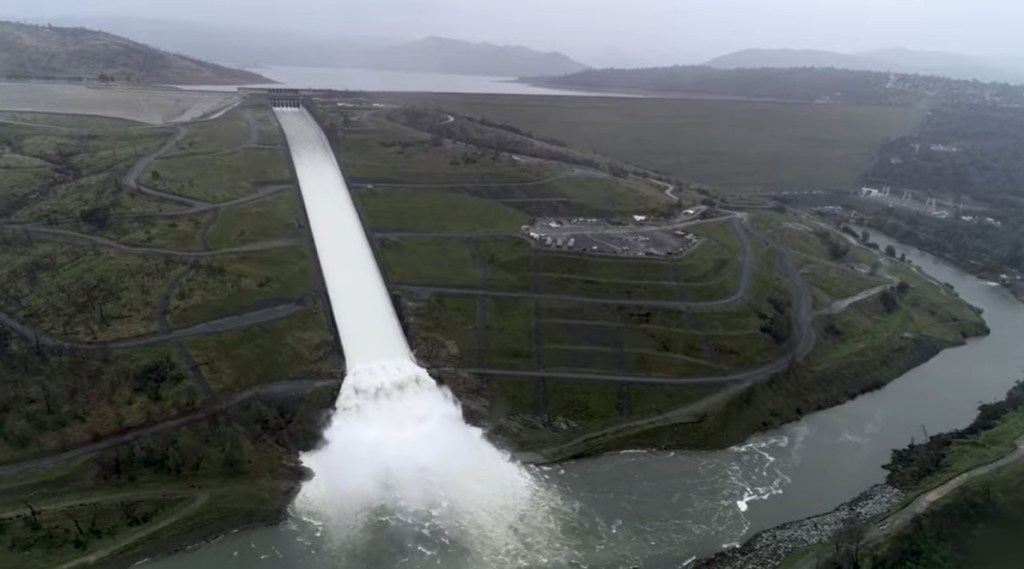
UPDATE: Operators at Oroville Dam, the tallest dam in the United States, have just opened spillway gates to release billions of gallons of water as California faces a surge in reservoir levels following significant storms. This urgent action aims to prevent potential flooding downstream, with the reservoir’s water level rising an astonishing 75 feet over the past three weeks.
Since December 16, the watershed surrounding Oroville Reservoir has received a staggering 12 inches of rain, rapidly filling the reservoir to 136% of its historical average for this time of year. As of this morning, the reservoir holds 2,578,222 acre feet of water—an increase of 837,554 acre feet or 273 billion gallons—enough to fill 400,000 Olympic swimming pools.
At 6 a.m. today, engineers from the Department of Water Resources confirmed that they had increased water releases from 1,856 cubic feet per second on Christmas Day to 16,135 cfs by Monday, showcasing the urgency of the situation. However, inflow continues to exceed outflow, with 29,051 cfs entering the reservoir as of Wednesday, causing levels to rise by nearly 3 feet per day.
“To maintain this storage space, DWR must increase releases from Lake Oroville,” the department stated, emphasizing their commitment to managing water levels responsibly.
California’s reservoirs, including Oroville and Shasta Lake, serve as crucial indicators of the state’s water supply, reflecting the impacts of both drought and deluge. The dam, completed in 1967, has a legacy of managing substantial water needs across the state, supplying cities and farms from San Jose to San Diego.
With a forecast of at least 10 days of sunny weather, state officials are monitoring conditions closely. They reduced outflows to 12,842 cfs on Wednesday, anticipating a steady decrease in releases as reservoir levels stabilize.
Historically, Oroville has filled to capacity during wet years, while remaining low during droughts, reflecting the environmental and economic challenges faced by California. The reservoir notably reached its lowest point ever in 2022, at just 22% full, leading to the shutdown of its power plant due to insufficient water levels.
This winter has begun on a positive note, offering hope for continued rain in February and March to bolster both reservoir levels and the Sierra Nevada snowpack, which is vital for California’s water supply.
As the situation continues to develop, officials urge residents to stay informed about water management efforts and potential impacts on local communities. The balancing act of managing California’s water reserves remains critical as the state navigates the consequences of its variable climate.