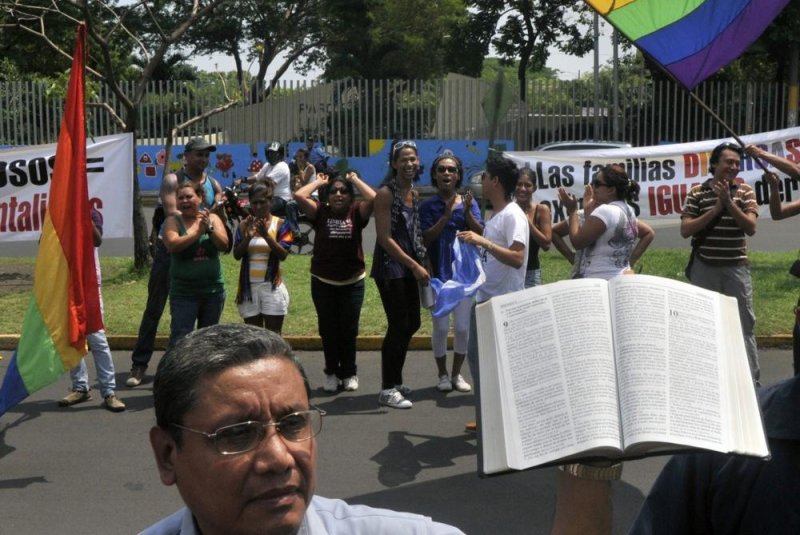
UPDATE: Nicaragua has imposed a controversial ban on the entry of Bibles, books, newspapers, and cameras, a move that has raised alarm among international organizations and human rights advocates. New reports confirm that international transportation companies must now post warnings to passengers about these prohibitions, which have been enforced for over six months without any formal decree.
Authorities at border crossings are rigorously monitoring and enforcing these restrictions, according to documentation from Christian Solidarity Worldwide, a U.K.-based organization dedicated to monitoring religious freedom violations. This development is creating a chilling atmosphere for free expression and religious practice in Nicaragua.
Anna Lee Stangl, director of advocacy for Christian Solidarity Worldwide, expressed deep concern over these measures, stating, “The Nicaraguan government’s efforts to restrict the entry of Bibles and other printed materials are deeply troubling in the current context of repression.” She urged the Nicaraguan government to lift this ban immediately and to end its ongoing repression of religious freedom and expression.
The situation is being described as part of a broader crackdown by the Nicaraguan government under President Daniel Ortega and Vice President Rosario Murillo, who have dismantled over 5,000 civil society organizations since 2018, with many linked to religious groups. A report by digital outlet El Confidencial indicates that in just two and a half years, the government has shut down 1,323 associations, including numerous evangelical and Catholic institutions.
The ban’s implications extend beyond mere restrictions; it is a strategic effort to control ideological and spiritual discourse in the country. Edwin Román, a Nicaraguan priest now in exile, stated, “Christ is the word that challenges and liberates. That is why they ban reading, not only religious texts but any reading that allows people to see a horizon different from the one the dictatorship seeks to impose.”
Despite the severe impact of this ban, there is no official law or decree documented in La Gaceta, Nicaragua’s official journal. The government is applying this policy through verbal or administrative orders, effectively allowing it to exert control without leaving a legal trace. This lack of transparency raises further concerns about the extent of governmental repression.
The ban on printed materials is part of a systematic campaign to stifle press freedom in Nicaragua. Since 2018, 61 media outlets have been forcibly closed, and nearly 300 journalists have been pushed into exile. According to the FLED Foundation, there have been 2,313 violations of journalists’ rights reported in the same period.
Public reaction is growing, with calls for the international community to intervene. The statement from Christian Solidarity Worldwide also urged global leaders to “seek creative ways to support and strengthen independent Nicaraguan voices, both inside the country and in exile.”
As the situation continues to develop, observers are urging immediate attention and action from international human rights organizations. The implications of Nicaragua’s restrictive policies on free expression and religious freedom could resonate far beyond its borders, impacting global discussions on human rights and democracy.
Stay tuned for further updates on this urgent situation.