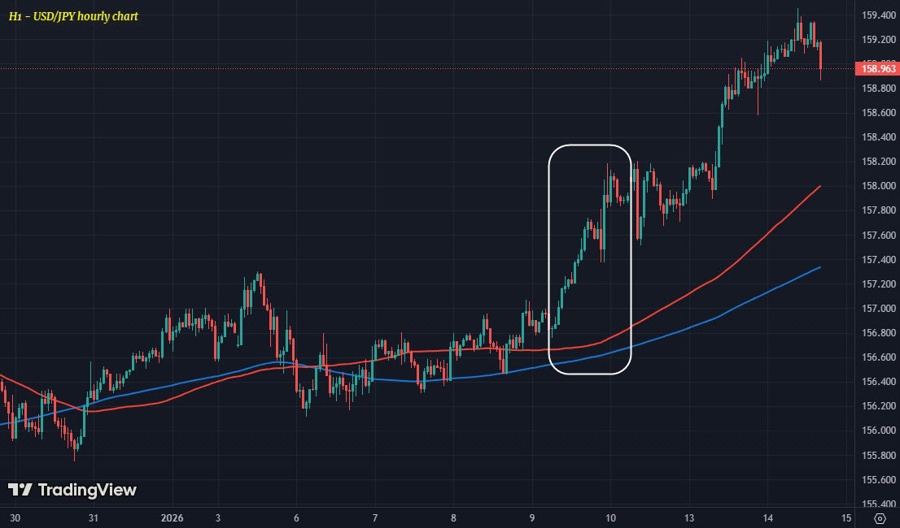
URGENT UPDATE: Japan’s finance minister, Katayama, has just made a striking statement regarding the recent surge in the Japanese yen, as it climbs past 159.00 against the US dollar. This development comes amid a wave of commentary from Tokyo officials, who are closely monitoring currency fluctuations that have significant implications for the nation’s economy.
The USD/JPY pair has breached the critical 158.00 level, a threshold that analysts have marked as pivotal. Last Friday alone, the yen gained over 100 pips, marking its sixth instance of such gains in the past three months. The pair’s current position at 159.00 is the highest it has reached since July 2024, raising questions about potential government intervention.
In his remarks, Katayama pointedly noted that the price action observed on January 9 did not align with “fundamentals,” suggesting a disconnect between market behavior and economic indicators. This comment has sparked significant interest among traders and analysts, who are now debating the implications of such a statement, especially as the yen’s rally appears to be driven by the Takaichi trade rather than rate differentials.
Market analysts believe that reaching the 160.00 mark is now a pressing possibility, with many speculating that intervention from Japanese authorities could be imminent. The recent dynamics in currency trading have raised alarms about the sustainability of the yen’s strength and its potential impact on Japan’s economic recovery.
As the situation continues to evolve, investors are advised to stay tuned for further updates. The financial community is on high alert, and the implications of Katayama’s comments could lead to significant market movements in the coming days.
What happens next? Traders and economists will be watching closely to see if the Japanese government takes action to stabilize the yen amid this rapid rise. The financial landscape in Japan is shifting, and the urgency of this situation cannot be overstated.
Stay with us for the latest developments on this critical issue.