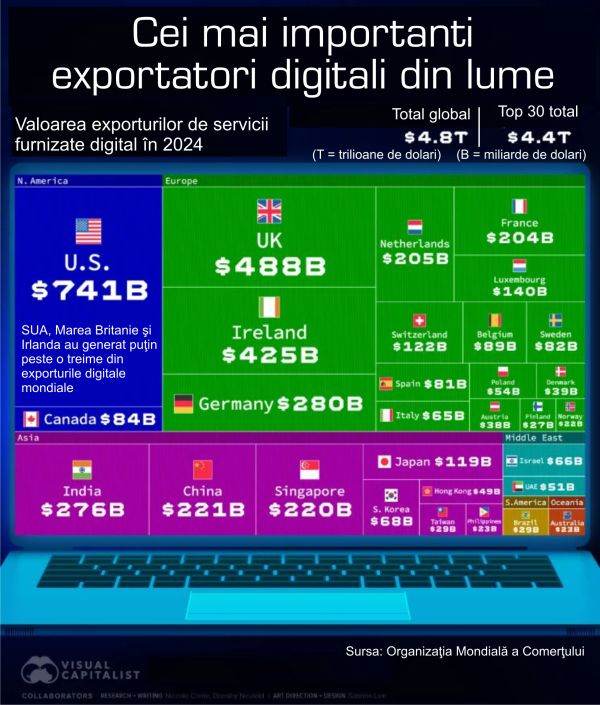
BREAKING: Digital exports have surged to a staggering $4.8 trillion globally, accounting for more than two-thirds of all services exports in 2024. This significant growth underscores the critical role of technology giants like Amazon, Meta, and Google in shaping the global economy, with the United States leading the charge.
According to an analysis by Visual Capitalist, U.S. digital exports alone reached $741 billion last year, reflecting an impressive annual growth rate of 11%. This figure represents 15% of the global total, solidifying the United States’ position as the premier digital economy. The exports encompass a wide range of services, including online education and financial services, significantly altering how businesses operate internationally.
The United Kingdom follows closely, ranking second with digital exports totaling $488 billion. Approximately 3.2 million jobs in the UK are now tied to this sector, fueled by its thriving technology and financial services industries. Meanwhile, Ireland has emerged as a crucial player, with digital exports hitting $425 billion, marking a remarkable growth rate of 24% in 2024—the fastest among major exporting nations.
As digital commerce expands, countries like Germany ($280 billion), India ($276 billion), and China ($221 billion) continue to strengthen their positions in the global digital landscape. The latest data from the World Trade Organization highlights the competitive nature of this sector, which is expected to grow even more dynamic.
In a related development, the European Union has announced a comprehensive digital package aimed at simplifying regulations surrounding artificial intelligence (AI) and data management. This initiative, unveiled last month, is designed to reduce administrative burdens for businesses, potentially saving up to €5 billion by 2029. Valdis Dombrovskis, the EU Commissioner for Economy and Productivity, emphasized the importance of this proposal: “This is an essential first step in our digital simplification agenda, aiming to create a more favorable business environment for European companies.”
The EU’s ambitious plan includes a Digital Omnibus to streamline existing rules, particularly for high-risk AI systems. The new framework aims to ensure that regulations adapt alongside technological advancements, thus enabling businesses to innovate without excessive bureaucratic constraints.
As digital exports continue to reshape the global marketplace, stakeholders are urged to monitor these evolving trends closely. The implications extend beyond economic figures, affecting millions of jobs and driving innovation across various sectors.
Stay tuned for further updates on this rapidly developing story, as the global digital economy evolves at an unprecedented pace.