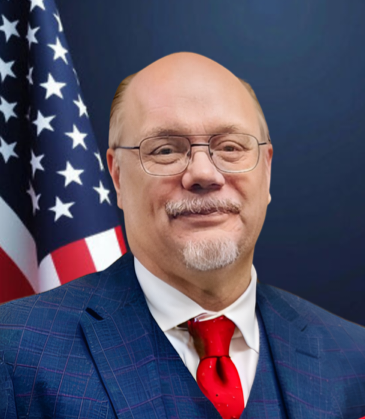
UPDATE: Alabama Public Service Commissioner Jeremy Oden is responding to mounting criticism regarding transparency and public engagement as he prepares for his reelection campaign for Alabama Public Service Commission, Place 1. In a newly released interview, Oden tackles accusations from advocacy groups and legislators, asserting that the commission is more transparent than critics claim.
The urgency of Oden’s remarks comes as he faces scrutiny ahead of the upcoming primary election on May 19, 2026. Oden emphasizes that the Public Service Commission (PSC) operates under strict ethical guidelines and legal restrictions that limit the information he can publicly disclose. He states, “We cannot discuss matters that are before the courts or any ongoing lawsuits. This is the law!”
Oden addresses allegations that the PSC has not reviewed Alabama Power in 40 years, labeling them a “false narrative.” He reveals that the commission continuously monitors all regulated companies, including Alabama Power, on a daily, monthly, and yearly basis. He insists, “We have a full-time dedicated staff that continually monitors Alabama Power alongside the Attorney General’s Office.”
Critics assert that the PSC lacks transparency and public meetings. Oden counters that the PSC holds mandatory monthly meetings—open to the public and recorded online—where they discuss crucial matters affecting ratepayers. “Anyone can go to our page and see the link for the meeting or previous meetings,” he stresses.
The conversation shifts to public input. In light of a Supreme Court ruling in the mid-1980s, the Attorney General’s office now serves as the advocate for ratepayers. Oden states, “Any citizen group can contact this office and have their views expressed.” This legal change was implemented to avoid potential conflicts of interest within the PSC.
Responding to calls from advocacy groups for annual open meetings, Oden challenges their motives, describing them as entities seeking publicity and profit. He declares, “These so-called people’s advocates want to wreak havoc on whatever process is done.”
The commissioner highlights that the PSC conducts thorough reviews of Alabama Power’s operations, including monthly reports on Rate Stabilization and Equalization (RSE) and Energy Cost Recovery (ECR). These reports encompass all aspects that may impact ratepayers, including rate changes and operational agreements.
Oden also addresses concerns about the rising costs of energy bills in Alabama. He explains that while energy production costs are monitored, actual bills reflect usage. “Alabama has one of the highest usages in the country,” he notes, attributing this to a reliance on electricity for heating homes. He adds, “Our cost of kilowatts of production is below the national average.”
In a controversial stance, Oden links current energy challenges to federal energy policies initiated during the Obama and Biden administrations. He argues that regulations have unfairly burdened the state’s energy production, stating, “These rules and policies apply to utilities and states, especially fossil fuel-heavy utilities.”
Looking ahead, Oden reassures ratepayers about potential relief. “We placed a moratorium on rate increases last November, which will remain in effect until 2028,” he confirms. He expresses optimism about future adjustments that could benefit consumers.
As this election cycle heats up, Oden invites public engagement, stating, “You can contact me and ask for clarification or anything else.”
With the general election set for November 3, 2026, all eyes will be on Oden as he navigates these critical discussions surrounding energy regulation, transparency, and public trust in the Alabama Public Service Commission.