Physicists at the University of Toledo are pioneering advancements in solar cell technology designed specifically for space applications. Supported by the Air Force Research Laboratory, this initiative addresses the unique challenges posed by the harsh environment of outer space, which significantly impacts the efficiency and lifespan of solar cells compared to their performance on Earth.
Recent research from the university’s Wright Center for Photovoltaics Innovation and Commercialization has focused on the use of antimony compounds as light-absorbing semiconductors. This innovative approach aims to enhance the durability of solar cells when exposed to extreme temperatures and high radiation levels encountered in space.
Breakthrough Research Published in Leading Journal
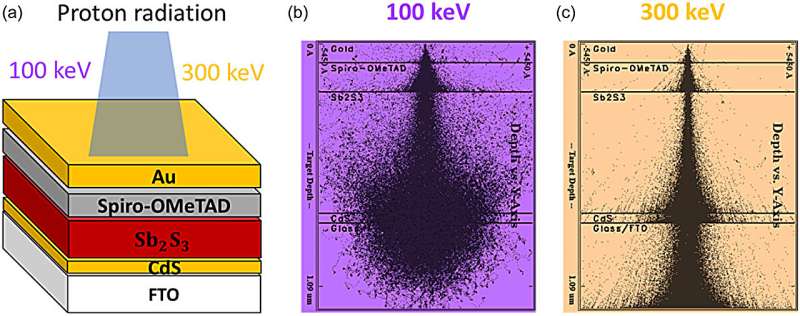
A team comprising faculty and students from the University of Toledo has published a groundbreaking assessment in the journal Solar RRL. This study, noted for its significant findings, is featured on the journal’s front cover. The research explores the potential of antimony chalcogenide-based solar cells, which exhibit superior resistance to radiation compared to traditional solar technologies currently utilized in space missions.
Alisha Adhikari, a doctoral student in physics and co-leader of the research team, emphasized the advantages of these new solar cells. “Antimony chalcogenide solar cells exhibit superior radiation robustness compared to the conventional technologies we’re deploying in space,” she stated. “But they’ll need to become much more efficient before they become a competitive alternative for future space missions.”
Collaborative Efforts Drive Innovation
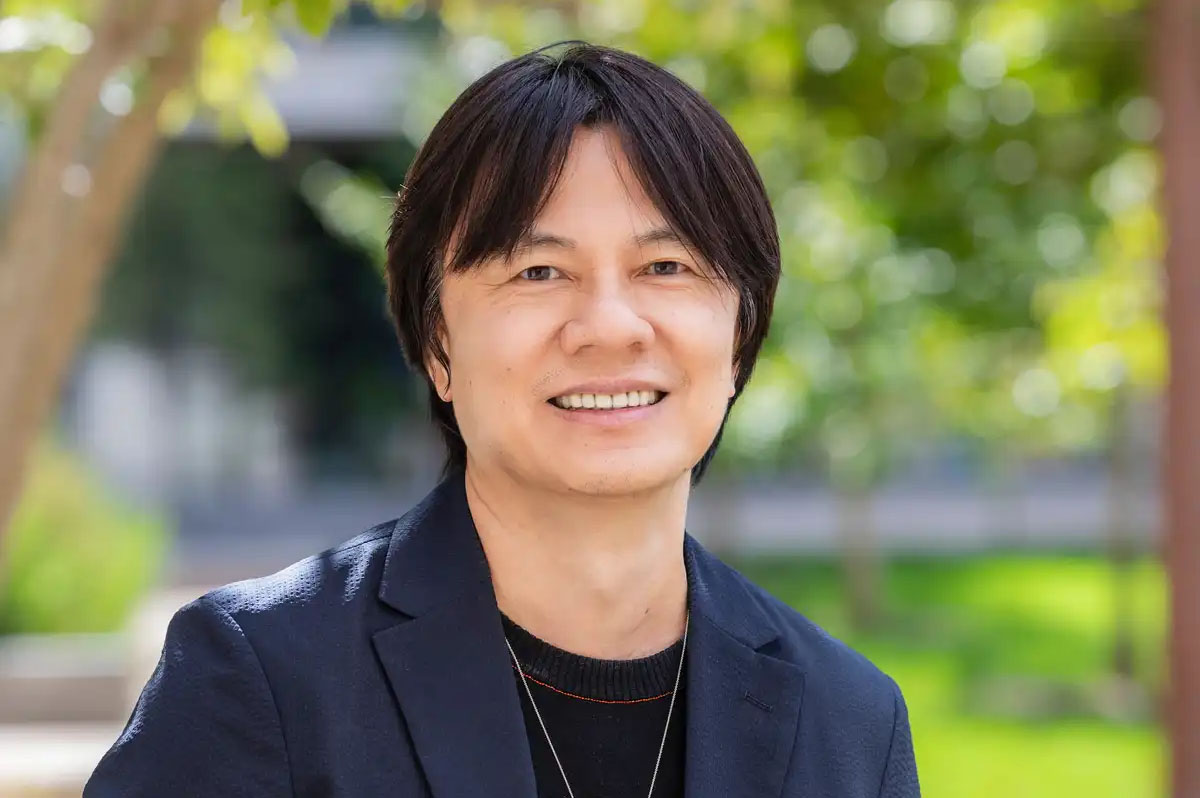
The research team is under the leadership of Dr. Randall Ellingson, a professor in the Department of Physics and Astronomy and the Wright Center Endowed Chair. Collaborators include postdoctoral researcher Dr. Vijay Karade, doctoral student Scott Lambright, and faculty members Dr. Yanfa Yan and Dr. Zhaoning Song. Their collective expertise is fueling the exploration of innovative strategies to harvest solar energy effectively in the challenging conditions of outer space.
The focus on antimony compounds reflects a broader trend in the solar energy sector, where researchers are increasingly looking for materials that offer enhanced performance and durability. The findings from this research not only contribute to the scientific community but also hold promise for future space exploration initiatives.
This work is part of a larger commitment to advancing solar technology for applications beyond Earth, potentially paving the way for more sustainable energy solutions in space missions. As research continues, the team aims to develop more efficient solar cells that can withstand the rigors of space travel, ultimately enhancing the viability of solar energy as a power source for future missions.
The study, titled “Assessing Proton Radiation Hardness of Antimony Chalcogenide Solar Cells,” was published in Solar RRL in 2025, and can be accessed using DOI: 10.1002/solr.202500699. This publication underscores the University of Toledo’s role in advancing cutting-edge research that may redefine energy solutions for space exploration.