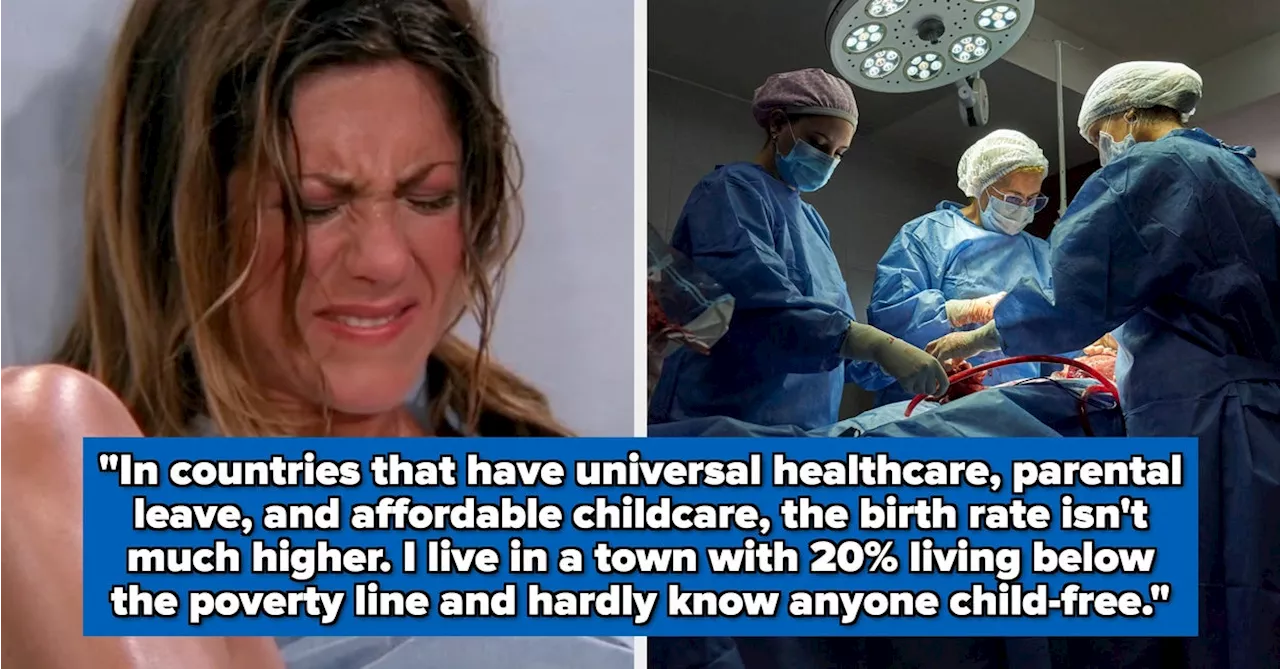
The decline in birth rates across developed nations has sparked significant discussion, highlighting a range of factors beyond just economic concerns. While the financial responsibilities associated with raising children, such as childcare, housing, and healthcare, shape many individuals’ decisions, a deeper analysis reveals that personal choice and evolving societal attitudes play critical roles in this trend.
Shifting Perspectives on Parenthood
As birth rates continue to fall, many people are re-evaluating what it means to become a parent. Financial considerations are undeniably significant; the cost of raising a child can be a substantial burden, leading individuals to delay or reconsider parenthood. According to recent studies, the financial implications are often cited as a primary factor influencing the decision to have children. This perspective suggests that improving economic conditions could potentially reverse the trend of declining birth rates.
However, this viewpoint may overlook a more profound shift in societal attitudes. Increasingly, individuals express a lack of desire for parenthood, irrespective of financial stability. This change signifies a move away from traditional expectations, where having children was often seen as a societal norm. Instead, many now prioritize personal aspirations, career goals, and other pursuits over starting a family. The role of reliable birth control has been transformative, granting individuals unprecedented control over their reproductive choices and enabling them to make decisions that align with their life plans.
The Diversity of Motivations
The motivations behind choosing a childfree lifestyle are varied and complex. Some individuals emphasize personal fulfillment and the desire to pursue their goals, while others cite concerns about genetic health issues or the lack of adequate support systems for raising children. These considerations illustrate that the choice not to have children extends beyond economic constraints; it reflects a broader acceptance of diverse life paths.
The narrative surrounding declining birth rates often frames it as an economic issue, which poses challenges for policymakers. They may view the trend as a problem requiring financial stimulus measures, rather than recognizing it as a reflection of changing values and improved options for individuals. The increase in open discussions regarding childfree choices highlights the necessity for society to normalize such decisions, acknowledging that each person’s perspective on parenthood is uniquely valid.
As developed nations grapple with the implications of declining birth rates, it is essential to approach the topic with a nuanced understanding. By considering both economic factors and personal choices, a more comprehensive picture emerges—one that respects individual decisions while addressing the broader societal shifts at play.