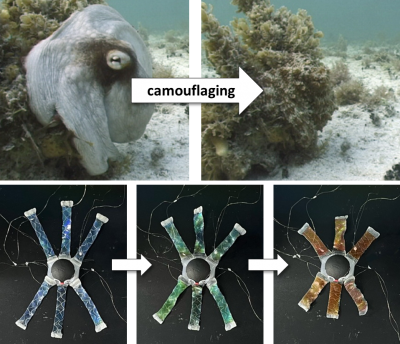
A research team led by Dr. Dae-Yoon Kim at the Korea Institute of Science and Technology (KIST) has unveiled a groundbreaking soft robot named ‘OCTOID’. This innovative creation is designed to change both its color and shape, drawing inspiration from the remarkable camouflage and movement capabilities of octopuses. The development was announced on March 15, 2024, and represents a significant advancement in robotics technology.
The OCTOID robot is an integrated soft system that surpasses conventional robotic movements. Unlike traditional robots that may only bend or stretch, OCTOID can alter its color in response to electrical stimulation. This feature allows it to adapt to its surroundings seamlessly, mimicking the natural behavior of octopuses in their habitats. Furthermore, OCTOID is capable of grasping objects, enhancing its functionality in various applications.
Innovative Design and Applications
The research team at KIST has focused on creating a soft robot that not only performs tasks but also interacts with its environment in a more natural way. By incorporating advanced materials and technology, OCTOID can perform tasks that require delicate handling, which could be beneficial in fields such as healthcare and manufacturing.
Dr. Kim emphasized the potential applications of OCTOID, stating, “Our goal is to develop robots that can assist in environments where human interaction is vital.” The ability to change color and shape allows OCTOID to navigate spaces with ease, making it suitable for tasks that involve complex movements or delicate materials.
Future of Soft Robotics
This development is part of a broader trend in soft robotics, which aims to create machines that can safely interact with humans and their environments. The design principles behind OCTOID could pave the way for future innovations in robotics, particularly in areas requiring flexibility and adaptability.
As the technology continues to evolve, researchers anticipate that soft robots like OCTOID could play a crucial role in various sectors, from disaster response to elderly care. The integration of color-changing capabilities and adaptable movement sets a new standard for what soft robots can achieve.
The work conducted by Dr. Kim and his team at KIST not only highlights the potential of soft robotics but also demonstrates the importance of interdisciplinary research in advancing technology. With continued investment and exploration, the future of robotics holds exciting possibilities that could transform how we interact with machines in our everyday lives.