The distinctive sound of adhesive tape being peeled from its roll has captured the curiosity of researchers and office workers alike. A recent study led by Er Qiang Li and colleagues, published in Physical Review E in 2026, delves into the science behind this phenomenon, exploring the supersonic air pulses generated during the peeling process.
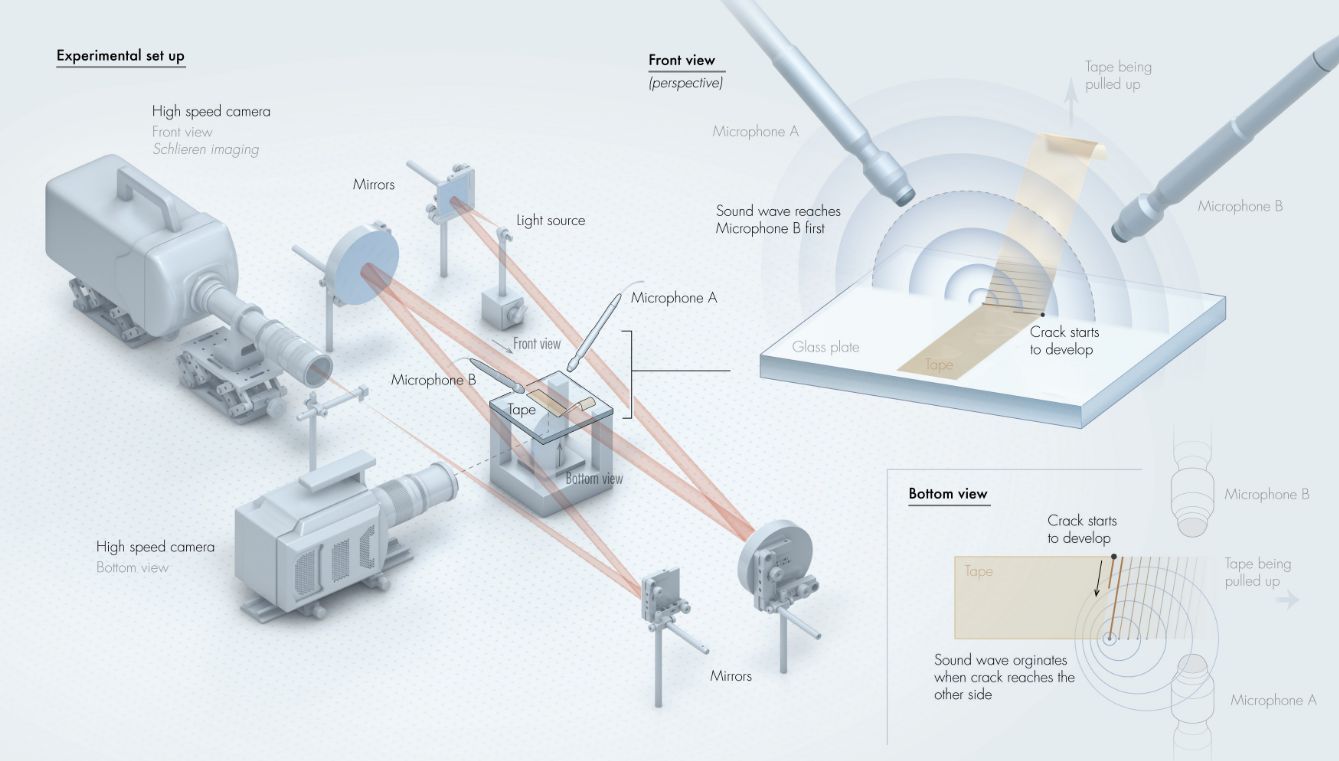
Using a combination of high-speed cameras and synchronized microphones, Li’s team employed a technique known as Schlieren imaging to capture the intricate details of the sound-producing mechanism. Their experiments revealed that the peeling of the tape involves a stick-slip dynamic, where the adhesive suddenly loses grip. This process initiates a rapid collapse of vacuum pockets that form during the stick phase, resulting in a significant sound wave.
The study documented that the pressure generated during the collapse reaches an impressive 9,600 Pa, producing shock waves that can be visually tracked through the Schlieren images. This discovery not only explains why the sound of peeling tape is so prominent, but also highlights the fascinating physical principles at play.
In addition to its auditory impact, adhesive tape is noted for its triboluminescence—the phenomenon where materials emit light when subjected to stress—as well as its ability to generate X-rays. These properties make adhesive tape a subject of interest for various scientific demonstrations, showcasing its versatility beyond simple applications.
The insights gained from this research contribute to a broader understanding of everyday materials and their behaviors. While the findings do not offer a solution to quieten the sound of peeling tape, they add a layer of intrigue to a common office activity. The study serves as a reminder of the complexity and wonder inherent in the materials we often take for granted.
Next time the sound of tape being peeled echoes in an open-plan office, it may be worth appreciating the scientific marvel that lies beneath its surface—a unique interaction of physics and materials that is both intriguing and illuminating.